
REVIEW · GUIDED
Riquewihr: the pearl of the vineyards with a local guide and tastings
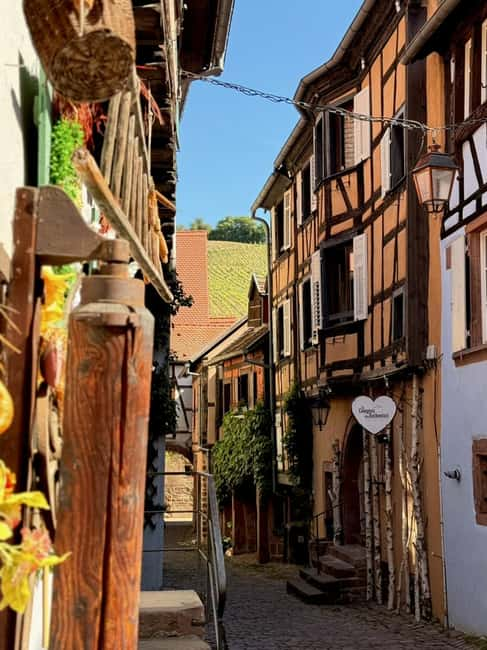
Riquewihr looks like a postcard, but this walk asks you to read beyond the flowers and half-timbered facades. A local guide leads you through gates, old prisons, merchant houses, symbols, legends, and wine-growing traditions, showing how the pretty surface grew from a serious medieval town. The stories are the main event.
I like the way the tour connects small details to bigger events, especially the marks carved into stone and wood. I also like the tasting element, from famous Riquewihr macarons to local sweet and savory specialties. The main consideration is language: the tour is conducted in French, and the advertised duration varies between 90 minutes and two hours in the description, so check the exact departure details before booking.
Key points to know before you book
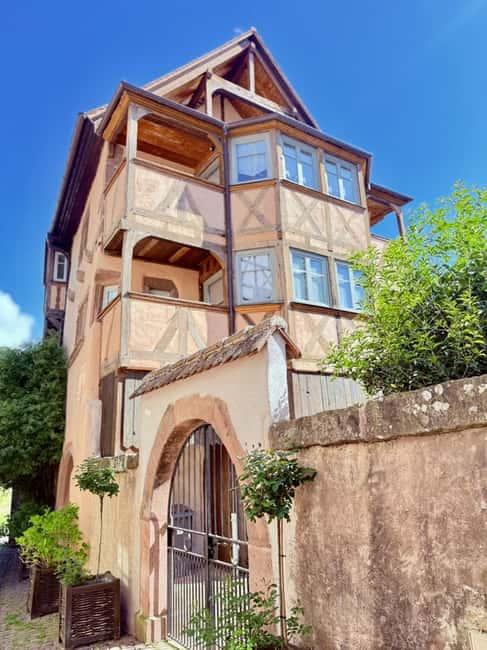
- Medieval clues in plain sight: Learn to read coats of arms, dates, protective crosses, mottos, and other marks on old buildings.
- A town beyond its postcard image: The route covers fortified gates, merchant homes, prisons, alleyways, courtyards, and wine culture.
- Local guide Géraldine: A recent visit led by Géraldine blended European history, Christmas atmosphere, local legends, and food tastings.
- Macarons and local specialties: The tasting adds a flavorful stop to a history walk, with Riquewihr macarons specifically included.
- French-language experience: The live guide speaks French, and some material may remain in its original language.
- Short but active outing: Expect a walk through historic streets, with comfortable shoes needed and limited suitability for people with mobility impairments.
Why Riquewihr deserves more than a quick photo stop
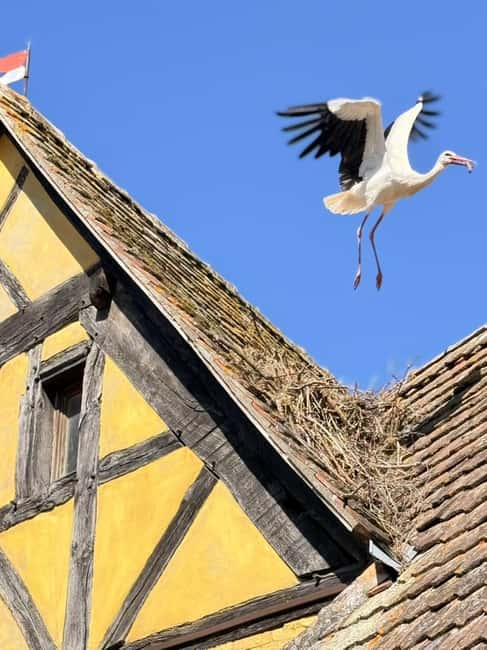
Riquewihr is easy to admire in a few minutes. You can stroll along its colorful main street, photograph the timber frames, and move on. That approach gives you the village’s appearance, but not much of its meaning.
This tour changes the pace. Instead of treating Riquewihr as a decorative Alsatian village, you look at it as a fortified settlement, a market town, and a wine-growing center. The details become evidence. A date on a beam, a carved symbol, or a coat of arms can point to a family, a trade, a belief, or a period of danger.
I find that approach especially useful here because Riquewihr’s prettiness can hide its harder past. The old walls were built for protection, the gates controlled movement, and the prison spaces recall a time when justice was public and severe. The tour gives those attractive buildings some weight without turning the walk into a dry lecture.
The route begins at Place Fernand Zeyer and returns there. That makes the outing simple to fit into a day in the village. You do not need to arrange transport between stops, and the compact format works well before lunch, after a wine visit, or during a broader tour of Alsace.
More visits with a guide alongside around France:
- Saint-Emilion: Grand Cru Classé Guided Winery Visit & Picnic
★ 4.7 · 296 reviews - Alsace Wine Route Wineries & Tasting Small Group Guided Tour from Strasbourg
★ 5.0 · 229 reviews - Small Group Guided E-bike Tour in Nice’s Organic Vineyard
★ 5.0 · 220 reviews
Reading the walls, gates, and old houses
The fortified walls and gates are among the most useful early stops because they explain why Riquewihr developed where it did. The village was not simply built to look charming. Its walls reflect a time when trade, defense, and control of movement mattered.
As you walk, your guide points out the difference between a town designed for protection and the softer image it presents today. The gates mark entrances and exits, while the surrounding structures show how security shaped daily life. You get a clearer sense of Riquewihr as a strategic settlement rather than just a row of photogenic buildings.
The 16th-century noble houses add another layer. Their decorated facades, frescoes, coats of arms, and mottos tell you about merchant families who wanted their status seen. This is where the tour’s attention to small details pays off. Instead of seeing decoration as simple ornament, you learn to ask who paid for it, what it announced, and which family or ambition it represented.
I like this part because it gives you a tool you can use after the tour. Once you understand how to spot dates, symbols, and family marks, you can continue looking at the village on your own. The buildings become easier to compare, and your later photographs have a story behind them.
Do not expect a museum-style display or a series of indoor exhibits. Much of the experience takes place outside, on historic streets and around old structures. In rainy weather, the tour still goes ahead, so a waterproof layer is sensible.
Symbols, signs, and stories carved into everyday life
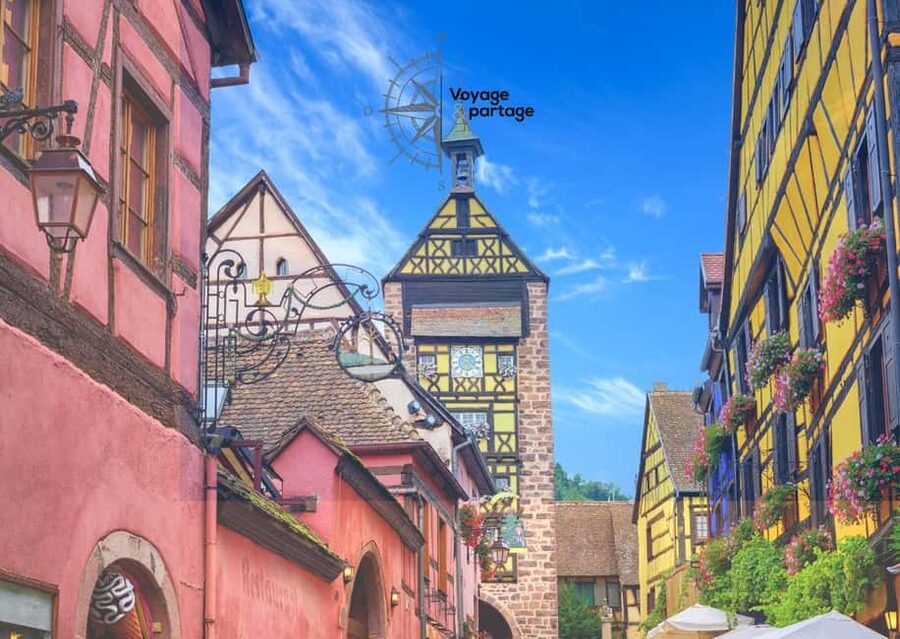
One of the more unusual features of this walk is its focus on signs that are easy to miss. Protective crosses, coded motifs, dates, and messages appear as part of the built environment. Some marks may have been practical, religious, commemorative, or protective. Your guide helps connect those details to the fears and hopes of the people who lived there.
This is a good reason to take the tour early in your visit. You will see far more than you would by wandering without context. Afterward, you can return to the same streets and notice clues that previously looked like random decoration.
The connection between legend and documented events is another strong theme. Alsace has stories of witches, accusations, trials, and punishment. The tour does not present these tales as simple fairy stories. It looks at how certain women were accused, tried, and sometimes burned when superstition influenced the law.
That subject may be unsettling, but it adds honesty to the village’s story. Riquewihr’s old streets were not only places of trade and celebration. They were also places where fear could become official punishment. The guide’s job is to show where local belief ends and historical evidence begins, or where the two remain difficult to separate.
Families can use this portion as a chance to talk about how laws and beliefs change. The tour is described as suitable for children, but parents should decide how much detail is right for their children. Tales of accusations, prison, and executions are part of the subject.
The Thieves’ Tower and the old prisons
The Thieves’ Tower brings the medieval justice system into sharper focus. Its name alone hints at the darker side of town life, and the old prison spaces help explain how punishment worked before modern legal systems.
This stop matters because it moves the tour from attractive facades to social control. You learn about exemplary punishments, public fears, and the role of a fortified town in keeping order. The material is not just about criminals. It also reveals what the community feared and how authorities tried to protect their power.
I would not choose this walk if you want only light sightseeing and food samples. The guide includes legends, prisons, and witch trials, so the tone shifts between pleasant discovery and uncomfortable history. That balance is one of the tour’s strengths, but it may not suit someone looking for a purely cheerful outing.
The route also includes references to secret passages, inner courtyards, and forgotten alleyways. These spaces offer a quieter view of Riquewihr than the main street. They show how much of village life once took place away from the formal front of the house.
Because the route is on foot and passes through old streets, wear shoes with good support. The experience is not suitable for people with mobility impairments, and uneven historic surfaces may make the walk tiring for some visitors.
More vineyard visits around France:
- Saint-Émilion: Grand Cru Classé Winery Visit and Tasting
★ 4.6 · 1,118 reviews - Saint Emilion Half-Day Trip with Wine Tasting & Winery Visit from Bordeaux
★ 4.5 · 1,034 reviews - Saint-Émilion: Bordeaux Vineyard Tour and Wine Tasting
★ 4.8 · 578 reviews - Bordeaux: Vineyards Wine Tasting Half-Day Trip
★ 4.2 · 470 reviews
Wine culture is part of the architecture
Wine is not added as a separate subject at the end. It helps explain the village itself. Riquewihr’s economy, buildings, reputation, and daily life were shaped by wine-growing over many centuries.
The tour places the wine trade alongside fortification and commerce. That combination helps you understand why prosperous families built impressive homes and why the town developed the way it did. Wine was not only something to drink. It was a source of work, income, status, and outside connections.
For you, this makes the tasting more useful. Instead of sampling a local product with no context, you get an explanation of why local food and wine traditions matter here. The material provided specifically mentions the famous macarons of Riquewihr. Recent visits have also included sweet and savory local specialties.
The tasting should be viewed as a modest part of a short walking tour, not as a full meal or a dedicated wine course. The information does not specify the number of samples, the exact producers, or whether wine itself is poured. If tasting details matter to your booking decision, ask the provider what will be served.
Still, the food stop adds warmth to the experience. History can become abstract when you only hear dates and names. A local specialty gives you a physical connection to the place, and the shared moment is part of the tour’s appeal.
What the 90-minute format means for your day
The price is $41 per person. For a 90-minute tour, that is a fairly serious price for a village walk, but it includes a live local guide, the guided route, tasting elements, and tips or vouchers for your stay. If the experience runs closer to two hours, as the longer description suggests, the value improves.
The strongest reason to pay is not the distance covered. Riquewihr is compact, and you could walk its main streets without a guide. You are paying for interpretation: the connections between the buildings, local legends, wine culture, medieval law, and family history.
That distinction matters. If you enjoy reading plaques, wandering alone, and researching later, $41 may feel high. If you want someone to point out the marks you would otherwise miss, the price is easier to justify.
The short format also works well in a busy Alsace schedule. You can pair it with independent sightseeing, food, or another village. The tour starts and ends at Place Fernand Zeyer, so the logistics are straightforward.
The booking terms are flexible: you can cancel up to 24 hours ahead for a full refund, and reserve now while paying later. Check the available start times because the stated duration and schedules can vary.
French language and guide style
The live tour guide speaks French. Some content is presented in its original language, so you should be comfortable following a French-language explanation or arranging your own translation support.
Géraldine led one of the highlighted visits, combining Riquewihr’s story with the wider history of Europe, the Christmas setting, and local sweet and savory tastings. Her approach suggests the tour can move between broad historical context and small village details rather than staying with a strict list of dates.
The guide is central to the value. Ask questions when you can, especially about symbols, legends, and the tasting. A passionate guide can make the same street feel new; a language barrier can make the same material harder to follow.
The activity has a rating of 4.7 from three reviews, a strong early signal but a small sample. I would treat that as encouraging rather than conclusive. The most consistent praise centers on detail, atmosphere, and the way history is combined with local specialties.
Who will enjoy this Riquewihr walk
I would recommend it to you if you like:
- Historic towns explained through buildings and small clues
- Local legends with a clear link to real events
- Short guided walks that leave time for independent exploring
- Food tastings tied to local culture
- Family activities with an educational angle
- French-language tours with a personal guide
You may want to skip it if you need an English-language guide, dislike walking on old streets, or want a long wine tasting with detailed producer information. It is also not a good match for people with mobility impairments.
Bring comfortable shoes and plan for weather. Since the tour runs in rain, a coat or umbrella is useful. The meeting point is Place Fernand Zeyer, and the walk returns there, which makes it easy to continue your day in Riquewihr.
Should you book this tour?
Book it if you want Riquewihr to make sense, not just look pretty. The tour’s best feature is its close reading of the village: fortified gates, merchant houses, symbols, prisons, legends, and wine traditions all become parts of one story.
The $41 price is reasonable for a guide-led experience with tastings, but only if you value interpretation and can follow French. Confirm the exact length and tasting details before paying, since the information gives both 90 minutes and two hours.
For a first visit, I like this as a compact introduction. It gives you enough background to walk the village with sharper eyes afterward, and the macarons provide a pleasant finish to some serious history.
FAQ
Where does the tour begin?
The tour begins at Place Fernand Zeyer in Riquewihr.
Where does the tour end?
The guided walk returns to Place Fernand Zeyer.
How long does the tour last?
The activity information gives a duration of 90 minutes. The longer description refers to two hours, so check the available departure details when booking.
What language is the tour in?
The live guide speaks French. Some content may be shown in its original language.
What is included in the price?
The experience includes a walking tour, a local guide, and tips and vouchers for your stay. Tasting elements are also described, including Riquewihr macarons.
Are food tastings included?
The tour includes a tasting of Riquewihr macarons. The experience also refers to local products and sweet and savory specialties, but it does not specify the full tasting menu.
How much does the tour cost?
The listed price is $41 per person.
Is the tour suitable for children?
Yes. The activity is described as suitable for children, though some stories involve prisons, witch accusations, trials, and executions.
What should I wear?
Wear comfortable shoes because the experience is a walking tour through historic streets. The tour takes place even in rainy weather, so prepare for wet conditions.
Is the tour suitable for people with mobility impairments?
No. The activity is marked as unsuitable for people with mobility impairments.
Can I cancel the booking?
You can cancel up to 24 hours in advance for a full refund. A reserve-now, pay-later option is also available.
Just listed around France
- Vosne-Romanée: Private Vineyards Walking Tour with Tasting★ 4.4 · 9 reviews
- Vineyard of the Alpilles by bike★ 4.6 · 8 reviews
- Vineyard tour and wine tasting in Davron★ 4.5 · 7 reviews
- Vineyard visit in Gyropode, visit of Cave & Tasting Wines of Bandol★ 5.0 · 19 reviews
- Private Vineyard Tour and Wine Tasting in Bandol★ 5.0 · 16 reviews
- Horse riding in the vineyards of Grimaud + wine tasting★ 5.0 · 3 reviews
- Bike ride on the Wine Route from Sélestat★ 5.0 · 5 reviews
- 1/2 day private Vintage tour, vineyards of Saint-Tropez★ 5.0 · 6 reviews
Guided, compared.
Private Self-Guided E-Bike Ride in Tuscany with Vineyard Visit
Read our review →
Malibu: Guided Vineyard Hike with Photo Stops and Wine
Read our review →
Toledo Guided Tour & Winery Visit with Tasting
Read our review →

Alsace Wine Route Wineries & Tasting Small Group Guided Tour from Strasbourg
Read our review →
Small Group Guided E-bike Tour in Nice’s Organic Vineyard
Read our review →
Manilva: Nilva Vineyard, Wine Tasting & Tapas Guided Tour
Read our review →
Browse the lists this tour appears in