REVIEW · ALSACE WINE ROUTE TOURS
Alsace Wine Route Wineries & Tasting Small Group Guided Tour from Strasbourg
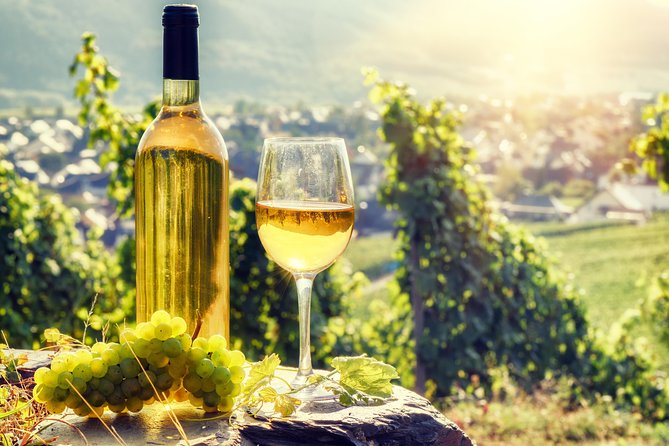
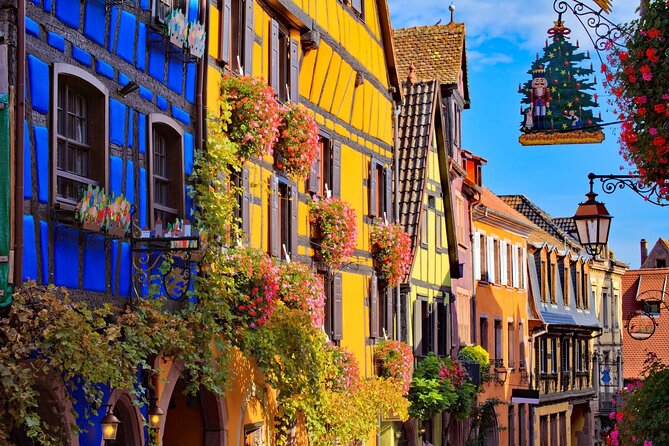
Alsace’s wine country is a fine antidote to the usual rushed tasting tour. You spend the day following the foothills of the Vosges, stopping at three wineries and weaving through villages with half-timbered houses, narrow lanes, and flower-filled streets. The wines are mostly white, with Riesling, Gewürztraminer, Pinot Blanc, Pinot Gris, Muscat, and Sylvaner in the glass.
I like the small maximum of eight people, which keeps the minivan personal and lets you ask questions. I also like the mix of producers: you may visit a family cellar, a modern operation, and a more established estate rather than seeing the same type of winery three times. The main caution is that the exact villages and wineries can change, and Riquewihr is not always a full walking stop, particularly during the busy Christmas season.
Key points
- Three winery visits: Taste Alsatian whites in several different cellar settings, with generous pours reported by some participants.
- A scenic 170-kilometer wine route: Travel beneath the Vosges Mountains through one of France’s best-known wine regions.
- Small-group transport: The air-conditioned minivan carries no more than eight people, making conversation and questions easy.
- Village time matters: Mittelbergheim, Dambach-la-Ville, Ribeauvillé, and Riquewihr are part of the touring area, but exact stops can vary.
- Guides make the difference: Pauline, Laurence, Jerome, Maxim, Amelie, Florence, and others are praised for explaining wine, local customs, and Alsatian history.
- Plan your meals: Tastings generally do not include snacks, and lunch is at your own expense.
A full day from Strasbourg to the vineyard foothills
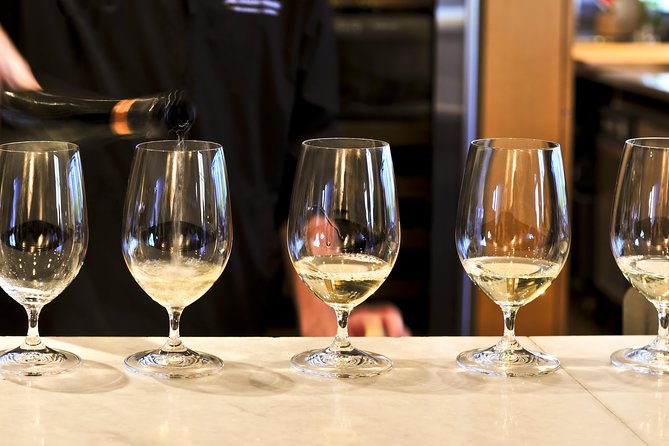
The tour begins at 9 a.m. outside the Strasbourg tourist information office at 17 Place de la Cathédrale. That central meeting point is practical if you are staying in or near the old town, but hotel pickup is not included, so allow time to reach the square.
You then leave Strasbourg in an air-conditioned minivan. With a maximum of eight people, the ride should feel much more relaxed than a large coach excursion. It also gives the guide room to explain what you are seeing as the city gives way to open fields, village roofs, and vineyard-covered slopes.
The Alsace Wine Route runs for about 170 kilometers along the base of the Vosges Mountains. You will not cover every mile of it in one day. Instead, the route acts as the backbone for a carefully paced circuit through several wine districts and villages.
I would treat the drive as part of the experience, not dead time. Alsace wine is closely tied to place, and the guide’s explanation of soil, weather, grape varieties, and family winemaking gives the tastings some context. Guides such as Pauline, Laurence, Jerome, Maxim, and Amelie have been singled out for making those connections clear and enjoyable.
More Wine Country Day Trips in France
- Alsace Wine Route Small Group Half-Day Tour with Tasting from Strasbourg
★ 4.5 · 291 reviews - ICONICS Tour: 1/2 day on the Wine Route, visit of 2 Villages + Tasting.
★ 5.0 · 159 reviews - From Lyon: Beaujolais Wine Route Half-Day Tour
★ 4.7 · 119 reviews
Mittelbergheim and the first white wines
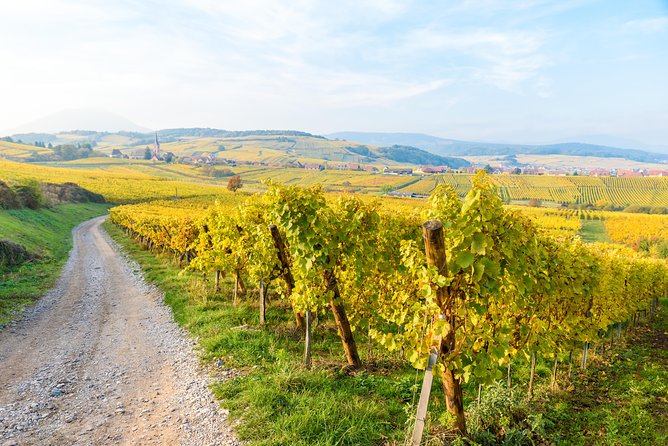
The first wine area is Mittelbergheim, a village associated with the grand crus Kastelberg, Zotzenberg, and Wiebelsberg. It is especially known for Riesling, a grape often linked more strongly with Germany, though Alsace gives it a distinctly French setting and style.
At the first winery, you can expect to taste Riesling along with Sylvaner and Pinot Blanc. This is a useful opening flight because it introduces three different sides of Alsatian white wine. Riesling is often the sharper, more structured choice, while Pinot Blanc is generally softer and easy to pair with food. Sylvaner gives you another local reference point that is less familiar to many North American visitors.
Do not expect every tasting room to look like a polished design showroom. The attraction here is the wine and the chance to understand how a working Alsatian producer presents it. Some tastings take place in simple cellars rather than formal rooms. That can feel plain, especially in cold weather, but it also gives the day a more direct connection to the people making the wine.
The lack of snacks is worth taking seriously. French wine tastings on this route usually focus on the wine itself, so you should eat a solid breakfast before leaving Strasbourg. Bring water if permitted and avoid assuming that bread or cheese will appear at each stop.
Dambach-la-Ville and the cellar experience
The next major stop is Dambach-la-Ville, one of Alsace’s most important wine villages. It produces more wine than any other village in the region and is associated with Frankstein Grand Cru, one of the area’s best-known appellations.
The second tasting takes place in a traditional wine cellar, or caveau. Here, the focus turns toward the relationship between Alsace’s soil, climate, and grape varieties. You should hear more about Riesling and Gewürztraminer, the latter known for its aromatic character and fuller style.
This portion of the day can be especially useful if you are still learning the difference between Alsatian grapes. You are not simply handed a glass and sent on your way. The guide can help compare the wines and explain how the same broad region produces very different bottles.
There is a practical tradeoff. A small family producer may offer a more personal encounter than a large estate, but the setting can be basic. One participant found a winter cellar cold and lacking atmosphere. I would dress for changing temperatures, even if the day outside is mild. The contrast between a formal tasting room and an old working cellar is part of the tour’s range, but not everyone will enjoy the rustic version equally.
Lunch in a village, with some planning required
Lunch is not included, and the exact village used for the midday break can change. Stops mentioned for the route include Ribeauvillé, Bergheim, and other small Alsatian towns, depending on the day’s winery schedule.
This is a pleasant chance to walk independently, look at the local architecture, and choose your own meal. Guides can suggest restaurants and regional dishes, which is helpful in a small village where opening hours may be limited.
The weak point is choice. Outside the busiest season, some restaurants may be closed, leaving fewer options than you expect. If lunch is important to you, ask your guide for advice early in the morning. You should also budget separately for food and drinks, since the tour price covers transport, guiding, and tastings but not lunch.
A village lunch is still a good fit for the pace of the day. You get a pause between tastings, and you can decide whether to eat quickly, browse shops, or simply enjoy the setting. Just do not expect a long restaurant stop with a wide range of open venues every day.
More Winery Tours in France
- Saint-Émilion: Grand Cru Classé Winery Visit and Tasting
★ 4.6 · 1,118 reviews - Saint Emilion Half-Day Trip with Wine Tasting & Winery Visit from Bordeaux
★ 4.5 · 1,034 reviews - Saint-Emilion: Grand Cru Classé Guided Winery Visit & Picnic
★ 4.7 · 296 reviews - Médoc Region Half-Day Wine Tour with Winery Visit & Tastings from Bordeaux
★ 4.5 · 211 reviews
Ribeauvillé and the best-known village views
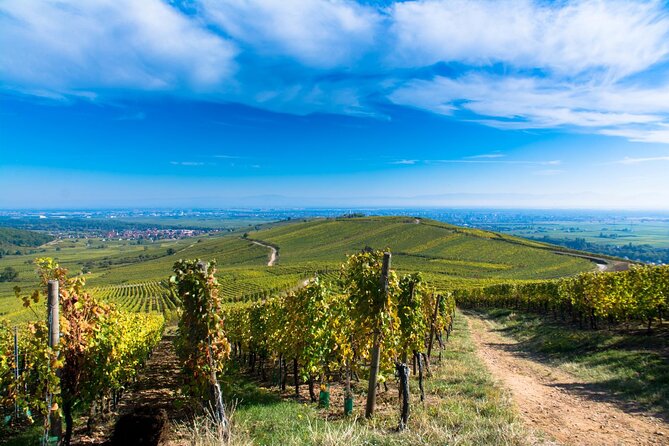
After lunch, the route moves toward the Ribeauvillé and Riquewihr wine area. This district includes five grand crus: Kirchberg, Osterberg, Geisberg, Schoenenbourg, and Sporen.
Riesling remains central here, but this is also a chance to encounter Muscat, Gewürztraminer, and Pinot Gris. The variety makes this part of the route rewarding for anyone who wants more than a single style of white wine.
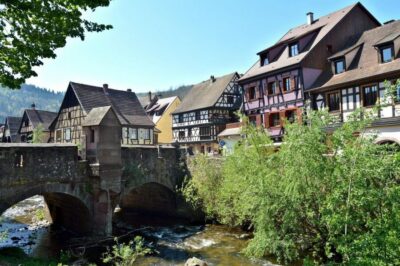
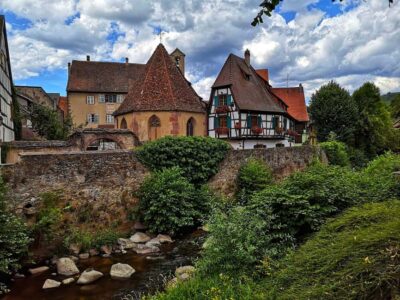
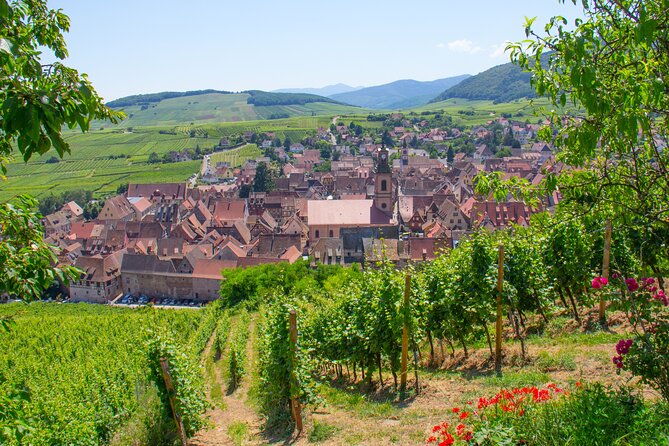
Ribeauvillé has a particularly attractive old-town setting, with colorful façades, narrow streets, and a strong connection to the surrounding vineyards. You may have time to walk through the center, depending on traffic and the winery appointments. The village is compact enough that even a short stop can give you a feel for the region.
Riquewihr is the more delicate promise. It is included in the touring area, but a full visit to the village is not guaranteed on every departure. Traffic, road access, the location of the wineries, and seasonal closures all affect the schedule. During the Christmas markets, heavy traffic and road restrictions can make access especially difficult.
If Riquewihr is your main reason for booking, ask the operator about the planned route before you commit. If you view it as one possible part of a broader wine day, the tour is easier to appreciate. You may still pass through the area or see other beautiful villages, but you should not treat every named village as a guaranteed extended stop.
The final winery visits and Alsatian wine families
The day includes three winery visits in total, with the later tasting or tastings taking place in the Ribeauvillé and Riquewihr area. You may encounter a small family-run cellar, a modern biodynamic producer, or a larger, long-established house.
That variety is one of the strongest reasons to choose this tour. You can compare not only wines but also the way each producer works, receives visitors, and talks about its bottles. Some tastings are generous, and you may have the chance to sample several grape varieties, including grand cru wines.
The guide also brings useful regional context. The Hugel and Trimbach families, for example, have made wine in Alsace for generations and are important names in the area. The point is not simply to memorize famous producers. It is to see how family ownership, vineyard plots, local soil, and inherited methods shape the bottles you taste.
The last tasting may not always have the same energy as the first two. A lot depends on the host at the cellar and on how much the guide fills in the gaps. Guides such as Laurence and Jerome are praised for keeping the conversation moving and adjusting the tasting to the group’s interests. That personal guidance matters more here than it would on a large bus tour.
You can buy wine during the day, though shipping arrangements and personal expenses are not included in the tour price. If you plan to bring bottles home, check the practical rules for your destination before buying a large quantity.
What $260.12 represents
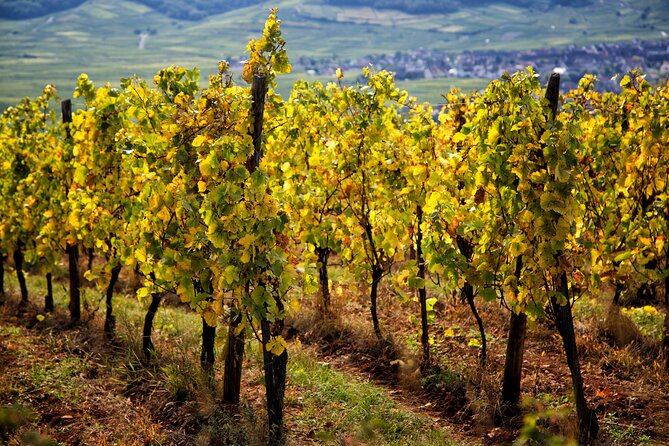
At $260.12 per person, this is not a budget wine outing. You are paying for an eight-hour day, a small group, an English-speaking driver-guide, air-conditioned transport, and three tastings.
The price makes the most sense if you value convenience. Driving yourself would mean navigating unfamiliar roads, limiting your own tasting, and arranging several winery appointments. Public transport can reach parts of the Alsace wine region, but connecting villages and cellars in one day is less simple.
The value also depends on your guide. A strong guide can turn the drive between villages into an explanation of Alsace, answer questions at the tastings, suggest lunch, and help you compare the wines. The most praised guides, including Pauline, Laurence, Jerome, Maxim, and Amelie, are described as warm, flexible, and well versed in both wine and local culture.
The price may feel high if you are mainly seeking premium estates or rare bottles. A few wineries may be modest in presentation, and not every wine will suit every palate. This is best understood as a regional introduction with tastings, not a luxury collector’s tour.
Who will enjoy this day most
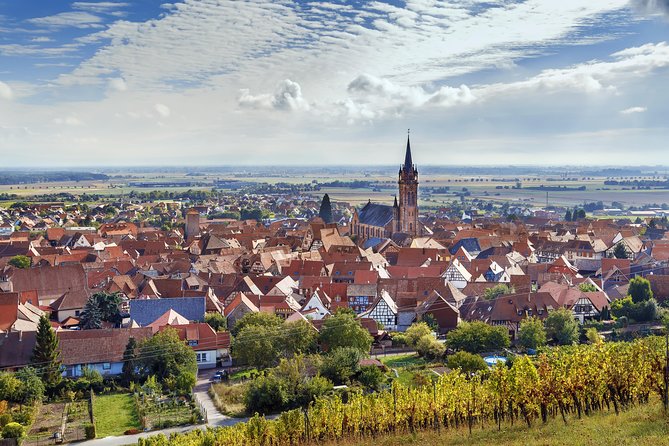
I would recommend the experience to you if you want wine, village scenery, and local explanation in one package. It suits a couple, friends, or a solo visitor who would rather join a small group than manage the route alone.
It is especially useful early in an Alsace stay. After one day, you will understand the main grape names, recognize the look of the wine villages, and have a better sense of which bottles to seek out later.
You should think twice if you need a fixed schedule or a guaranteed stop in Riquewihr. You may also prefer another option if you want a serious food pairing program, winery snacks, or a luxury tasting-room setting at every stop.
The tour is for adults only. Children under 18 are not permitted, pets are not allowed, and at least two adults are required for the departure to operate. Most people can participate, and the activity is near public transport at its Strasbourg meeting point.
Practical details before you reserve
The day starts at 9 a.m. and returns to the same general meeting point in Strasbourg after about eight hours. During the Christmas period, the return location may be just outside the Grande-Île district, with the exact address arranged with the guide.
Confirmation is provided when you book. The activity is not offered on December 25 or January 1. It depends on good weather and a minimum number of participants. If the operator cancels for either reason, you are offered another date or a full refund.
Your own cancellation terms are stricter: the experience is non-refundable and cannot be changed for any reason. Read that condition carefully before booking.
Should you book the Alsace Wine Route tour?
Book it if you want an easy, well-organized day with three tastings, attractive villages, and a guide who can explain what makes Alsatian wine different. The small group, comfortable minivan, and strong record of guide-led commentary give it real practical value.
Do not book it expecting every winery to be elegant or every named village to receive a long walking visit. For the best experience, eat breakfast, bring a warm layer, keep lunch flexible, and treat Riquewihr as a possibility rather than a promise. If that sounds fair, this is one of the more useful ways to get beyond Strasbourg and understand the wine country around it.
FAQ
Where does the tour begin?
It begins at 17 Place de la Cathédrale, 67082 Strasbourg, France, at 9 a.m.
Where does the tour end?
The activity ends back at the meeting point in Strasbourg. During the Christmas period, the return may be just outside the Grande-Île district, with the exact address arranged with the guide.
How long does the tour last?
The tour lasts approximately eight hours.
How many people can join the tour?
The maximum group size is eight people. At least two adults are required for the activity to operate.
How many wineries will I visit?
You will visit three wineries and receive three wine tastings.
Which wines might I taste?
The tour may include Riesling, Sylvaner, Pinot Blanc, Gewürztraminer, Muscat, and Pinot Gris. Grand cru wines may also be included.
Is lunch included?
No. Lunch is at your own expense, and food and drinks are not included unless specified.
Are children allowed?
No. This is an adult-only tour, and children under 18 are not permitted.
Is hotel pickup included?
No. Hotel pickup and drop-off are not included. You must reach the meeting point in central Strasbourg.
More stops on the Alsace wine route around France
- Private and customizable: Alsace Wine Route HIGHLIGHTS in 3 hours
★ 5.0 · 63 reviews - Through Alsace Vineyards and Wine Villages Private Bike Tour
★ 5.0 · 47 reviews - Wine tour of the Alsace wine route
★ 3.4 · 23 reviews - From Strasbourg: Colmar & Alsace Wine Route Private Day Trip
★ 5.0 · 10 reviews
Just listed around France
- Vosne-Romanée: Private Vineyards Walking Tour with Tasting★ 4.4 · 9 reviews
- Vineyard of the Alpilles by bike★ 4.6 · 8 reviews
- Vineyard tour and wine tasting in Davron★ 4.5 · 7 reviews
- Vineyard visit in Gyropode, visit of Cave & Tasting Wines of Bandol★ 5.0 · 19 reviews
- Private Vineyard Tour and Wine Tasting in Bandol★ 5.0 · 16 reviews
- Horse riding in the vineyards of Grimaud + wine tasting★ 5.0 · 3 reviews
- Bike ride on the Wine Route from Sélestat★ 5.0 · 5 reviews
- 1/2 day private Vintage tour, vineyards of Saint-Tropez★ 5.0 · 6 reviews
Alsace Wine Route Tours, compared.
Alsace Wine Route Small Group Half-Day Tour with Tasting from Strasbourg
Read our review →
Private and customizable: Alsace Wine Route HIGHLIGHTS in 3 hours
Read our review →
Through Alsace Vineyards and Wine Villages Private Bike Tour
Read our review →
From Strasbourg: Colmar & Alsace Wine Route Private Day Trip
Read our review →