
REVIEW · FRANCE VINEYARD TOURS
Walk in the vineyards of Chablis Grands Crus
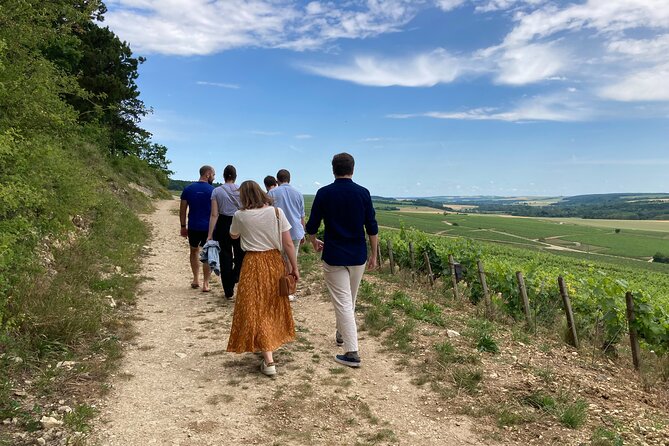
The most interesting part of this two-hour outing is seeing the Chablis Grand Cru vineyards from inside the rows, rather than only tasting the wine in town. You learn how the winegrower works, how the four Chablis ranks differ, and why the local soils matter. I like the combination of a short countryside walk and a generous cellar tasting, and I like that the visit stays small, with no more than 20 people.
I also like the chance to see the Grand Cru area called Les Clos from different viewpoints, then compare several wines from Domaine Céline & Frédéric Gueguen. The main drawback is the rough ground and a fairly steep climb near the end. Rain or intense heat can also affect the walk, so sturdy shoes and sensible timing matter.
Key points to know before you book
- A vineyard walk with a purpose: You learn about cultivation, soils, winegrowing, and the four Chablis ranks while seeing the vines up close.
- Grand Cru views: The route includes the celebrated Les Clos area and viewpoints across the Chablis growing region.
- A generous tasting: The cellar portion includes a broad selection of Chablis and Burgundy wines, with Grand Cru pours possibly available for an extra €5.
- Small-group feel: The maximum group size is 20, though some departures may be much smaller.
- Rough and hilly terrain: Wear sturdy footwear and expect a climb near the end of the walk.
- Weather matters: Poor weather can lead to a new date or a full refund, and hot sun can make the route tiring.
Starting at 5 Bis Rue Jules Rathier in Chablis
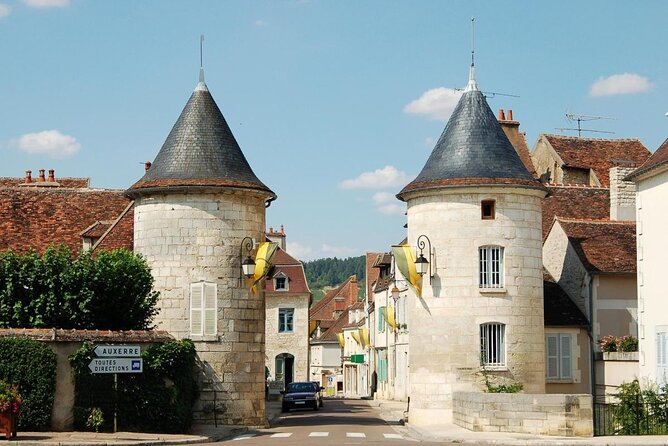
Your visit begins at 5 Bis Rue Jules Rathier, 89800 Chablis, and ends at the same place. That simple out-and-back format is useful because you do not need to arrange a taxi or work out a second pickup point after the tasting.
The experience lasts about two hours. That is enough time to get beyond a quick photo stop and into the basic logic of Chablis wine, but it is not a full-day vineyard excursion. You should arrive ready to walk soon after meeting the guide, since the main activity is outdoors before the cellar tasting begins.
The group can include up to 20 people. That is not an intimate private tour, but it is still a manageable size for a guided walk. Some departures have been much smaller, including one with only four people. A smaller group gives you more room to ask questions about the vines, soils, and estate wines.
The activity is offered in English. Confirmation is sent within 48 hours of booking, subject to availability, so it is wise not to leave this until the last minute. It is booked, on average, about 31 days ahead, which suggests that planning early is sensible during busy periods.
More vineyard visits around France:
- Saint-Émilion: Grand Cru Classé Winery Visit and Tasting
★ 4.6 · 1,118 reviews - Saint Emilion Half-Day Trip with Wine Tasting & Winery Visit from Bordeaux
★ 4.5 · 1,034 reviews - Saint-Émilion: Bordeaux Vineyard Tour and Wine Tasting
★ 4.8 · 578 reviews
Walking through the Chablis Grand Cru vineyards
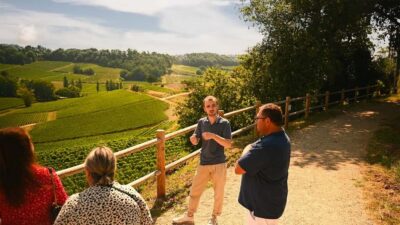
The walk is designed to explain the winegrower’s work while you are standing among the vines. That makes the information easier to follow than a cellar talk alone. You can connect the shape of the slopes, the soil under your feet, and the cultivation methods with the wines you taste later.
The route includes the Grand Cru area known as Les Clos, one of the places that gives this visit its appeal. You are not simply shown a vineyard and sent on your way. The guide explains the different parts of the Chablis growing area and helps you understand why the wines are classified into four ranks.
A relief map may be used to explain the designated climats and the position of the vineyards. Once you see the layout from the map, the views from the route become more useful. You can begin to match the names and ranks with the hills and parcels in front of you.
The experience also covers different types of cultivation and the character of the soils. The precise technical depth may depend on the guide and the questions in your group, but the central lesson is clear: Chablis is not just one uniform wine region. Soil, slope, vineyard location, and rank all play a part in the final bottle.
This is the kind of walk that suits you if you enjoy understanding how a local product is made. It is less suitable if you want a long countryside hike with little commentary. The route is described as a short walk, and the focus stays on wine rather than exercise.
Why the views help explain Chablis wine
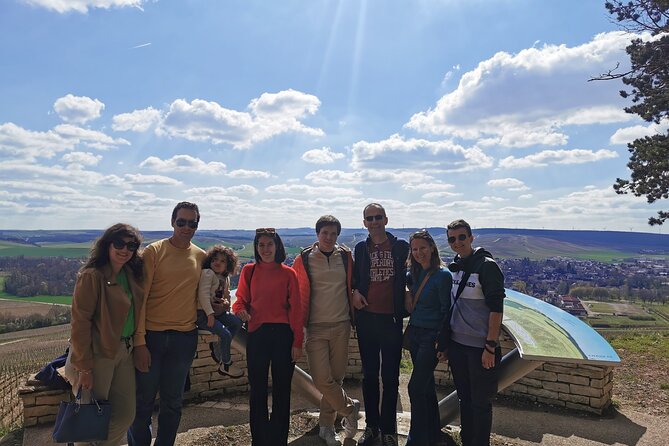
The route gives you more than a pleasant walk between vines. It helps you see the relationship between the left and right bank growing areas, along with the wider Chablis scenery. In clear weather, several viewpoints make the layout of the region easier to understand.
Weather can change this part of the visit. Rain has forced one group to see the left and right bank areas by car instead of walking. That still provided good views and useful explanations, but it was understandably less satisfying for people who had come specifically to walk through the vineyards.
Heat is another concern. One visit took place in very warm conditions, and the route felt hot among the vines. If you can choose your timing, a morning walk may be more comfortable. A cloudy day can also be pleasant, although poor weather may cause the outdoor portion to be canceled.
The activity requires a moderate level of physical fitness. The ground is rough, and there is a fairly steep climb near the end. You do not need to be a serious hiker, but sandals, smooth city shoes, or unstable footwear would be poor choices. Wear shoes with a firm sole and good grip.
What you learn about the four Chablis ranks
A strong reason to choose this tour is that it gives you a way to compare the four Chablis ranks in context. Instead of hearing the terms in a shop and trying to remember them later, you see the growing areas and discuss how the ranks relate to the vineyards.
The walk is particularly helpful if you already know a little about Chablis but want to make sense of the labels. You can ask why one parcel is classed differently from another, how the soils vary, and how the estate approaches cultivation.
The information is not only for wine experts. The explanations are aimed at helping you understand the basics without requiring a technical background. If you are new to Burgundy wine, the combination of the relief map, vineyard views, and tasting should give you a useful framework.
Keep in mind that the outdoor explanation is only part of the story. The tasting is where you can test the differences in the glass. Listen for connections between what the guide says about the vineyards and what you notice in the wines. You may not identify every distinction, but the comparison makes the labels less abstract.
Same wine country, a different gate to drive through:
- Bordeaux: Vineyards Wine Tasting Half-Day Trip
★ 4.2 · 470 reviews - Half-Day Wine tour across Bordeaux’s Vineyards
★ 3.5 · 429 reviews - Saint-Émilion: Vineyard Walking Tour and Tasting
★ 5.0 · 404 reviews - Small-Group Full-Day Tour of Côte de Nuits, Côte de Beaune Vineyards and Beaune Historical District
★ 5.0 · 364 reviews
Returning to the cellar for Chablis and Burgundy wines
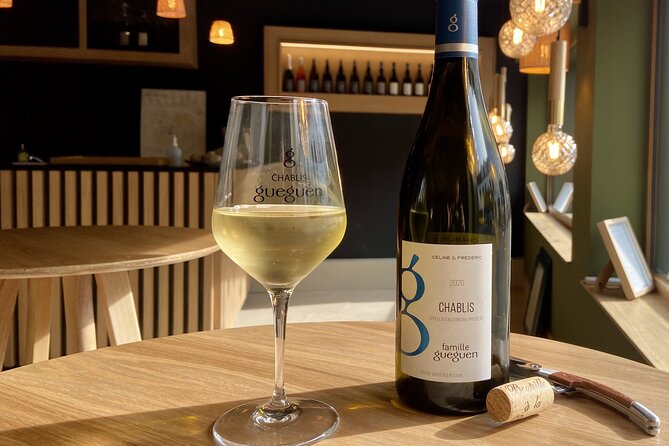
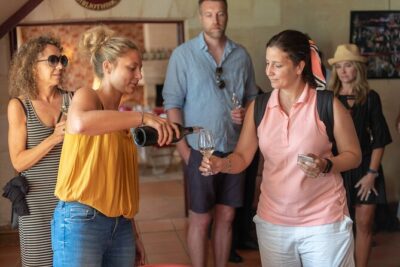
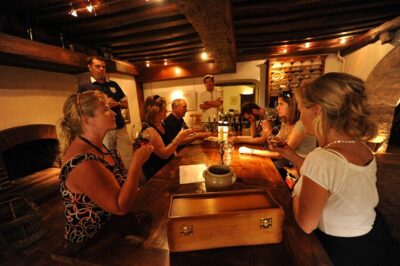
After the walk, you return to the cellar at the starting point for a tasting. This is a relaxed and informal part of the visit, with time to sample a broad range of the estate’s wines. The tasting includes Chablis and Burgundy wines, and the selection has been described as generous.
That generosity matters when judging the price. At $54.07 per person, the experience costs more than a simple wine tasting in town, but you are paying for both the guided vineyard visit and the cellar portion. If you want the setting and explanation as well as the wine, the price is easier to justify.
The tasting also gives you a chance to revisit what you learned outdoors. You might compare wines from different ranks or ask how the estate’s bottles express their vineyard sources. The tasting is not presented as a formal, silent ceremony. It is intended to be friendly and conversational.
Some visits have included local dishes with the tasting. Since that is not stated as a fixed feature of every departure, you should not book the activity expecting a full food pairing. The reliable part is the wine tasting itself.
The question of Grand Cru pours
The standard tasting may not automatically include every Grand Cru wine. Stock can be limited, and the provider has stated that two Chablis Grand Cru wines may be tasted for a small extra charge of €5.
That detail is worth checking before you arrive, especially if the Grand Cru vineyards are your main reason for booking. You may see the Grand Cru parcels on the walk but taste mainly other wines unless you request the additional pours and they are available.
I see this as a reasonable arrangement for a small producer with limited stock, but it should be clear in your expectations. The included tasting is already broad, while the Grand Cru option gives serious wine fans a chance to add the top category without forcing everyone in the group to pay for it.
The wines of Domaine Céline & Frédéric Gueguen have also been praised for good quality at reasonable prices. If you find a bottle you like, the cellar is a natural place to ask about buying it, though the supplied details do not specify shipping arrangements or purchase procedures.
How the guide shapes the experience
The provider is Domaine Céline & Frédéric Gueguen. Frédérique has led visits and is described as bringing expertise and a friendly mood to the walk and tasting. The quality of the visit will naturally depend on the guide, the group, and the weather, but the format leaves room for questions rather than just a fixed script.
A good guide is especially important in a vineyard because the rows can look similar at first glance. Explanations about soil, cultivation, and vineyard ranks give the scenery a point. Without that context, you would still have a pleasant walk, but you would miss much of what makes Chablis worth studying.
The informal cellar tasting is another strength. You can ask about the wines while they are in front of you, rather than trying to remember questions after leaving. If you are already familiar with Chablis, use this time to ask about the estate’s different bottles and the Grand Cru stock.
Value at $54.07 per person
At $54.07, this is best viewed as a two-part wine experience, not a basic hike. You get approximately two hours, an English-language guide, a vineyard walk, an explanation of Chablis winegrowing, and a tasting of several Chablis and Burgundy wines.
The value is strongest for people who want context. A tasting alone may cost less, but it will not show you the Grand Cru area or explain the terrain. A longer private vineyard tour may offer more time, but this small-group format keeps the commitment to half an afternoon.
The price is less attractive if you mainly want to drink Grand Cru wine. The top bottles may require the extra €5 charge and may not always be available. Likewise, the tour may not suit you if you dislike uneven paths or prefer a fully indoor tasting.
I would compare the cost with what you want from Chablis. If your goal is to understand the place behind the label, the combination is well judged. If your goal is simply to buy and taste wine, a cellar visit in town may be a simpler choice.
Practical advice for a better visit
Wear sturdy shoes. This is the most useful preparation because of the rough ground and the climb near the end.
Bring protection from the sun and check the forecast. The route can feel very warm in direct sun, while rain may change the walk into a drive-based viewing experience or lead to cancellation.
Plan to spend the full two hours. The cellar tasting is an important part of the visit, not an optional afterthought. Rushing away after the vineyard portion would mean missing much of the value.
Only people aged 18 and over may drink alcohol. Service animals are allowed. The tour is offered in English, and the maximum group size is 20.
Free cancellation is available up to 24 hours before the start time for a full refund. Changes or cancellations inside that 24-hour window are not accepted for a refund. If poor weather causes the provider to cancel, you can be offered another date or a full refund.
Who should book this Chablis vineyard walk?
You should book it if you want a clear introduction to Chablis vineyard ranks, soils, and wine production, with enough time to see the Grand Cru area and taste a broad range of wines afterward.
It is especially suitable for couples, small groups, and parents who want an adult wine activity that includes a walk rather than two hours inside a cellar. Children may be able to accompany the walking portion, but only adults aged 18 and over may drink alcohol.
You may want to skip it if you need a flat, easy route, dislike outdoor heat, or want guaranteed Grand Cru tasting. You should also think twice if rain is likely and the vineyard walk is the main attraction for you.
Should you book the Domaine Gueguen experience?
I would book this tour if you want to connect the view from the vineyard with the wine in your glass. The route through the Chablis Grand Cru area, the explanation of the four ranks, and the generous tasting give you more substance than a quick stop at a wine shop.
Go on a cool, dry day, wear proper shoes, and ask about the Grand Cru supplement if those wines matter to you. With those points in mind, this is a practical and fairly priced introduction to Chablis, especially for anyone who wants the place behind the bottle.
FAQ
Where does the Chablis vineyard walk begin?
The activity begins at 5 Bis Rue Jules Rathier, 89800 Chablis, France.
Where does the experience end?
The activity ends back at the meeting point at 5 Bis Rue Jules Rathier.
How long does the tour last?
The tour lasts approximately two hours.
Is the activity offered in English?
Yes. The experience is offered in English.
What is included in the experience?
The experience includes a guided walk in the Chablis Grand Cru vineyards, explanations of winegrowing and winemaking, and a cellar tasting of Chablis and Burgundy wines.
Are Grand Cru wines included in the tasting?
Grand Cru wines may require a small additional charge. The provider has stated that two Chablis Grand Cru wines can be tasted for a €5 supplement, subject to limited stock.
Is the walk physically demanding?
You should have a moderate level of physical fitness. The route includes rough ground and a fairly steep climb near the end.
What happens if the weather is poor?
The experience requires good weather. If it is canceled because of poor weather, you can be offered another date or a full refund.
Can I cancel for a full refund?
Yes. You can cancel up to 24 hours before the experience start time for a full refund. Cancellations or changes made less than 24 hours before the start time are not refunded.
Just listed around France
- Vosne-Romanée: Private Vineyards Walking Tour with Tasting★ 4.4 · 9 reviews
- Vineyard of the Alpilles by bike★ 4.6 · 8 reviews
- Vineyard tour and wine tasting in Davron★ 4.5 · 7 reviews
- Vineyard visit in Gyropode, visit of Cave & Tasting Wines of Bandol★ 5.0 · 19 reviews
- Private Vineyard Tour and Wine Tasting in Bandol★ 5.0 · 16 reviews
- Horse riding in the vineyards of Grimaud + wine tasting★ 5.0 · 3 reviews
- Bike ride on the Wine Route from Sélestat★ 5.0 · 5 reviews
- 1/2 day private Vintage tour, vineyards of Saint-Tropez★ 5.0 · 6 reviews
France Vineyard Tours, compared.
Saint Emilion Half-Day Trip with Wine Tasting & Winery Visit from Bordeaux
Read our review →
Small-Group Full-Day Tour of Côte de Nuits, Côte de Beaune Vineyards and Beaune Historical District
Read our review →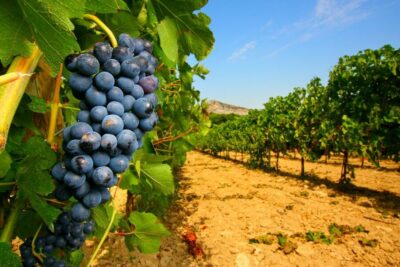
Browse the lists this tour appears in