
REVIEW · SAINT EMILION VINEYARD TOURS
Saint-Émilion: Vineyard Walking Tour and Tasting
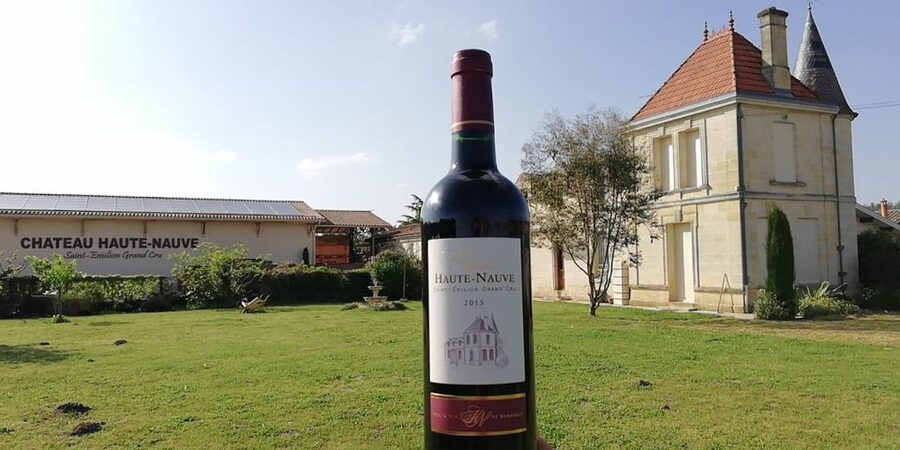
A six-meter wine bottle, a wind turbine, and a working family vineyard make this more than a standard tasting-room stop. At Château Haute-Nauve, Florent or his mother, Marie-Anne, leads you from the vines to the cellars, explaining what happens at each stage.
I like the personal family connection and the fact that you walk among actual vineyard plots before tasting the finished wine. I also like the small groups of up to 10, which leaves room for questions and gives the visit a relaxed feel. The only real drawback is location: the château sits 3 kilometers from Saint-Émilion, and the family recommends arriving by car.
Key points to know before you book
- Fourth-generation hosts: Florent or Marie-Anne leads the visit and explains the estate from a winemaker’s point of view.
- Four wines at the finish: Taste four Château Haute-Nauve wines, including two with Grand Cru appellations.
- Vineyard-to-bottle route: The two-hour visit covers vine care, fermentation, pumping, pressing, and barrel ageing.
- Small-group setting: The group is limited to 10 people, with French and English tours available.
- Useful Saint-Émilion base: The château is only 3 kilometers from the village, but transport is not included.
- Wine shopping without pressure: You can buy bottles at the estate after tasting, but purchases are optional.
A family vineyard just outside Saint-Émilion
Château Haute-Nauve gives you a close look at the working side of Saint-Émilion wine. This is not simply a polished room where bottles appear on a table. You begin outside, among the vines, then move into the production areas and finish with the wines themselves.
That order matters. You first see the raw material, then the equipment, then the finished product. By the time you taste, you have a clearer sense of how soil, weather, grape varieties, cellar work, and ageing all affect what reaches your glass.
The estate is run by the fourth generation of the family. Florent is often the host, while Marie-Anne also leads tours. Their family connection gives the visit a direct, practical tone. You are hearing about decisions made on this property, not just a general lecture about Bordeaux wine.
The château is about 3 kilometers from the village of Saint-Émilion. The meeting point is inside Château Haute-Nauve, near the large building with solar panels and beneath the Château Haute-Nauve purple sign. A car is the simplest choice, especially if you are visiting several estates or carrying bottles afterward.
More vineyard visits around France:
- Saint-Émilion: Grand Cru Classé Winery Visit and Tasting
★ 4.6 · 1,118 reviews - Saint Emilion Half-Day Trip with Wine Tasting & Winery Visit from Bordeaux
★ 4.5 · 1,034 reviews - Saint-Émilion: Bordeaux Vineyard Tour and Wine Tasting
★ 4.8 · 578 reviews
Walking the vines with Florent or Marie-Anne
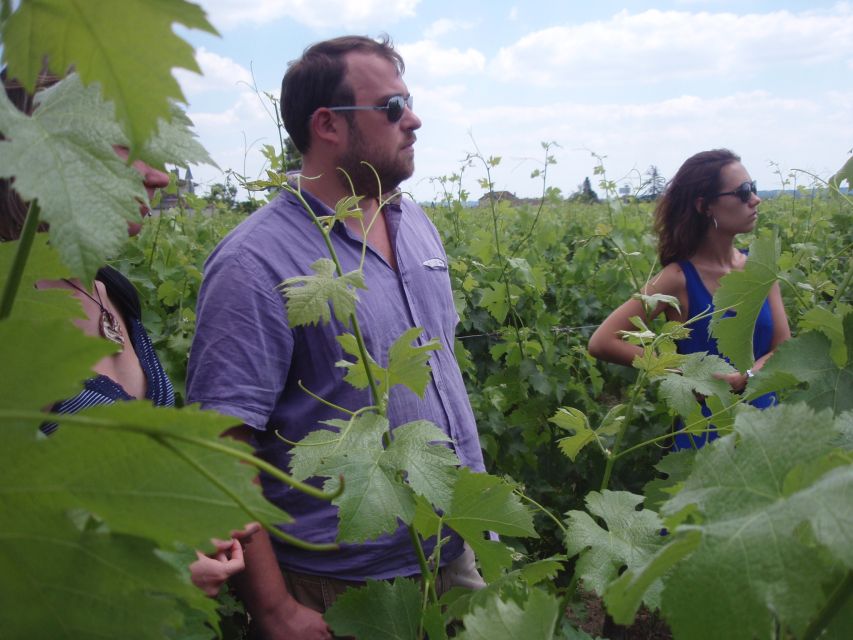
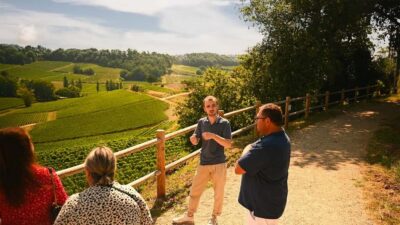
The outdoor portion takes you through several plots and introduces the Saint-Émilion appellation. You learn about the varieties used here, the family’s land, and the work required at different times of year.
This is one of the strongest parts of the experience for me because it corrects a common impression of wine tourism. The work does not begin at harvest. Vines need attention throughout the year, and the guide explains how that work changes with the season.
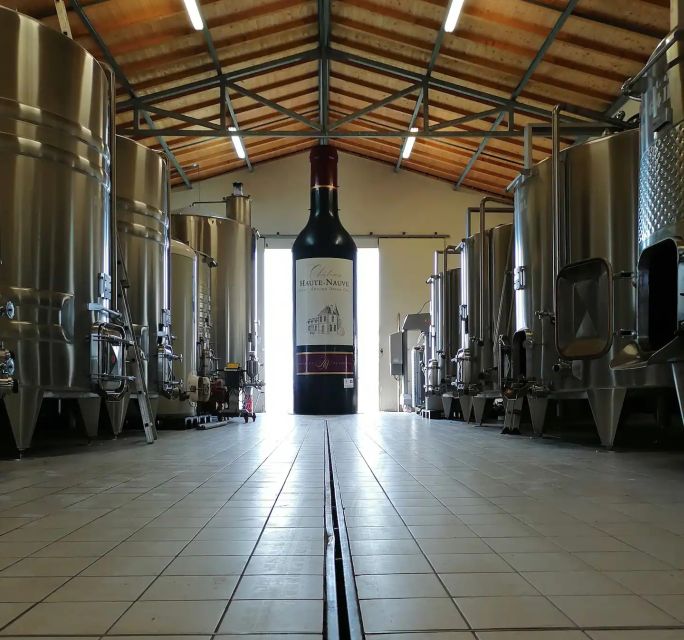
You also hear about the problems that can threaten a crop. Frost is a serious concern, and Château Haute-Nauve has developed ways to respond. The oversized wine bottle on the property is not only a curious photo stop. It is connected to frost protection and the estate’s efforts to manage difficult weather.
The wind turbine adds another unexpected detail. So do the solar panels on the main building. These features help explain how the estate thinks about energy, sustainability, and the practical demands of modern wine production.
The family also discusses diversification and the development of new wine varieties. That is useful context because a small winery cannot simply rely on tradition. It has to deal with changing weather, market demands, production costs, and the need to keep the business viable for the next generation.
Wear comfortable shoes. The vineyard walk is not a long hike, but you will be outside and on uneven ground. Weather-appropriate clothing matters more here than dressing up for a wine tasting.
From grapes to fermentation tanks
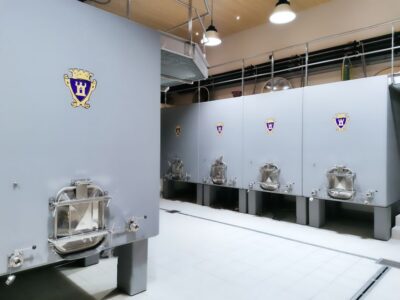
After the vineyard, you enter the vinification cellar. This is where the visit shifts from farming to production.
The guide explains what happens after the grapes are harvested, including fermentation, pumping, and pressing. You can see the machinery and technology involved rather than hearing about the process in the abstract.
For anyone who has taken several wine tours, this focus on equipment is useful. Many visits spend most of their time discussing the vines or the tasting notes. Here, you get a clearer picture of the mechanical side of wine-making: how grapes are handled, how juice moves through the winery, and how the cellar team controls the process.
The presentation is designed for mixed levels of experience. You do not need to know the difference between fermentation and pressing before you arrive. Florent’s style, based on the information available about the experience, is conversational and open to questions. The family format also means you can ask about the decisions made at this particular château.
The technology is not presented as a replacement for tradition. Instead, it shows how an old family business uses modern tools while continuing to work with the same vineyards. That balance is a central idea throughout the tour.
The barrel cellar and the waiting years
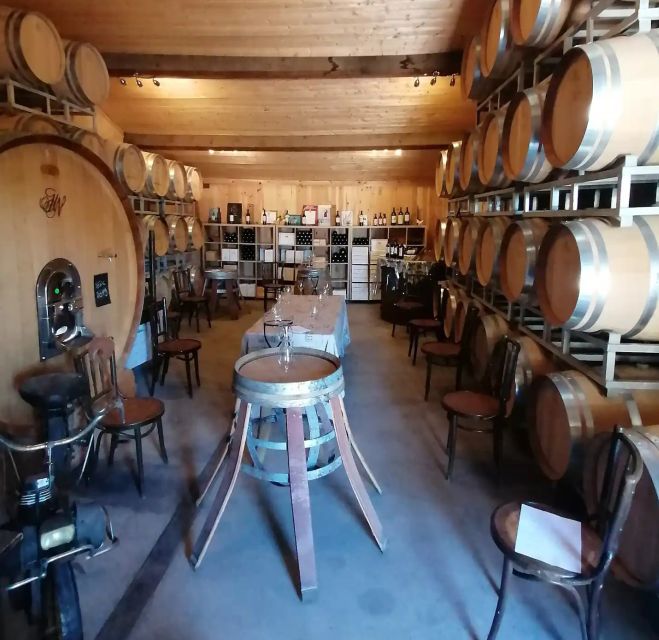
The final production stop is the barrel cellar, where you learn about ageing. This part helps explain why the wine you taste may have a different character from a young wine still in production.
Ageing is where time becomes part of the process. The family explains how wine is kept and prepared before bottling, and you see the barrels used for this stage. It is a quieter stop than the machinery area, but it rounds out the route from grape to finished bottle.
I find this especially helpful if you are buying wine in Bordeaux and want to understand what you are paying for. The price of a bottle is not only about the grape harvest. It also reflects cellar work, storage, ageing, equipment, land, and the time before the wine is ready to sell.
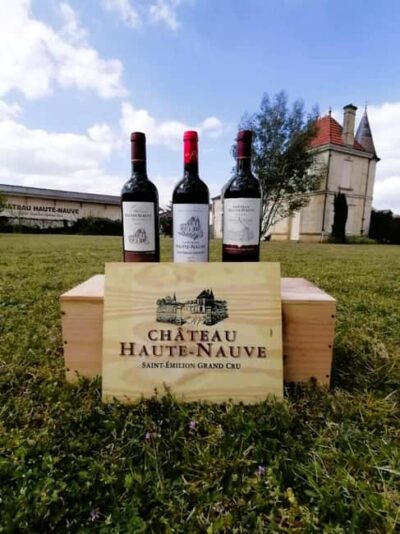
The family’s modern approach appears here as well. The estate produces wines in contemporary bottles, and the guides discuss the practical choices behind the wines and their presentation. You get a sense of a winery that respects its family roots without treating tradition as a reason to stop adapting.
Same wine country, a different gate to drive through:
- Bordeaux: Vineyards Wine Tasting Half-Day Trip
★ 4.2 · 470 reviews - Half-Day Wine tour across Bordeaux’s Vineyards
★ 3.5 · 429 reviews - Small-Group Full-Day Tour of Côte de Nuits, Côte de Beaune Vineyards and Beaune Historical District
★ 5.0 · 364 reviews - From Avignon: Half-Day Great Vineyards Tour
★ 4.8 · 337 reviews
Four wines, including two Grand Crus
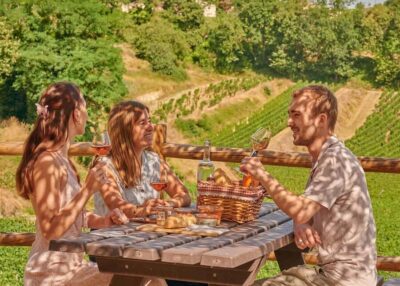
The tour ends with a guided tasting of four wines from Château Haute-Nauve. Two have Grand Cru appellations, giving you a chance to compare different levels within the estate’s range.
The tasting is not an isolated add-on. Because you have just seen the vineyard and cellar, you can connect the glass with the work you have been shown. You may taste differences linked to grape varieties, plots, terroir, and vintages, all subjects that form part of the explanation.
The selection is also broad enough to keep the finish interesting. The wines range from smoother styles to fuller-bodied examples, according to the tasting experiences described for this tour. You are not simply given four near-identical pours.
This is a guided tasting rather than a rushed sample at a counter. You can ask questions, compare the wines, and talk through what you are noticing. You do not need to arrive with a trained palate. The useful aim is to understand what you prefer and why.
The estate allows you to purchase bottles after the tasting. There is no requirement to buy, but this is a practical chance to take home a wine you have just tasted at its source. Remember that extra bottles are not included in the $29 activity price.
Is $29 good value?
At $29 per person, this is strong value for a two-hour Saint-Émilion experience. You receive a guided vineyard walk, a visit to the production and barrel cellars, and four estate wines. The guide is also one of the owners or family members, rather than a general host working from a fixed script.
The price is particularly fair if you want more than a tasting. A short tasting alone can leave you with a few flavors but little understanding of the work behind them. Here, the wine is tied to the land, equipment, family history, and seasonal problems.
You should still budget for transport and any bottles you choose to buy. Food is not included, so plan this as a wine-focused stop rather than a meal. If you want lunch or snacks, arrange them separately in Saint-Émilion.
The value is best for people who enjoy learning as they taste. If your only goal is to sample rare or expensive wines, a different type of tasting may suit you better. Château Haute-Nauve is selling understanding and access to the family business as much as it is serving wine.
Small groups make the visit more personal
The group limit is 10 people, and that size matters. A small group makes it easier to hear outside, ask about the vines, and stay involved during the cellar explanations.
Some bookings may feel almost private, particularly when the date is quiet. That is not guaranteed, but the limited capacity gives the tour a more personal character than a large coach-group visit.
The family hosts are also part of the appeal. Florent is described as friendly, funny, warm, and passionate about the estate. Marie-Anne may lead instead, giving you the perspective of another member of the family. The information is delivered in French or English.
This works well for mixed groups. Adults interested in wine can ask technical questions, while first-time wine visitors can follow the basic process from vine to bottle. Families have also taken part, with children enjoying the outdoor setting and unusual sights such as the giant bottle.
The two-hour length feels sensible. It gives you enough time to walk the vineyard and visit the working areas without turning the stop into a half-day commitment. You can fit it around time in the village or another Bordeaux activity.
Practical details that shape the day
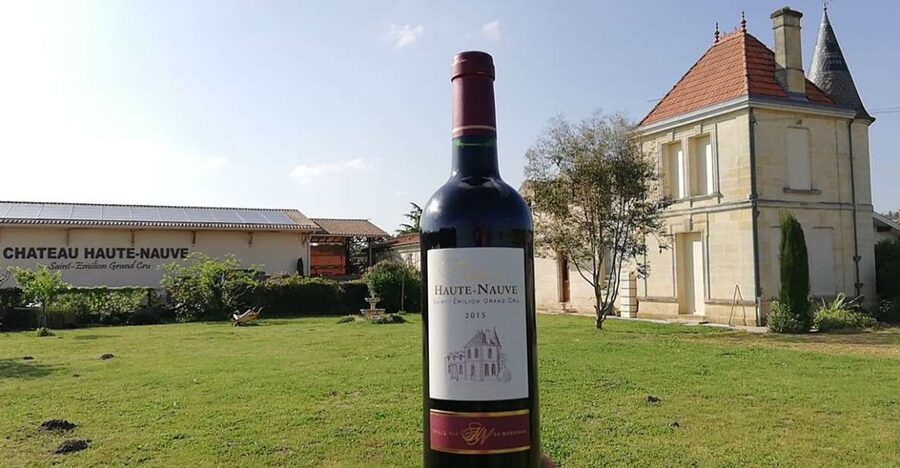
Plan to arrive at the château rather than the center of Saint-Émilion. Look for the large building with solar panels and the purple Château Haute-Nauve sign. The car park is near that building.
A car is recommended. Transport is not included, and the activity does not provide a pickup from Bordeaux or Saint-Émilion. The short distance from town may make a ride service possible, but you should arrange your return before tasting if you are not driving.
The tour is wheelchair accessible, though you should still consider the outdoor vineyard walk and ask the provider about your specific needs before arrival. Comfortable shoes are the sensible choice for everyone.
The booking terms are flexible: you can cancel up to 24 hours ahead for a full refund, and you can reserve now and pay later. Starting times vary, so check availability when choosing your date.
Who will enjoy Château Haute-Nauve most?
I would choose this tour if you want a friendly introduction to Saint-Émilion wine with real access to the production side. It suits first-time wine visitors, couples, families, and anyone who prefers a small family business to a large commercial operation.
It is also a good fit if you want to understand vineyard work. The discussion of frost, sustainability, diversification, and new varieties adds useful substance beyond tasting notes.
You may want another option if you dislike walking outside, need a meal included, or want a long, highly formal tasting focused on many producers. This visit stays focused on one estate and four wines.
For wine shoppers, it offers a clear advantage: you can taste before buying and take home bottles from the property. For casual sightseers, the giant bottle, wind turbine, and vineyard views make the stop more varied than a cellar-only visit.
Should you book this Saint-Émilion wine tour?
Yes, if you want a well-priced, personal look at how a family vineyard works. The strongest reasons are the fourth-generation hosts, the small group size, the complete route from vines to barrels, and the four-wine tasting that includes two Grand Crus.
Book it as a two-hour countryside stop near Saint-Émilion, not as a full-day food and wine excursion. Arrive by car if possible, wear practical shoes, and leave space in your luggage for a bottle or two. At $29, it gives you a lot of useful context before the first sip, which is exactly why this experience earns its place on a Saint-Émilion itinerary.
FAQ
Where is Château Haute-Nauve located?
Château Haute-Nauve is in the Saint-Émilion area of Nouvelle-Aquitaine, France, about 3 kilometers from the village of Saint-Émilion.
How long does the vineyard tour and tasting last?
The experience lasts two hours, including the vineyard walk, cellar visits, and tasting of four wines.
Who leads the tour?
The tour is led by a member of the family, either Marie-Anne or Florent. They are fourth-generation winemakers at Château Haute-Nauve.
How many wines are included?
The guided tasting includes four wines from the estate. Two of them have Grand Cru appellations.
Is the tour available in English?
Yes. The live guide is available in English or French.
Is transport included?
No. Transport is not included, and the château recommends arriving by car. There is parking near the large building with solar panels and the Château Haute-Nauve purple sign.
Can I cancel the booking?
Yes. You can cancel up to 24 hours in advance for a full refund. You can also reserve now and pay later.
Just listed around France
- Vosne-Romanée: Private Vineyards Walking Tour with Tasting★ 4.4 · 9 reviews
- Vineyard of the Alpilles by bike★ 4.6 · 8 reviews
- Vineyard tour and wine tasting in Davron★ 4.5 · 7 reviews
- Vineyard visit in Gyropode, visit of Cave & Tasting Wines of Bandol★ 5.0 · 19 reviews
- Private Vineyard Tour and Wine Tasting in Bandol★ 5.0 · 16 reviews
- Horse riding in the vineyards of Grimaud + wine tasting★ 5.0 · 3 reviews
- Bike ride on the Wine Route from Sélestat★ 5.0 · 5 reviews
- 1/2 day private Vintage tour, vineyards of Saint-Tropez★ 5.0 · 6 reviews
Saint Emilion Vineyard Tours, compared.
Private ride through the vineyards from Saint-Emilion – 1h30
Read our review →Browse the lists this tour appears in