
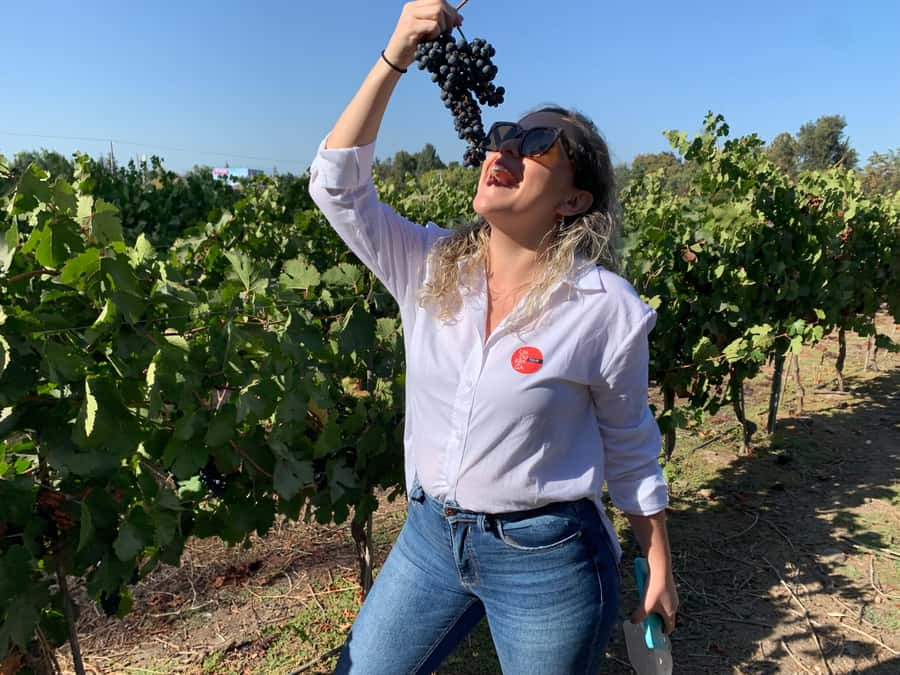
REVIEW · SANTIAGO VINEYARD TOURS
Santiago: Maipo Valley Wine Tasting Tour with 4 Vineyards
Maipo Valley is close enough to Santiago for a day trip, yet the change is quick: city streets give way to vineyards, open farmland, and the Maipo River. This tour gives you four winery stops, though only three are formal tasting visits. TerraMater is mainly the lunch break, with time to shop for its award-winning olive oil.
I like the mix of a small family farm and large traditional producers. I also like the efficient route, with hotel pickup, a driver who handles the wine, and little wasted time between stops. The main drawback is the long day, and Undurraga can feel rushed or commercial compared with the first two visits.
Quick points to know
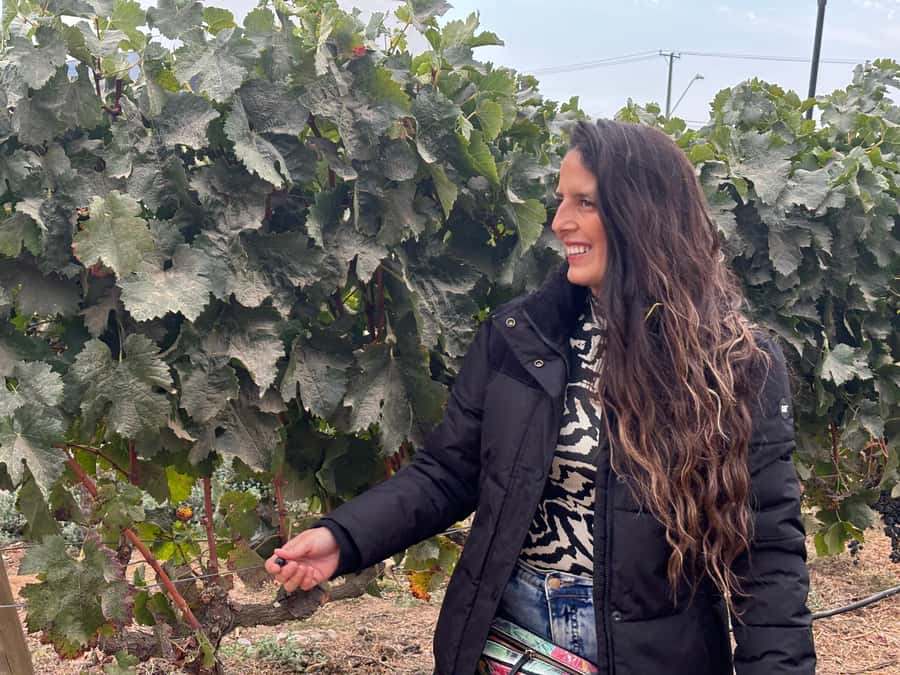
- The first stop is a real family farm: Campo La Quirinca combines wine, alpacas, chickens, gardens, local snacks, and Chilean pisco.
- You taste across three distinct winery styles: Santa Ema offers a polished premium tasting, while Undurraga presents a much larger-scale operation.
- TerraMater is a lunch stop, not a full fourth tasting: Bring extra money for the meal and any olive oil or wine purchases.
- The day runs from about 7:30 a.m. to 6:00 or 6:30 p.m.: It is a serious full-day outing, not a casual half-day excursion.
- The small-group format matters: Groups are limited to 15, with English and Spanish guides and pickup from central Santiago districts.
- Eat before you go: Tastings can include roughly 10 to 13 glasses across the day, depending on the exact arrangements.
Why Maipo Valley works as a day trip from Santiago
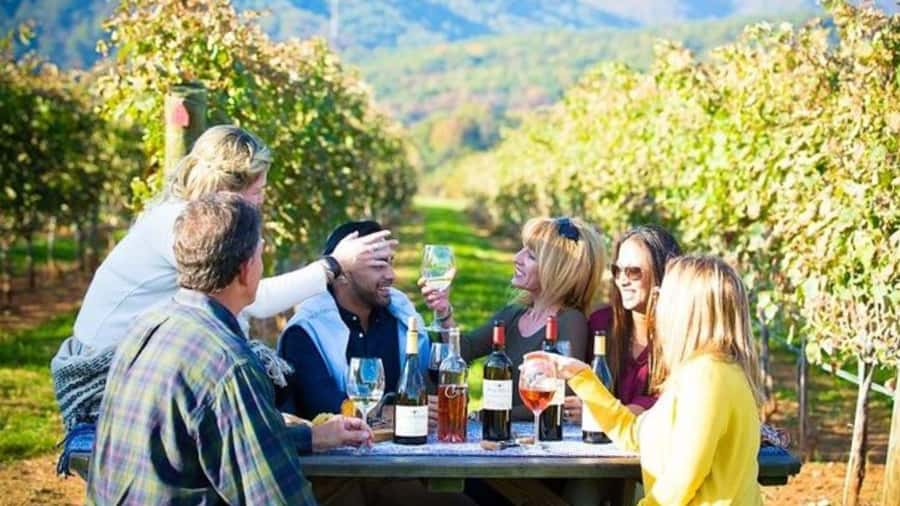
If you have limited time in Santiago, Maipo Valley is one of the easiest ways to get beyond the capital without giving up a full day to transport. Pickup is available from central Santiago, Providencia, Las Condes, Vitacura, Recoleta, and Estación Central, with a nearby meeting point offered if your hotel falls outside the regular zone.
The tour usually begins between 7:30 and 8:00 a.m. You then head south toward the wine country, with a short photo stop by the Maipo River. The drive helps you see how quickly Santiago gives way to a quieter rural setting, though traffic at the beginning and end can add time.
The group is limited to 15 people, and transport is by an air-conditioned vehicle. That is useful on a wine day, since nobody in the group needs to drive and the guide can keep the schedule moving. The vehicle is generally comfortable, though one practical point came up repeatedly: high seatbacks can make it harder to see the scenery. If you care about the views, try to sit where you have a clear window.
More vineyard visits around Santiago:
- Santiago: Concha y Toro Vineyard Tour w/ Transfer & Tasting
★ 4.2 · 455 reviews - Santiago: Inca Lagoon and Vineyard Visit with Wine Tasting
★ 4.5 · 233 reviews - Santiago: Concha y Toro and Undurraga Vineyards Tour
★ 4.1 · 194 reviews
Campo La Quirinca brings wine down to earth
Campo La Quirinca, also called Campo La Quirinca family garage winery, is the most distinctive stop. This is not a grand estate designed only for visitors. It is a working family property where wine sits alongside other forms of rural production.
You walk through the facilities and gardens, see agricultural areas, and learn about everyday Chilean country life. Alpacas and several breeds of chickens are part of the visit, which gives the stop a welcome sense of place. The tour helps explain that wine production in Chile is not separate from farm life. It grows out of it.
The tasting follows in a relaxed salon setting. You sample wine with cheese and local snacks, then try Chilean pisco. That pisco tasting adds something different from the standard winery routine, and it gives the guide a chance to explain a drink that is central to Chilean food and drink culture.
This is also a good place to buy local products. The shop may include wine, pisco, snacks, and other goods from the property. Prices and stock can change, but the chance to take home something made in the area is more appealing here than buying a generic souvenir in the city.
Allow around 90 minutes to two hours for this stop. It includes walking, so wear shoes that are comfortable on garden and farm paths. The farm setting is also useful for visitors who are curious about Chile but do not want a day made up of cellar rooms and tasting counters.
The tone can depend on the local host. Mary, one of the hosts highlighted by past guests, is known for bringing plenty of humor and energy to the visit. Your host may be different, but the format remains the same: farm tour, wine, pisco, snacks, and a close look at small-scale production.
Santa Ema offers a shorter, polished tasting
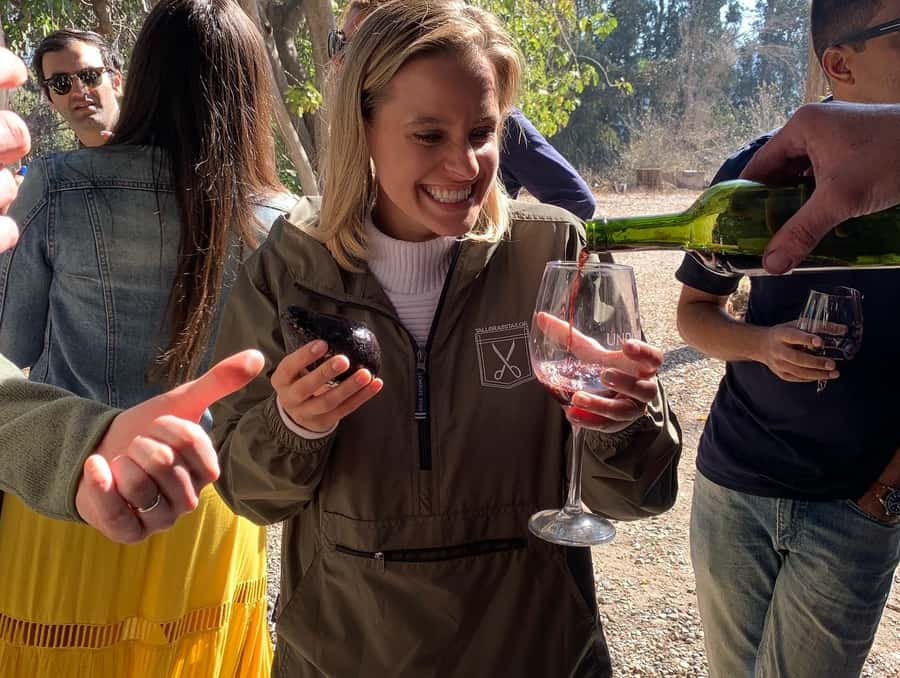
The next stop is Santa Ema, often listed as Viña Santa Ema or the Santa Ema wine shop at El Peral. This is a shorter visit, usually about 45 minutes to one hour, and it shifts the mood from family farm to established winery.
You taste three premium wines, including one of the winery’s signature labels. The setting is attractive, and the tasting is more structured than at Campo La Quirinca. It is a useful comparison because you can see how a larger producer presents its wines, explains its range, and controls the pace of a formal tasting.
This stop does not offer the same long farm visit as the first one. That is not a flaw if you want variety, but it can feel brief if you prefer detailed cellar tours. You may also have a chance to purchase bottles, though the main purpose here is tasting and presentation.
One practical tip is to pace yourself. Santa Ema comes fairly early, and the day includes more wine ahead. If you are especially interested in white wine, one past guest singled out Santa Ema’s Sauvignon Blanc, though it was not part of the standard tasting. Availability can change, so ask before assuming it is included.
TerraMater is the lunch pause, not another full tasting
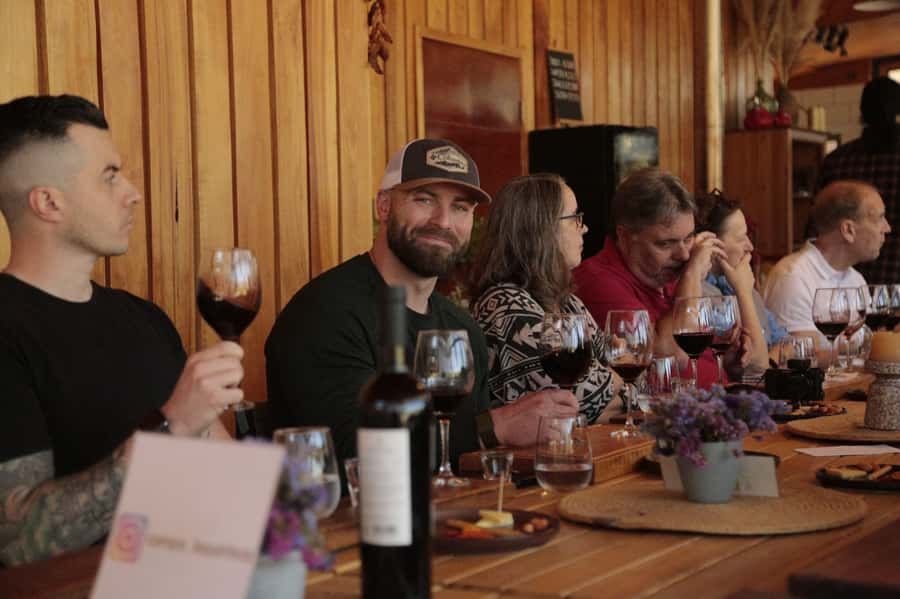
Around 12:30 p.m., you arrive at Viña TerraMater. This stop is important for the rhythm of the day. After the farm visit and the Santa Ema tasting, you need a proper break, and TerraMater provides it.
Lunch at the Zinfandel restaurant is at your own cost. The exact menu and price are not specified, so budget separately for the meal. The restaurant is part of the winery, and the setting is described as pleasant, with outdoor dining available on some visits.
TerraMater is also known for olive oil. Its oil has received major awards in Chile and internationally, and the shop sells it at cellar prices. This is a good chance to buy a practical Chilean food souvenir rather than another bottle of wine.
Be clear about what you are booking: TerraMater counts as one of the four winery stops, but it is mainly a restaurant and shopping break. It does not function like the formal tasting at Santa Ema or the guided cellar visit at Undurraga. Some visitors may see that as a sensible way to pace the day. If you expected four full tastings, you may feel the description overstates the number.
I see TerraMater as a strength when used properly. A long wine day needs food, a seat, and a pause. It also gives you time to decide what you might actually want to buy, rather than rushing from one tasting to the next.
Same wine country, a different gate to drive through:
- Casablanca world class wines, 4 vineyards & Tanino lunch stop
★ 5.0 · 109 reviews - Santiago: World-class Wines, Visit to 4 Vineyards and Tanino
★ 5.0 · 91 reviews - Cousiño Macul Vineyard – Maipo Valley – Premium Tasting – HD
★ 5.0 · 65 reviews - UNDURRAGA VINEYARD
★ 4.6 · 64 reviews
Undurraga shows Chilean wine at a larger scale
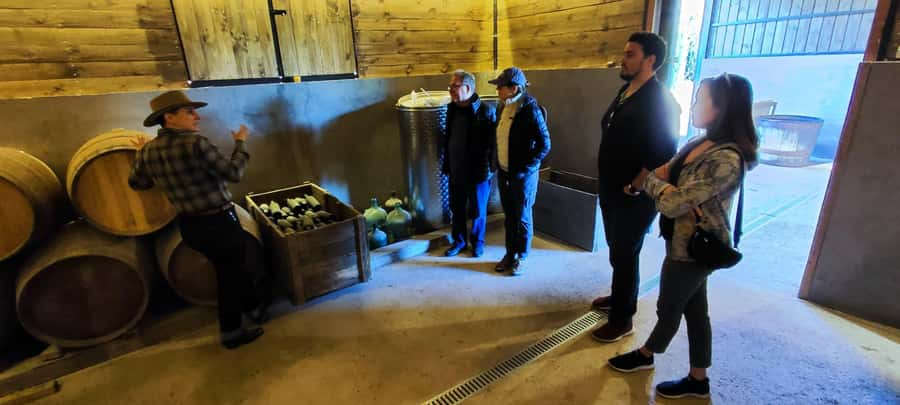
The final major stop is Viña Undurraga, one of Chile’s older and more traditional wineries, with around 130 years of experience. This is the largest and most commercial-feeling visit on the route, but it also provides the broadest look at the country’s wine industry.
The guided visit usually includes the gardens, vineyards, production areas, barrel cellar, and a pre-Columbian exhibition. That last element adds cultural context beyond wine, although the amount of explanation can depend on the local guide and the pace of the group.
The tasting includes four premium wines, and you receive a wine glass as a gift. That small souvenir is useful and easy to pack, though you should protect it carefully if you are flying onward.
Undurraga is where opinions can split. Some guides give excellent explanations and answer detailed questions. Benjamin, one of the local guides praised during past visits, was especially strong at explaining the wines and the winery. At other times, the tour has felt rushed, with a short tasting and limited answers.
The scale is part of the point. You see how a large Chilean producer works, how wine is presented for export, and how a traditional estate handles many visitors. If you prefer intimate, low-production wineries, this may be your least favorite stop. If you want to understand the range of Chilean wine production, it completes the day well.
The guides shape the whole experience
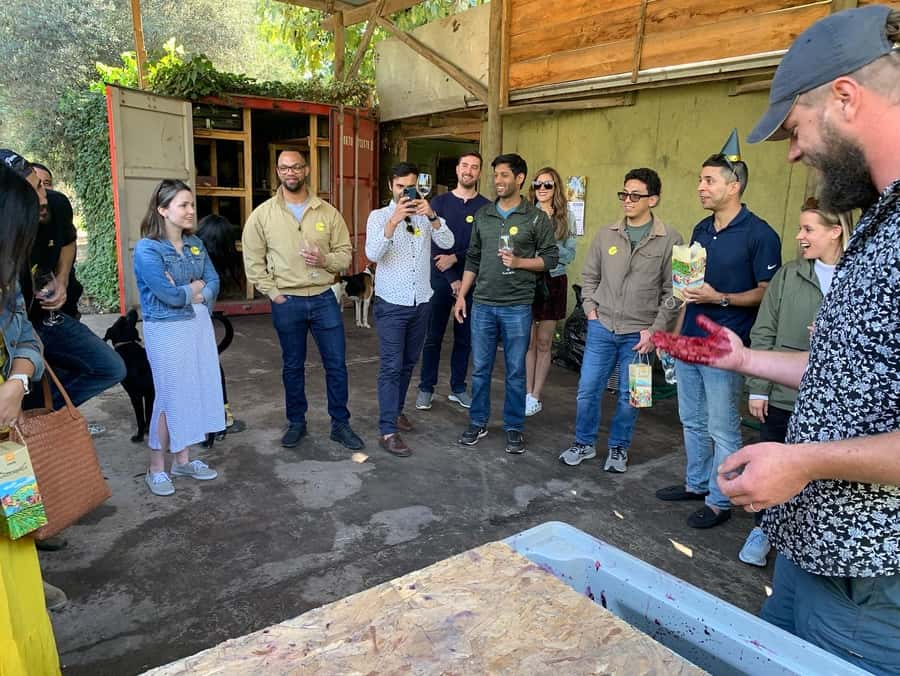
The route is fixed enough to give the day structure, but the guide has a large effect on how much you get from it. Guides such as Pablo, Nacho, Esme, Alexia, Paulina, Ramses, Stephanie, and Tephi have been praised for clear English, good humor, punctuality, and care with the group.
Names are not guaranteed, so do not book on the assumption that a particular guide will lead your tour. The important point is that the guide is expected to handle English and Spanish, explain the region, manage pickup and timing, and help the group move through several tastings without losing track of anyone.
A good guide also makes the drive useful. You can ask about Chilean wine, pisco, the Maipo region, and Santiago itself. Several guides have also helped people with suggestions for things to do after the tour, which is handy if this is one of your last days in the city.
The driver matters too. Since you will be drinking, having a professional driver is more than a comfort. It is the practical reason this tour works. The ride back can be quiet, especially after a full day of wine and fresh country air.
How much wine do you actually taste?
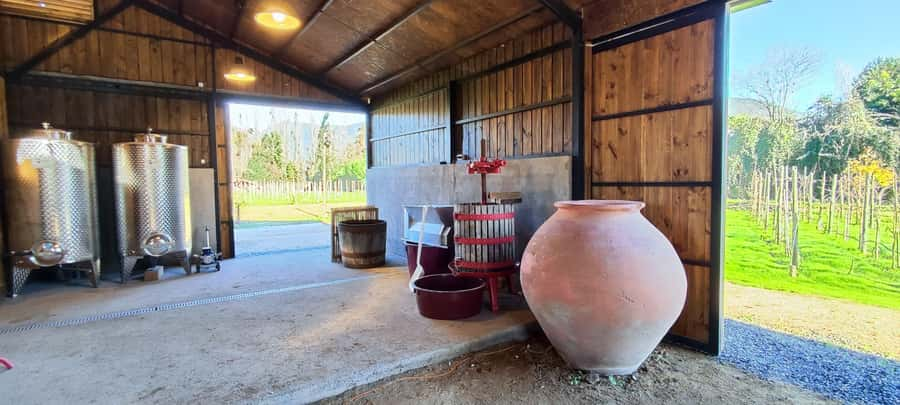
The exact amount varies by date and winery arrangement, but the day can add up to roughly 10 to 13 glasses. One account described 11 wines across the formal winery visits, while another counted about 13 glasses.
That is plenty. You should eat breakfast, drink water when it is available, and take the snacks and lunch seriously. This is not a tasting where you sample a single sip at each stop and finish fresh as a daisy. The pours can be generous, and the combination of wine, pisco, sun, walking, and a long day can catch up with you.
You do not need to finish every pour. Spitting may be possible at some tastings, though that is not specified as part of the tour, so ask your guide or tasting host. The responsible choice is to pace yourself and let the driver do the work.
The food side is modest but useful. Campo La Quirinca includes cheese and local snacks, while TerraMater gives you the chance to order a proper meal. Dinner in Santiago may be all you want afterward.
Is $134 a fair price?
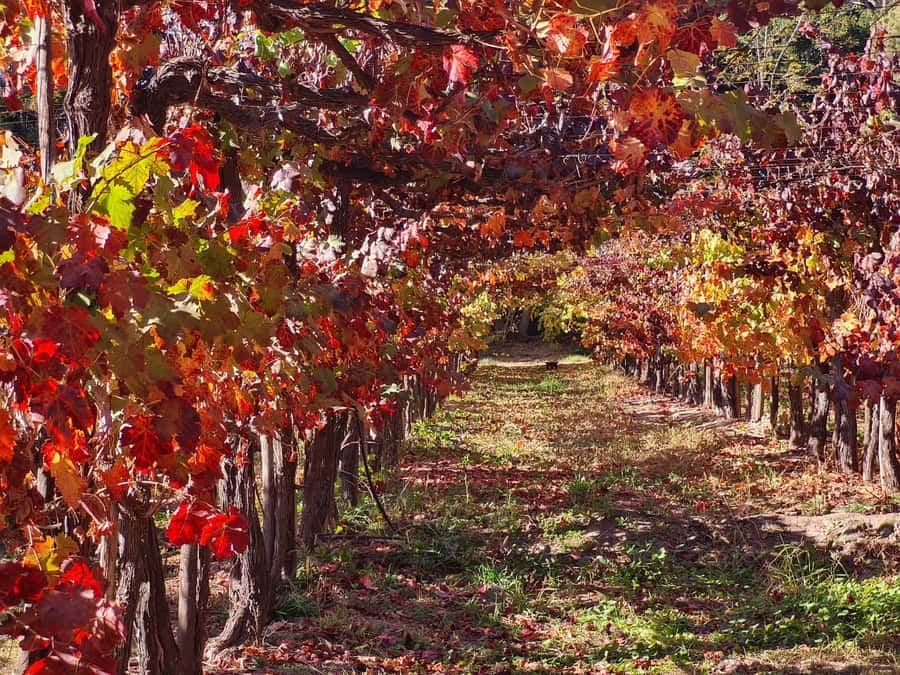
At $134 per person, this tour is not the cheapest way to visit one winery. It is priced as a full-day package with hotel pickup and drop-off, transport, a guide, four winery stops, several tastings, and a driver who allows you to drink safely.
The value improves if you want to see different types of producers in one day. A private car to several wineries would cost more, and arranging the same route independently would require transport planning, reservations, and a sober driver. You also save time because the route is organized rather than built around long gaps between attractions.
Lunch is not included, and gratuities are also extra. Add those costs before you compare the tour with other options. Wine, olive oil, pisco, and local goods are available to buy, so leave room in your budget if you enjoy shopping.
I would call the price fair for someone who wants a broad introduction to Maipo Valley. It is less compelling for someone who wants a slow, luxury winery day with long tastings at only two estates. This tour favors variety, convenience, and volume.
Who should book this Maipo Valley tour?
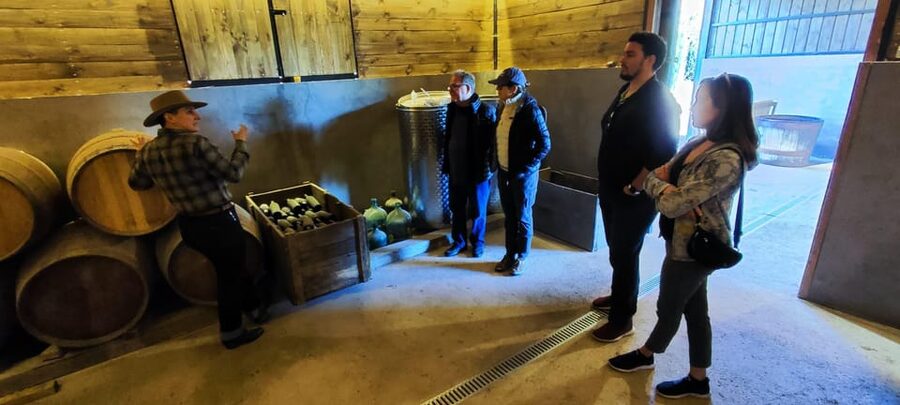
You should consider it if you have one free day in Santiago and want a simple route into wine country. It suits couples, solo visitors, friends, and mixed groups because the farm, formal tastings, lunch, scenery, and cultural displays offer more than one kind of interest.
It is also a good fit for first-time visitors to Chilean wine. You see a small operation, a medium-scale producer, a restaurant and olive oil maker, and a large traditional winery. That progression gives you a useful frame for understanding how Chilean wine reaches both local shops and export markets.
I would be more cautious if you dislike group tours, standing during tastings, or early starts. The day is long, and traffic can make the first and last parts feel slow. Some people have also found the final winery too commercial or too rushed.
The tour is wheelchair accessible, but the provided information does not describe every path, tasting room, or restroom. If you use a wheelchair, confirm the details for the specific departure before booking.
Free cancellation is available up to 24 hours before departure, and you can reserve now and pay later. If one regular winery is unavailable, the operator may substitute Viña Ballek, so the exact mix is not guaranteed.
Should you book it?
Book this tour if you want a full, social day with plenty of wine and several different winery styles. Campo La Quirinca is the most personal stop, Santa Ema gives you a polished tasting, TerraMater supplies the needed lunch break, and Undurraga adds scale and tradition.
Skip it if four full winery tours are essential to you, since TerraMater is primarily lunch. You should also skip it if you want a quiet, high-end tasting with lots of time at each estate.
For most first-time visitors based in Santiago, I think the route makes good use of a single day. Eat beforehand, carry water, budget for lunch, and sit where you can see out of the van. Do that, and the $134 price buys a convenient introduction to Maipo Valley without asking you to solve the transport problem yourself.
FAQ
How long does the Maipo Valley wine tour last?
The experience lasts about 10 hours. Pickup generally takes place between 7:30 and 8:00 a.m., with return to Santiago around 6:00 to 6:30 p.m.
Which wineries are included?
The planned stops are Campo La Quirinca, Viña Santa Ema, Viña TerraMater, and Viña Undurraga. If a regular provider is unavailable, Viña Ballek may be used as a substitute.
Is TerraMater a wine tasting stop?
TerraMater is mainly the lunch stop and olive oil shopping stop. Lunch is at your own cost, and it does not function as a full formal tasting like Santa Ema or Undurraga.
Is lunch included in the price?
No. Lunch at the Zinfandel restaurant at TerraMater is not included, so bring money for your meal.
How many wines will I taste?
The exact number can vary, but the day may include around 10 to 13 glasses across the formal winery visits. Campo La Quirinca also includes Chilean pisco.
Is hotel pickup available?
Yes. Pickup is available from many centrally located hotels in Santiago, including areas around Downtown, Providencia, Las Condes, Vitacura, Recoleta, and Estación Central. If your hotel is outside the service area, you will be given a nearby meeting point.
Is the tour offered in English?
Yes. Live guiding is available in English and Spanish.
How large is the group?
The tour is described as a small-group experience limited to 15 participants.
Can I cancel the booking?
You can cancel up to 24 hours in advance for a full refund. The tour also offers a reserve-now, pay-later option.
Just listed around Santiago
- Santiago: Veramonte Vineyard, Isla Negra and Algarrobo,★ 4.3 · 4 reviews
- Santa Rita Vineyard Tour: History, Wine, and Outdoor Picnic★ 4.7 · 4 reviews
- Santiago: Cousiño Macul Vineyard Premium Tasting Tour★ 4.7 · 6 reviews
- Santa Rita Vineyard Tour with Lunch, an Unforgettable Day!★ 4.7 · 4 reviews
- From Santiago: Vineyard, Valparaíso, and Viña del Mar Tour★ 4.4 · 22 reviews
- Santiago: Inca Lagoon Tour with Local Vineyard and Tasting★ 4.9 · 43 reviews
- Andes Portillo & Aconcagua wine tour semi private★ 5.0 · 47 reviews
- Cousiño Macul Vineyard – Maipo Valley – Premium Tasting – HD★ 5.0 · 65 reviews
Santiago Vineyard Tours, compared.

Concha y Toro Vineyard Tour w/ Transfer & Tasting
Read our review →
Inca Lagoon and Vineyard Visit with Wine Tasting
Read our review →

Casablanca world class wines, 4 vineyards & Tanino lunch stop
Read our review →
World-class Wines, Visit to 4 Vineyards and Tanino
Read our review →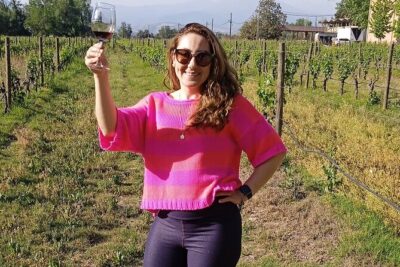
Cousiño Macul Vineyard – Maipo Valley – Premium Tasting – HD
Read our review →
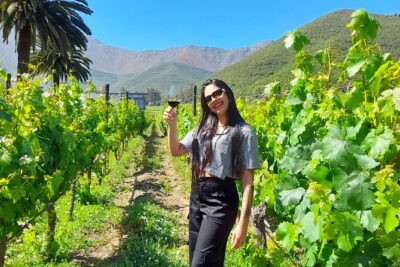
Andes Portillo & Aconcagua wine tour semi private
Read our review →Browse the lists this tour appears in