
REVIEW · TUSCANY WINE TOURS
Montalcino Castle and Vineyards tour with tasting
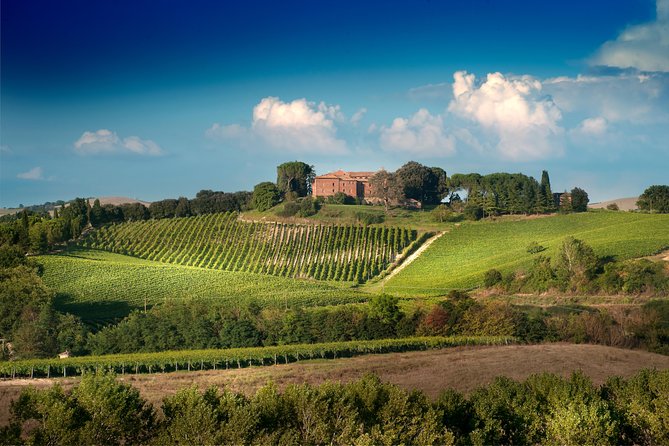
The best part of this Montalcino outing is the setting: a working wine estate inside a 15th-century castle, with Brunello vines outside the old walls and a tasting in one of the castle’s historic rooms. I like the compact format and the chance to try three local reds without committing to a long winery visit. The small group, capped at 15, also gives you a better chance to ask questions.
I especially like the mix of place and wine. You see the courtyards, old cellars, chapel, vineyard setting, and castle walls before tasting Brunello di Montalcino, Rosso di Montalcino, and a Toscana IGP. The main caution is to keep your expectations in check: the castle visit is largely outdoors, and the food is closer to breadsticks and tasting crackers than a substantial Tuscan snack spread.
Key points at a glance
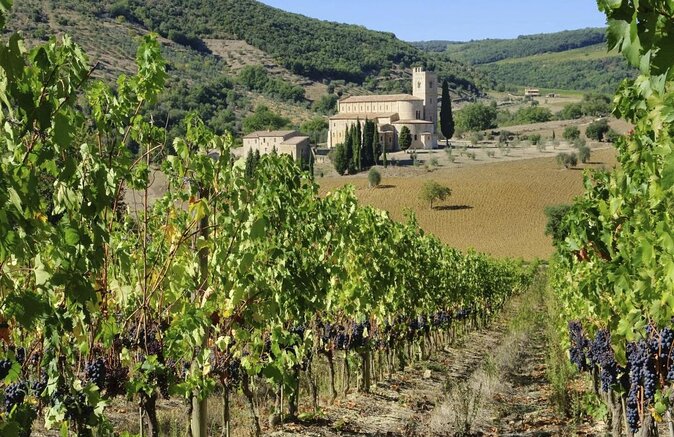
- A real castle winery: Castello Tricerchi combines medieval and Renaissance features with an active Brunello estate.
- Three Tuscan reds: The tasting includes Brunello di Montalcino, Rosso di Montalcino, and a Toscana IGP.
- A short, focused visit: The scheduled tour lasts about one hour, though some visits may run closer to 90 minutes.
- A historic tasting room: Wine is served at the end in a memorable room inside the castle.
- Small-group format: The maximum group size is 15 people.
- Simple food pairing: Expect water, breadsticks, and a modest Tuscan snack rather than a full meal.
Why Castello Tricerchi makes a good wine stop
Montalcino is famous for Brunello, but a visit to the area can easily turn into a string of cellar appointments with similar explanations. Castello Tricerchi gives you a different starting point. You are not only tasting wine. You are walking through an old estate, looking across vineyards, and hearing how the property functions as both a historic site and a producing winery.
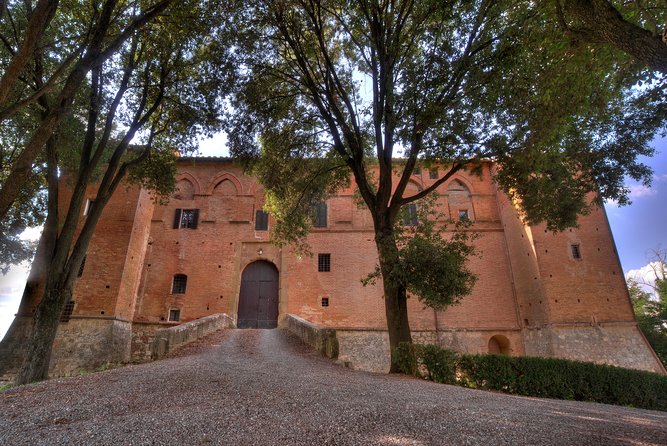
The estate traces its story back roughly 600 years. The castle walls, courtyards, chapel, noble vineyards, and old cellars give the visit a strong sense of place. I find that useful because Brunello makes more sense when you see the land and the buildings tied to its production.
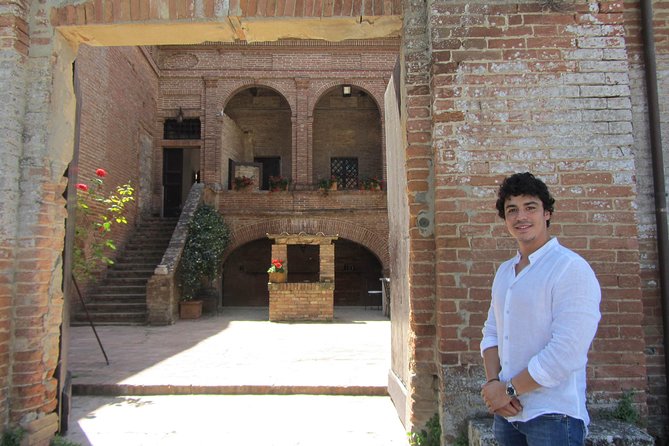
The tour begins at the ancient main entrance. From there, you follow the castle walls and reach the bridge associated with Baldassare Peruzzi, an early 16th-century architect. You also see the Chapel of the Virgin of the Veil, which still contains a relic said to be a fragment of the Virgin Mary’s veil.
That chapel is an unusual detail in a wine tour. It adds a religious and local-history layer that you would not get at a modern tasting room. The visit is not presented as a full architectural tour, though, so you should think of these features as part of a short introduction rather than a long examination of the castle.
More Tuscan estates around Italy:
- Private Self-Guided E-Bike Ride in Tuscany with Vineyard Visit
★ 5.0 · 775 reviews - Private Tuscany Tour from Florence Including Siena, San Gimignano and Chianti Wine Region
★ 4.5 · 128 reviews - Tasting in a Tuscan Vineyard with transfer from Lucca
★ 5.0 · 104 reviews
Walking the courtyards, walls, and vineyard setting
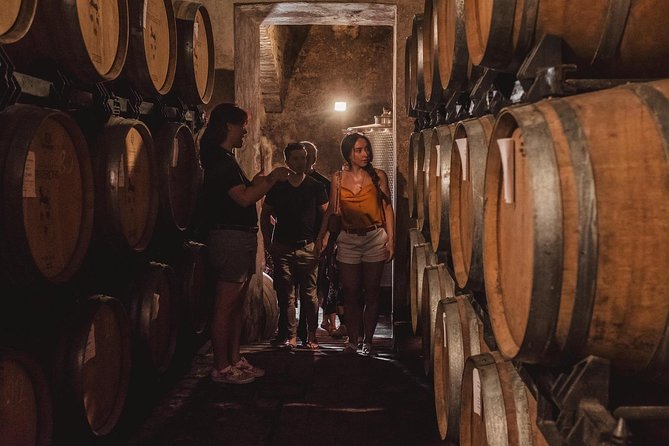
The first portion is a walk through the castle grounds. You pass through courtyards and along the walls, with the vineyards providing the backdrop. On a clear day, the views across the valley are one of the strongest parts of the experience.
The phrase castle tour can create a certain picture in your mind. Here, much of the visit takes place outside. You should not expect a long tour through furnished rooms or a grand series of indoor chambers. The focus is on the exterior spaces, the grounds, the cellar areas, and the way the estate fits together.
That outdoor format has two sides. It keeps the visit connected to the vines and gives you attractive views, but it also makes weather important. One visit was shortened by heavy rain, so bring suitable clothing if the forecast looks unsettled. The tour may still go ahead, but the walking portion can become briefer and less comfortable.
I like that the guide does not treat the vineyard as decoration alone. The tour explains how wine is produced and how the character of the wine can vary from one day or vintage to another. The available information does not give a detailed technical schedule for every stage of production, so you should expect an accessible overview rather than a winemaking master class.
Inside the medieval cellars
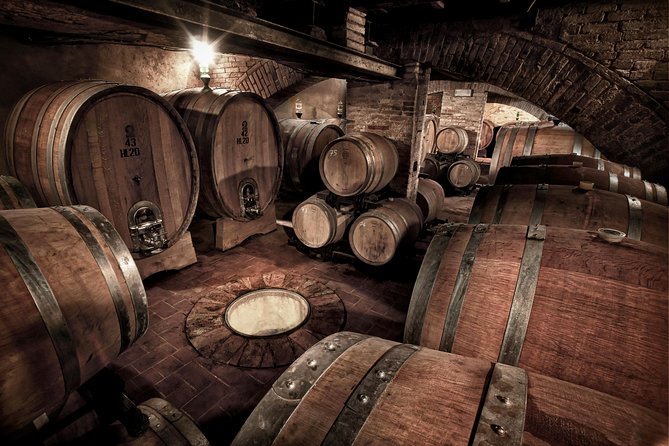
The old cellars provide the clearest link between the castle and the wine in your glass. This is where the visit shifts from architecture and scenery to production. You get a look at the traditional side of the estate before settling in for the tasting.
The exact amount of time spent in the cellars can vary with the pace of the group and the guide. The advertised tour is about one hour, and some descriptions of the visit put the total outing closer to 90 minutes. I would plan for a short appointment, not half a day.
That timing suits you if you want a taste of Montalcino during a busy day of sightseeing. It is also useful if you are not yet sure how much winery detail you want. You can learn the basic process, see an old producing property, and sample the wines without giving up an entire afternoon.
The guide makes a big difference here. Alice has been praised for explaining both the castle and the wine in an engaging way. Alessandro, also listed as Alexandro in one account, has been described as professional, polite, and clear when discussing the wines. Since guides can vary, your experience may depend on who leads the session and how much time the group has for questions.
Three wines, three ways to read Montalcino
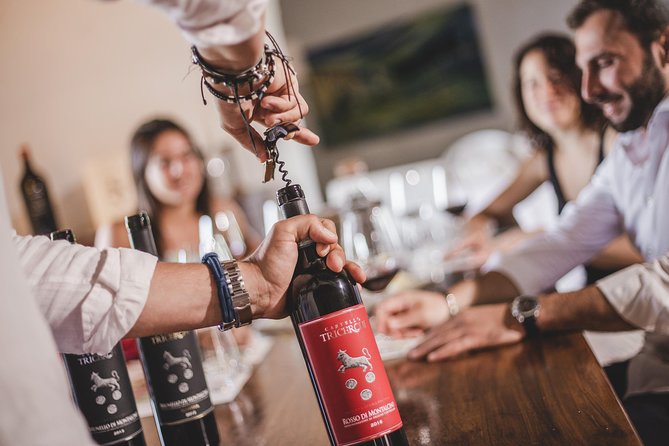
The tasting includes three red wines:
- Brunello di Montalcino
- Rosso di Montalcino
- Toscana IGP
This lineup gives you a simple comparison. Brunello is the star of the estate and the wine most closely associated with Montalcino. Rosso offers a different expression from the same broad area, while the Toscana IGP shows a less narrowly defined category.
You are not simply handed three glasses and left alone. The tasting includes an explanation of how the wines are structured, and the guide may discuss their production and character. I like this format because it helps you compare rather than judge each wine in isolation.
The Brunello received the most consistent praise. Some people enjoyed all three wines, while others felt the quality varied by bottle or by personal taste. That is normal with a tasting, and it is useful to remember that a famous name does not guarantee that every visitor will love every pour.
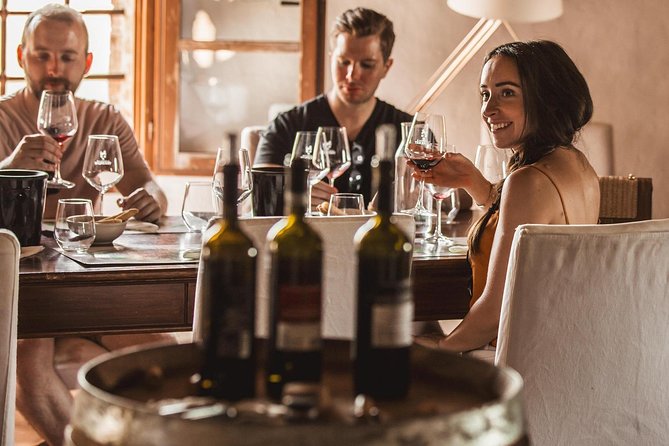
The tasting takes place in a historic room inside the castle. That setting gives the final part of the visit a sense of occasion without requiring formal ceremony. You can sit down, look back over the property you have just seen, and focus on the differences among the wines.
More vineyard visits around Italy:
- Half day Chianti Vineyard Escape from Florence with Wine Tastings
★ 4.5 · 2,196 reviews - Florence: Chianti Wine Region Vespa or Fiat Topolino Tour
★ 4.8 · 739 reviews - From Venice: Prosecco Wine Region Tour with 2 Tastings
★ 5.0 · 374 reviews - Discover Valpolicella Vineyards and Wine Tasting Experience
★ 4.5 · 341 reviews
What you actually get with the snacks
The food pairing is modest. You receive water and breadsticks, along with a small Tuscan snack. Some descriptions refer to tasting crackers, and the accompanying food has been considered too limited by people expecting cheese or a fuller plate.
This is the main place where I would adjust the sales language in your head. Treat the food as a palate aid, not lunch. If you are hungry, eat before the tour or plan a meal afterward. Do not book this experience expecting a spread of local meats, cheeses, olive oil, and warm dishes.
That said, the simple pairing does not undermine the wine portion for everyone. The main purpose is to keep your palate comfortable between tastings and offer a little something with the reds. If your priority is Brunello in a historic setting, the basic snack may be perfectly adequate.
If food is a major part of your interest in Tuscan wine culture, you may prefer a longer tasting that specifically includes a substantial menu. This outing is better suited to people who want the estate, the story, and the wine first.
How the one-hour schedule works for your day
The experience is offered at multiple departure times, which is useful in a region where driving between hill towns and wineries takes planning. You meet at Castello Tricerchi, at Località Altesi in Montalcino, and return to the same point at the end.
Because no transport from Siena is included in the supplied details, you need to arrange your own way to the estate. That matters. This is not a city-center activity that you can casually walk into between museums. Check your route and allow enough time to arrive at the winery.
The one-hour format works well as an add-on to a day in Montalcino. You can pair it with a visit to the town or another stop in the area. I would avoid scheduling it so tightly that a delayed arrival creates stress, especially since one group started late while waiting for people who never appeared.
The small maximum of 15 people is a real advantage. It does not guarantee a private tour, but it keeps the group manageable. You are less likely to be lost at the back of a large crowd, and it should be easier to hear explanations in the courtyards and cellar.
What the guides add to the experience
The strongest guide experiences balance two subjects: the castle’s past and the wine’s present. Alice has been singled out for clear explanations of the property, the surrounding vineyards, harvesting, and fermentation. Alessandro has also been praised for a warm welcome and strong presentation of the three wines.
At the same time, guide quality can be uneven. One visit was rushed, and the guide was unable to answer several questions about the family connected with the castle. That matters if you are visiting because of the estate’s long story rather than simply looking for a tasting.
If the family history is central to your interest, ask at the start how much of the tour will cover it. The property has connections to notable historical figures and local traditions, but the amount of detail you receive may depend on the guide and the questions asked.
I would approach the tour with a few questions ready. Ask about the difference between the three wines, the role of the vineyards around the castle, and how the estate balances its historic buildings with current production. A small group makes those questions more practical.
Price and overall value at $46.86
At $46.86 per person, this is not the cheapest way to taste wine in Tuscany. You are paying for more than three pours, though. The price includes a guided visit to the castle grounds, the vineyard setting, the medieval cellars, and the tasting in a historic room.
I see the value most clearly if you want a short, atmospheric stop rather than a long educational program. The property is the main reason to book. If you only care about the wine and plan to buy bottles based on flavor alone, the price may feel high, particularly since the snack is minimal.
The cost makes more sense for a first visit to Montalcino, when you want a quick introduction to the area and its signature wine. It also suits a couple or small group looking for a scenic activity that does not take up an entire day.
The experience is less convincing for someone expecting a full meal, extensive indoor castle access, or a detailed lecture on the estate’s family line. Those expectations are likely to leave you feeling that the visit was too brief.
Who should book this Castello Tricerchi visit?
I would recommend it to you if you meet most of these conditions:
- You want to taste Brunello in the area where it is made.
- You enjoy historic buildings as much as wine production.
- You prefer a small group to a large bus-style tour.
- You have about an hour to spare in the Montalcino area.
- You are happy with breadsticks and a light snack.
- You want several departure times to fit around a day of sightseeing.
It is a good match for first-time wine visitors because the tasting compares three categories without requiring specialist knowledge. It also works for experienced wine drinkers who care about the setting and want to see a traditional estate.
I would hesitate if your priority is a generous food pairing, a long cellar session, or a fully documented family history. You might also choose something else if rain is likely and outdoor walking is not appealing.
Practical details before you book
The experience is offered in English and uses a mobile ticket. Confirmation is provided when you book, and most participants can take part. The group is limited to 15 people.
You can cancel for a full refund if you do so at least 24 hours before the scheduled start. Cancellations made less than 24 hours ahead are not refundable, and changes within that period are not accepted.
One simple tip: read the date and operating details carefully. The property is closed on January 1, and a mistaken arrival on that date led to an avoidable problem that was later resolved with a full refund.
Should you book it?
Book this tour if you want a short castle-and-wine experience with strong views, a historic setting, and three Tuscan reds. The Brunello tasting and the final room inside the castle are the highlights, while the small group and flexible departure times make the outing easy to fit into a Montalcino day.
Do not book it expecting a full lunch, a long indoor castle tour, or a perfectly consistent level of historical detail. For the right expectations, Castello Tricerchi offers an appealing slice of the Brunello region at a fair, though not bargain, price.
FAQ
Where does the tour begin?
The tour begins at Castello Tricerchi, Winery in Montalcino, at Località Altesi, 53024 Montalcino SI, Italy.
Where does the tour end?
The activity ends back at the Castello Tricerchi meeting point.
How long does the tour last?
The scheduled experience lasts approximately one hour. Some visits have taken closer to 90 minutes.
Which wines are included?
You taste three red wines: Brunello di Montalcino, Rosso di Montalcino, and Toscana IGP.
What food is served with the wine?
The tasting includes water, breadsticks, and a small Tuscan snack. The food is not presented as a full meal.
How many people can join the tour?
The activity has a maximum group size of 15 participants.
Can I cancel for a refund?
Yes. You can receive a full refund by canceling at least 24 hours before the scheduled start time. Cancellations made less than 24 hours ahead are not refunded.
Just listed around Italy
- Winery Visit & Tasting on the Volcanic Slopes near Catania★ 5.0 · 2 reviews
- Winery Visit & Tasting near Grosseto with 6 wines★ 4.8 · 6 reviews
- Winery Visit on Parma Hills & Wine Tasting with Food Platter★ 5.0 · 26 reviews
- Wine Tasting and Winery Visit near Asti and Turin★ 4.5 · 5 reviews
- Wine tour and lunch or dinner at our vineyard★ 4.6 · 15 reviews
- Wine tasting under the Stars in the vineyards of Agrigento★ 5.0 · 3 reviews
- Walk through our vineyard and aperitif★ 4.7 · 19 reviews
- Volterra: Aperivintage aperitif in vineyard whit a Fiat 500★ 5.0 · 7 reviews
Tuscany Wine Tours, compared.
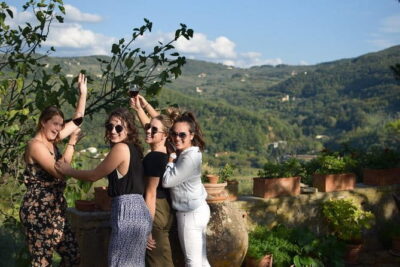
Private Self-Guided E-Bike Ride in Tuscany with Vineyard Visit
Read our review →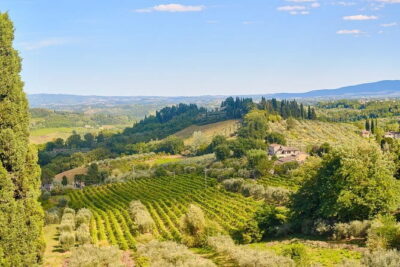
Private Tuscany Tour from Florence Including Siena, San Gimignano and Chianti Wine Region
Read our review →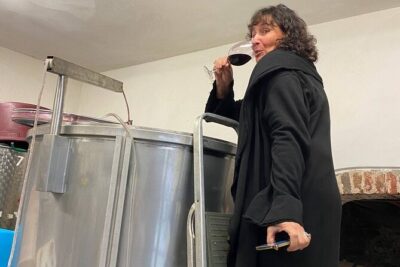
Tasting in a Tuscan Vineyard with transfer from Lucca
Read our review →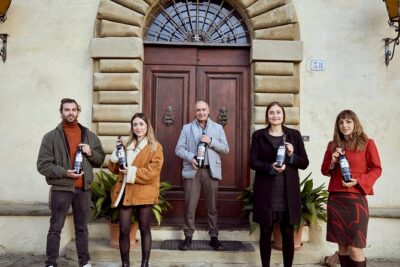
Tour through the vineyards and wine and olive oil tasting in Tuscany
Read our review →
Small Group Wine Tasting in Tuscany with Vineyard Visit
Read our review →
San Gimignano: Tuscan Vineyard Lunch with Wine Tasting
Read our review →Browse the lists this tour appears in