
REVIEW · RIOJA AND RIBERA WINE TOURS
Mastering The Rioja Wine Region with a Sommelier (With Cheese Pairings)
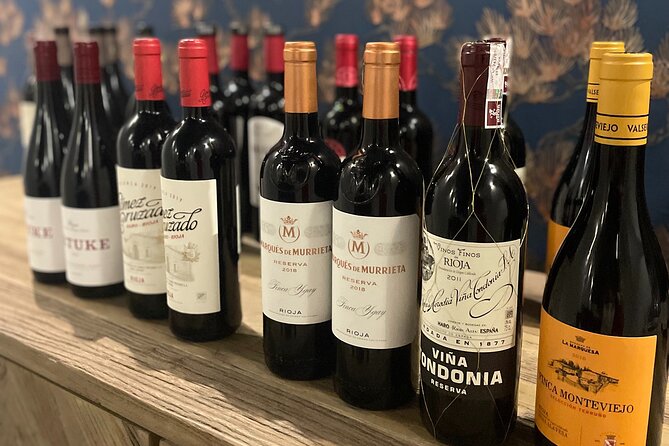
The best part of this Bilbao tasting is its focus on how Rioja actually works. You taste five selected wines beside local cheeses while a sommelier explains grape varieties, Rioja DOCa standards, and the meaning of Crianza, Reserva, and Gran Reserva. It is more useful than a quick pour-and-move-on tasting.
I like the small group, capped at 12, and the fact that the wines come from small family wineries. I also like the clear food pairing: cheese gives you a practical way to notice how wine changes with food. The main consideration is time. At about 90 minutes, this is a focused introduction, not a full-day visit to Rioja’s vineyards.
Key points at a glance
- Five Rioja wines with cheese: Each wine is paired with local cheese in a Bilbao tasting room.
- Sommelier-led instruction: Irene explains Rioja in a warm, approachable way, including grapes beyond Tempranillo.
- A compact 90-minute format: The session fits neatly into a Bilbao morning or afternoon plan.
- Small family wineries: The selection focuses on boutique producers with traditional character.
- Small group size: No more than 12 people are scheduled for the activity.
- Central Bilbao meeting point: Begin and finish at Salbe Plaza, at Salbe pl. 6.
Five Rioja wines, one useful lesson at a time
This is a tasting built around comparison. You are not simply handed five glasses and left to guess what you like. The sommelier guides you through the wines and connects them to the rules, grapes, and ageing methods that shape Rioja.
That matters because Rioja is often reduced to one word: Tempranillo. Tempranillo is important, but it is not the whole story. The session introduces the authorised grape varieties used in the region, giving you a wider frame for understanding what is in your glass.
I like this approach for a first Rioja tasting. You can enjoy the wines at the table, then attach each one to a clear idea. Perhaps the point is a different grape, a different ageing category, or the way a wine works with cheese. The lesson has a purpose, rather than becoming a list of technical terms.
The wines are selected from small, family-run wineries. That does not mean every bottle will suit every palate, and the exact producers are not specified in the tour details. Still, the focus is appealing if you prefer wines with a sense of place and family tradition over a tasting built only around famous commercial labels.
More Wine Country Day Trips in Spain
- From Fuerteventura: Lanzarote Volcano and Wine Region Tour
★ 4.4 · 1,220 reviews - Lanzarote Volcano and Wine Region Tour from Fuerteventura
★ 4.5 · 264 reviews - Sun and Wine Route – Small group, wine tasting and tapas included
★ 5.0 · 87 reviews
Understanding Rioja DOCa without the usual confusion
Rioja carries the DOCa designation, Spain’s top category of wine origin. During the tasting, you learn what that designation means and how it relates to production and ageing.
You do not need to arrive with a working knowledge of Spanish wine law. The value of a sommelier-led session is that the formal rules are explained while you taste. That makes the information easier to remember than a page of definitions read before your trip.
The ageing terms are especially useful. Crianza, Reserva, and Gran Reserva are not interchangeable labels. They point to different ageing requirements, and the session shows you how those requirements affect the final wine.
This is the kind of information that can help later, when you are choosing a bottle in Bilbao, browsing a wine shop, or ordering at a restaurant. You may not remember every rule, but you should leave with a better sense of why two Rioja wines can taste and cost quite differently.
The experience also gives you a chance to ask questions directly. With a group limit of 12, the setting should be more personal than a large tour where the guide has to repeat the same speech and rush everyone along. The details do not promise private instruction, so you should still expect a shared tasting rather than a one-on-one lesson.
Irene’s teaching style is part of the appeal
Irene is the sommelier associated with the tasting, and her role is more than pouring wine. She explains the choices, discusses the cheeses, and helps connect the tasting to the wider world of Spanish wine.
Her style comes across as warm and enthusiastic rather than stiff or overly formal. That is important for beginners. Wine terminology can make a short tasting feel like a school exam, but an inviting guide gives you room to ask basic questions without feeling out of place.
The experience also touches on Txakoli and other Spanish wines in the wider conversation. Txakoli is closely linked with the Basque Country, so it is a useful local reference even though the main subject here is Rioja. If you are exploring Bilbao’s food and drink, this broader connection helps place Rioja within the region’s wine culture.
You should not expect a technical certification course. The promise is practical education, guided tasting, and a better understanding of the bottles in front of you. For most people, that is the right level for a 90-minute activity.
Local cheese makes the tasting more practical
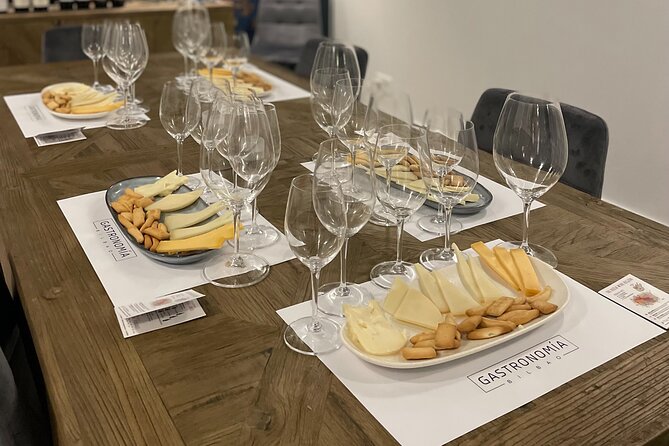
The cheese pairings are not a decorative extra. They help you notice how food changes wine.
A wine can taste sharper, softer, fuller, or more balanced when paired with food. Cheese gives you an immediate comparison because its salt, texture, and richness affect the wine in your mouth. You do not need advanced tasting skills to notice that the same glass behaves differently with and without a bite of cheese.
The exact cheeses are not listed, so you should not book this expecting a named regional cheese flight. The useful point is the format: five Rioja wines are paired with local cheeses in the tasting room.
I like this for people who enjoy food more than formal wine analysis. You can focus on the pleasure of the combination, then pick up the technical explanation as you go. It also makes the activity a better choice for couples or friends with mixed levels of wine interest. One person can follow the ageing discussion while another simply enjoys finding a favorite pairing.
The pairing may also help you make sense of the wines from small wineries. Rather than tasting them in isolation, you encounter them as part of a meal-like setting. That makes the session feel connected to how wine is actually enjoyed in Spain.
More Rioja and Ribera bodegas around Spain:
- From Bilbao: Rioja Wine Region with Winery & Vitoria-Gasteiz
★ 4.5 · 60 reviews - Rioja Wine Route with winery owner
★ 5.0 · 54 reviews - Full Day Tasting The Unknown Rioja Wine Region
★ 5.0 · 34 reviews - Rioja wine region with visit to winery & Vitoria-Gasteiz
★ 4.5 · 32 reviews
The Bilbao setting keeps the schedule simple
The meeting point is Salbe pl. 6, 48007 Bilbao, at the wine bar and tasting room operated by Gastronomía Bilbao. The activity begins at 11:30 am and finishes back at the same location.
This fixed indoor setting is practical. You do not need to arrange transport to Rioja, organize a driver, or spend much of the day moving between wineries. If your Bilbao visit is short, you can fit the tasting around museums, food stops, or an afternoon walk.
The tradeoff is equally clear: you are learning about Rioja in Bilbao, not standing among the vineyards or visiting cellars in the Rioja region. You will not get a vineyard tour, winery architecture, or a view across the growing area from the information provided.
That makes this best for a city-based introduction. If your main goal is to see the wine country itself, choose a longer Rioja excursion instead. If you want a concentrated tasting without leaving Bilbao, the location works well.
The meeting point is near public transportation, and the activity ends where it begins. That removes a common source of stress during a food tour. You can arrive, taste, and continue your day without figuring out a separate return route.
Why the 90-minute length works
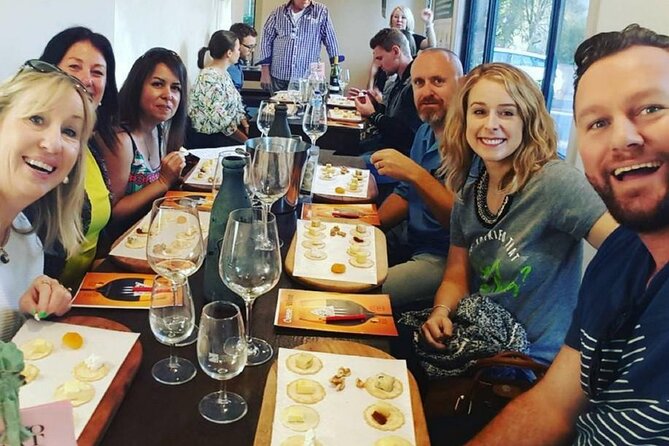
Ninety minutes is long enough to give five wines proper attention, but short enough to stay manageable. You get a clear beginning, a series of guided tastings, and a finish at the original meeting point without giving up half a day.
The pace will likely be steady. Five wines, cheese pairings, grape information, Rioja DOCa, and ageing categories leave plenty to cover. You should expect an organized session rather than a slow, leisurely afternoon with long breaks between glasses.
That pace is a strength if you want an introduction. It is also a limit if you already know Rioja well. Experienced wine drinkers may find the basic explanation familiar, although the boutique-winery selection or specific bottle choices could still make the tasting worthwhile.
The activity is offered in English. That makes the technical material easier to follow if you are not comfortable discussing wine in Spanish. You still get a local setting and Basque context, but the instruction is presented in a language you can use confidently.
Is $66.51 a fair price?
At $66.51 per person, this is not the cheapest way to drink wine in Bilbao. You are paying for five wines, local cheese, the tasting room, and Irene’s instruction, not simply for five small pours.
The price makes more sense if you value guidance. A good sommelier can help you identify why a wine tastes the way it does, explain a label you might otherwise ignore, and show you how food affects the glass. That kind of context is hard to get from ordering one Rioja at a restaurant.
The small group also supports the price. A maximum of 12 people gives the session a more personal scale, even though it is not advertised as private. You have a better chance of hearing the explanation clearly and asking a question than you would in a large room.
Still, value depends on your goal. If you only want to sample Spanish wine, you may spend less at a Bilbao wine bar. If you want five wines selected around a clear subject, cheese pairings, and an English-speaking sommelier, the price is easier to justify.
The strongest value is for curious drinkers who want to leave with usable knowledge. You should be able to recognize the importance of ageing terms, understand that Rioja includes more than Tempranillo, and feel more comfortable making a Spanish wine choice afterward.
Who should book this tasting?
I would point this experience toward several types of visitors.
First, it suits wine beginners who want a friendly introduction without committing to a full-day wine-country trip. You do not need to know Spanish grape varieties before arriving. The session is designed to explain the basics while you taste.
It also suits food lovers. The cheese pairings keep the activity grounded in eating and drinking, rather than making it a lecture. If you are planning Bilbao around its food scene, this fits naturally into that plan.
Couples and small groups should appreciate the compact format. The group limit of 12 keeps the mood more intimate than a major sightseeing tour, while the tasting gives everyone something to discuss.
It is also a good choice for visitors with limited time. The 11:30 am start and 90-minute length leave much of the day free. You can use it as a structured morning activity, then continue exploring Bilbao from the same general area.
I would be more cautious about recommending it to advanced Rioja specialists. The details do not promise rare vintages, cellar visits, or a deep technical study of soil, fermentation, or vintage variation. You may enjoy the wines, but the teaching is aimed at broadening understanding rather than challenging experts.
Practical details before you reserve
Your confirmation is provided when you book, and the experience is available with a mobile ticket. You begin and end at Salbe pl. 6, and the scheduled start is 11:30 am.
Service animals are allowed, and most people can participate. The activity is near public transportation, which is helpful if you are staying outside the immediate area.
The booking includes free cancellation if you cancel at least 24 hours before the local start time. Cancellations made less than 24 hours before the start are not refunded, and changes within that period are not accepted. The activity also requires a minimum number of participants. If that minimum is not reached and the session is canceled, you are offered another date or experience, or a full refund.
These rules are straightforward, but pay attention to the cutoff. A morning tasting can be easy to forget if you are changing plans late in your trip.
The main strengths and limits
The strongest feature is the combination of expert guidance and direct tasting. You are not asked to memorize Rioja facts before trying the wine. The information arrives as part of the experience, with cheese giving you a clear way to compare.
The second strength is the personal scale. A 12-person maximum should make it easier to hear Irene and take part in the discussion. The family-winery focus adds character, even though the specific bottles are not listed in advance.
The main limit is the setting. You get Rioja in Bilbao, not Rioja itself. There is no stated vineyard visit, winery tour, or transport into the wine region. The activity also lasts only 90 minutes, so it cannot cover every part of Rioja’s wine culture.
Think of it as a focused tasting lesson, not a full regional tour. That distinction will help you book it for the right reason.
Should you book the Bilbao Rioja tasting?
Book it if you want five Rioja wines, local cheese, and clear instruction from sommelier Irene in a small Bilbao tasting room. It is especially well suited to wine beginners, food lovers, and anyone who wants a useful morning activity without leaving the city.
Skip it if your priority is visiting vineyards, walking through cellars, or spending a full day in the Rioja wine region. For everyone else, $66.51 is a reasonable price for a compact tasting that combines pleasure with information. You should leave knowing more about Rioja, and with a better idea of what to order next.
FAQ
Where does the Rioja wine tasting begin?
It begins at Salbe pl. 6, 48007 Bilbao, Bizkaia, Spain, at the Gastronomía Bilbao wine bar and tasting room.
What time does the experience start?
The scheduled start time is 11:30 am.
How long does the tasting last?
The tasting lasts approximately 1 hour and 30 minutes.
How many wines are included?
You taste five Rioja wines, paired with local cheeses.
Is the activity offered in English?
Yes. The experience is offered in English.
What is the cancellation policy?
You can cancel for a full refund up to 24 hours before the experience start time. Cancellations or changes made less than 24 hours before the start are not accepted for a refund.
More cheese boards around Spain
- Rías Baixas Albariño Experience: Winery Visit & Cheese
★ 5.0 · 3 reviews - Queenstown Classic Wine Tour: 3 Winery Visits, Cave Tour & Cheese
★ 5.0 · 207 reviews - Santiago de Querétaro: Pueblos Mágicos Cheese and Wine Route
★ 4.8 · 96 reviews - Cheese and Wine Route with 2 Towns, starting from Querétaro
★ 5.0 · 27 reviews
Just listed around Spain
- Winery Visit and Tasting in Elche with wines and tapas from Alicante in Van★ 5.0 · 9 reviews
- Xalo: Vineyard Tour with Wine Tasting and Snacks★ 4.9 · 8 reviews
- Wine Route with 3 Tastings & Castillo La Mola: Small Group★ 4.9 · 31 reviews
- Valencia: Vineyard Tour, Local Wine, Cava Tasting & Snacks★ 5.0 · 8 reviews
- Valencia: Premium Wine Tasting & 3-Course Gastronomic Lunch★ 4.8 · 2 reviews
- Requena Somm. Private Vineyards/ Premium Wine tasting 1/2 Day★ 5.0 · 5 reviews
- Visit to Arafo Mountain Vineyard and Organic Wine Tasting★ 5.0 · 23 reviews
- Full Day Tasting The Unknown Rioja Wine Region★ 5.0 · 34 reviews
Rioja and Ribera Wine Tours, compared.
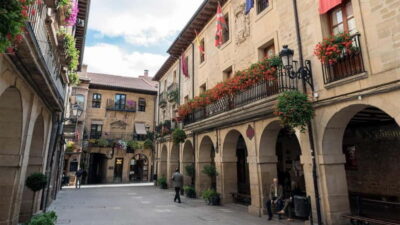
From Bilbao: Rioja Wine Region with Winery & Vitoria-Gasteiz
Read our review →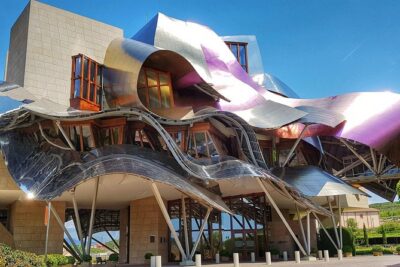
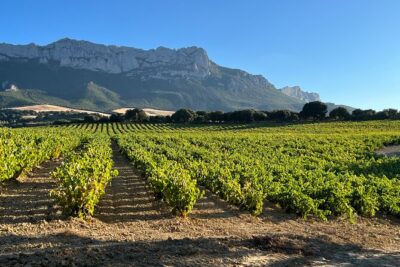
Rioja wine region with visit to winery & Vitoria-Gasteiz
Read our review →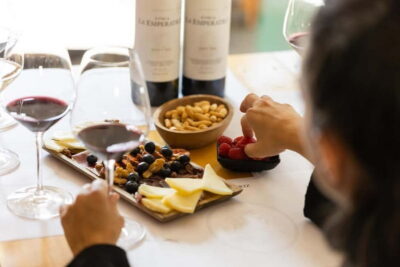
From Bilbao: La Rioja a journey to the vineyards & tradition
Read our review →
Ribera del Duero: Experience, vineyard, and 4×4 ride, plus an aperitif and tasting.
Read our review →
Ribera del Duero Winery Tour & Wine Tasting Near Valladolid
Read our review →
From Madrid to Ribera del Duero: Hidden Vineyards and Towns
Read our review →Browse the lists this tour appears in