
REVIEW · CHAMPAGNE HOUSE TOURS
Vineyard and Triple Tasting First Cru in the Mountains of Reims
The best part of this Champagne visit happens outdoors, in the middle of a Chardonnay 1er Cru plot with views across ten hectares toward the western Montagne de Reims and Reims Cathedral. Marie Lallement connects that view to the work behind each bottle, from terroir to the business choices that let a small grower compete in the Champagne trade.
I like two things right away: the tasting has a clear three-step method, and you choose three cuvées from a range of four rather than receiving a fixed flight. The one drawback is the short length. At about an hour, this is a focused introduction, not a full winery day, and snacks are not included.
Key points to know before you book
- The setting: Taste in a Chardonnay 1er Cru vineyard with views of the Montagne de Reims and Reims Cathedral.
- The teaching: Learn to judge Champagne through the eye, nose, and mouth, with the hand movements used by sommeliers.
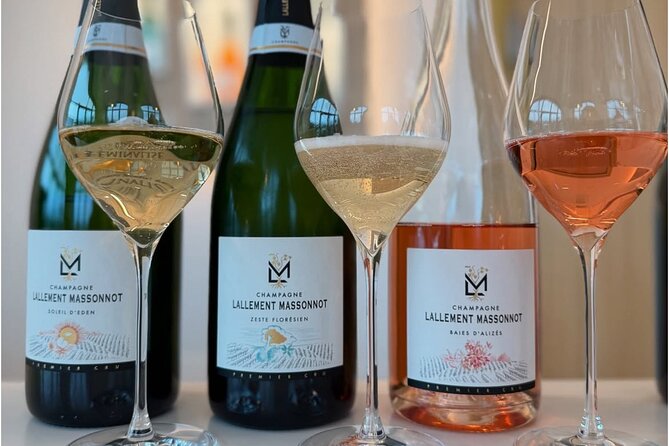
- The tasting choice: Select three cuvées from Sun D’eden, Floresian Zest, Baies d’Alizés, and Vintage 2020.
- The scale: Groups are limited to eight people, keeping the visit small and personal.
- The host: Marie Lallement presents the family estate and its approach to grower Champagne.
- The value: At $30.04 per person, the price covers a one-hour vineyard explanation and three Champagne tastings.
A vineyard introduction with Reims Cathedral in view
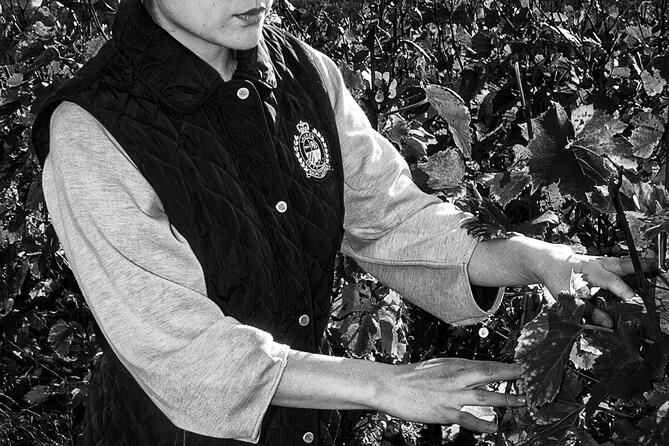
Champagne can feel like a grand industrial product when you see it only in famous houses and polished cellars. This visit gives you a different starting point: a working vineyard and a family estate in Coulommes-la-Montagne, a village near Reims.
You meet at Champagne Lallement Massonnot, at 35 Rue Haute. The first part takes place in or around the estate’s Chardonnay 1er Cru plot. The view is a useful lesson in itself. You can see ten hectares of vines, the western Montagne de Reims, and Reims Cathedral in the distance. That visual link helps place the bottle in its setting rather than treating Champagne as a label detached from the land.
The introduction covers three subjects that are easy to skip on a standard tasting. You hear about the different economic actors in Champagne, the region’s terroir, and the history of Champagne production. You also learn how a grower works within that larger system and what the estate considers its own strengths.
That last point matters. A small family producer is not simply a smaller version of a major Champagne house. The relationship with the vines, the scale of production, and the need to define an individual identity all shape the wines. The visit presents Champagne from the winemaker’s side of the business, not only from the point of view of a famous brand.
More Champagne houses around France:
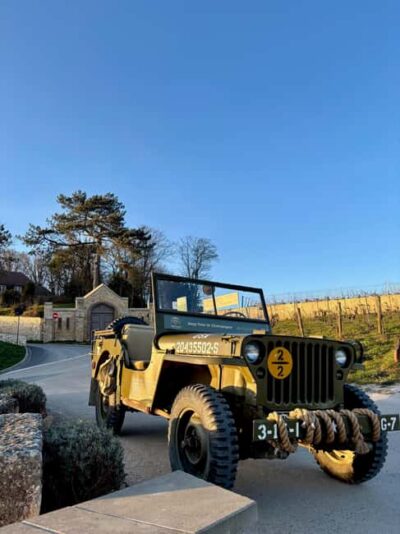
- Epernay: Jeep tour of the vineyards with tasting and visits
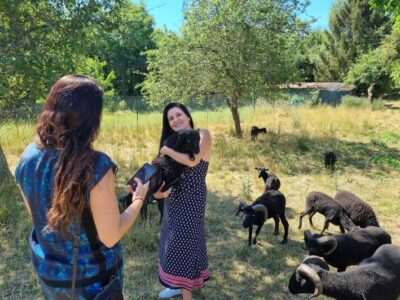
★ 5.0 · 70 reviews - Champagne Vineyard Experience: Delve into the terroir
★ 4.4 · 52 reviews - Gourmet walk in the heart of the vineyards with Champagne tasting near Epernay
★ 5.0 · 45 reviews
What the 1er Cru setting adds to the visit
The term 1er Cru signals a recognized quality classification for Champagne villages and vineyards. It does not mean every bottle tastes the same, but it gives you useful context for the wines you are about to taste.
Here, the focus is Chardonnay. That makes the vineyard setting especially relevant because you are not hearing a general speech about Champagne and then tasting unrelated bottles. The grapes in the plot, the village setting, and the cuvées are presented as part of one story.
I like this connection between place and glass. You begin by looking at the vines, then hear about the choices made by the winemaker, and finally taste three expressions from the estate. The order gives the tasting more meaning. You can ask not only whether you like a Champagne, but what may have shaped its style.
The views are also a genuine part of the appeal. Reims Cathedral gives you an easy landmark, while the Montagne de Reims reminds you that the area is more than an urban stop between major Champagne houses. You are still close to Reims, but the setting feels rural and tied to vineyard work.
Do not expect a long walk through many separate vineyard parcels. The information describes a presentation in the middle of the estate’s plot, not a large walking tour. That is a plus if you want a simple, low-effort introduction, but a limitation if you are looking for a detailed agricultural tour.
Learning to taste Champagne in three moves
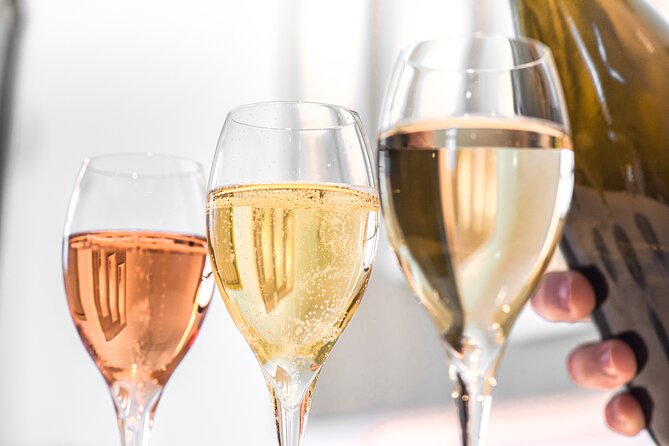
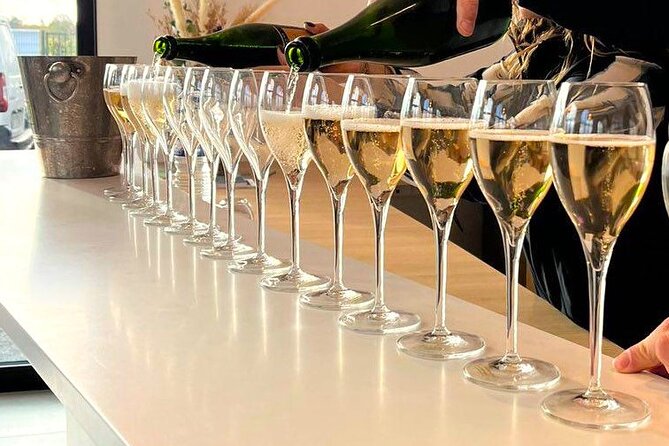
The tasting follows a practical sequence: eye, nose, and mouth. This is a good format for beginners because it gives you something to do with every glass instead of asking you to rely on vague impressions.
First, you look at the Champagne. Color, clarity, and the bubbles all form part of the visual stage. You then move to the nose, where you consider the aromas before tasting. Finally, you taste the wine and think about its character on the palate.
The guide also explains the gestures used by sommeliers. That detail may sound small, but it makes the lesson easier to remember. You leave with a repeatable method you can use at another tasting, in a restaurant, or when opening a bottle at home.
The order of the wines matters, too. The estate uses a progression of styles to help prevent palate fatigue. Champagne can begin to taste alike when several samples arrive without a plan. A structured sequence gives each cuvée room to show its differences.
You choose three cuvées from four:
- Sun D’eden
- Floresian Zest
- Baies d’Alizés
- Vintage 2020
The choice works best for couples and small groups who want some control over the tasting. You are not simply handed three anonymous pours. You and your companion, or your group, select the three bottles you want to explore from the range.
The experience does not promise a full technical class in Champagne production. It is more useful as an accessible foundation. If you already know how to assess acidity, bubbles, aroma, and finish, you may find the one-hour format basic. For someone who wants to understand what to look for in a glass, the structure is well judged.
The four cuvées and what your choice means
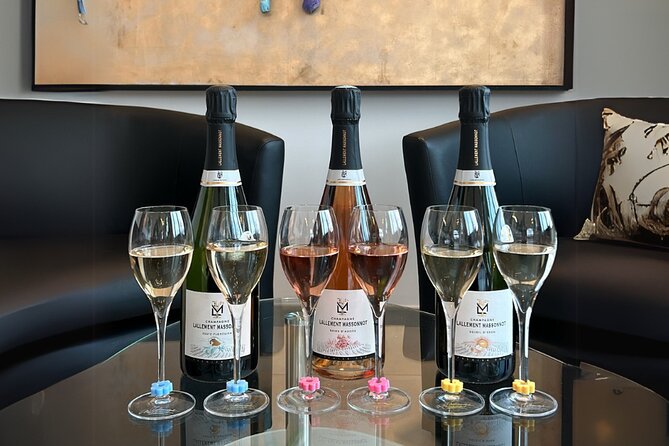
The four cuvée names are provided as the tasting range, but detailed tasting notes are not given in the tour information. That is worth knowing before you book. You should not arrive expecting a published chart of sweetness, grape blend, or food pairings for each bottle.
Instead, your choice is part of the conversation. Marie can explain the wines as you taste them, and you can compare the styles through the three-part method. The option to choose three from four also gives a small group a reason to discuss preferences before the glasses arrive.
Vintage 2020 is the most obvious choice for someone curious about a specific harvest year. The other three cuvées let you explore the estate’s broader range. Because the available details do not define each wine’s exact profile, the best approach is to ask during the visit what makes each one different before making your selection.
This is one place where a small group helps. With a maximum of eight people, you have a better chance to ask about the cuvées without competing with a large crowd. The tasting is not designed as a private session for every booking, but it has a much more personal scale than a large cellar presentation.
The three tastings are included in the price. Snacks are not. Eat beforehand or plan food afterward, especially if you are using the visit as part of a full day around Reims. Champagne is enjoyable on an empty stomach for only so long, and the tasting itself is not presented as a meal or pairing session.
More vineyard visits around France:
- Saint-Émilion: Grand Cru Classé Winery Visit and Tasting
★ 4.6 · 1,118 reviews - Saint Emilion Half-Day Trip with Wine Tasting & Winery Visit from Bordeaux
★ 4.5 · 1,034 reviews - Saint-Émilion: Bordeaux Vineyard Tour and Wine Tasting
★ 4.8 · 578 reviews - Bordeaux: Vineyards Wine Tasting Half-Day Trip
★ 4.2 · 470 reviews
Why the family-estate story matters
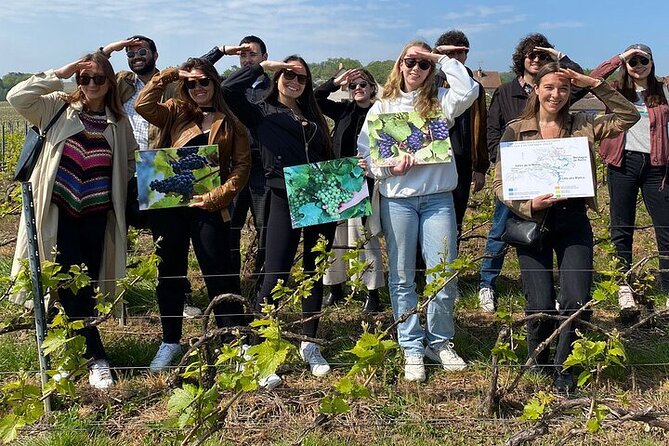
The strongest human element is the family connection. Marie Lallement presents the estate with a sense of personal responsibility for the vineyards and wines. Her welcome, as described in the experience details, is warm and attentive, and the visit can be adapted to the needs of the group.
That personal touch is important in a region where Champagne can be approached through large, well-known houses. A family estate gives you a chance to hear about grower Champagne and the effort required to make and sell wine under your own name.
The business discussion is not filler. Champagne involves growers, producers, sellers, and other economic players. Understanding those roles helps explain why a small estate needs a clear identity and why the phrase grower Champagne carries meaning for many wine drinkers.
You also hear about the standards the estate applies to its product. The visit presents the work as demanding, not automatic. The views may look peaceful, but the talk makes clear that the bottle represents farming, production, decisions about style, and the challenge of earning a place in a crowded market.
This is where the visit feels more authentic than a quick pour at a shop. You are not only sampling a finished drink. You are meeting the story of a producer and seeing the setting connected to that story.
How much time and money should you plan?
The experience lasts about one hour and costs $30.04 per person. At first glance, that may seem high for three tastes, but the price includes more than the liquid in the glasses. You are paying for a vineyard presentation, an explanation of Champagne’s structure and history, a guided tasting lesson, and three pours from the estate’s range.
The value depends on what you want. If your goal is simply to drink Champagne, a bottle from a shop may cost less. If you want a short educational visit near Reims, with a family producer and a scenic vineyard setting, the fee is reasonable.
One hour is both the strength and the limit. It fits neatly into a day of sightseeing and does not demand a major time commitment. You can add it to a Reims visit without giving up half a day.
On the other hand, the short duration means the presentation needs to stay focused. You should not expect an extended cellar tour, a large number of wines, a meal, or a long walk among the vines. This is a compact tasting with context, not a full-day wine course.
The activity is offered in English, which makes the technical material easier to follow if you do not speak French. Confirmation arrives when you book, and the booking is typically made about 15 days ahead, so reserve early if your Reims schedule is fixed.
Who will get the most from this Champagne visit?
I would recommend it most strongly to first-time Champagne visitors, couples, and small groups who want more than a bar tasting but less than a full wine day. The scenic setting, simple tasting method, and family-estate story give you a useful introduction without making the subject feel too technical.
It also suits wine drinkers who want to compare several bottles from one producer. Selecting three cuvées from four encourages you to think about style and preference rather than treating Champagne as one uniform category.
The experience is less suited to anyone expecting a substantial food pairing. No snacks are included. It may also feel brief to serious wine students who want detailed production notes, vineyard geology, or a large flight of wines.
The small group limit is a practical advantage. With no more than eight people, the conversation should be easier to follow, and you have a better chance to ask Marie about the estate, the vineyards, and the cuvées.
Dogs are allowed throughout the visit if they are unassisted, and service animals are allowed. Alcohol is served only to people aged 18 and over. Minors receive soft drinks instead, so families can attend, though the tasting is naturally aimed at adults.
Practical details at Coulommes-la-Montagne
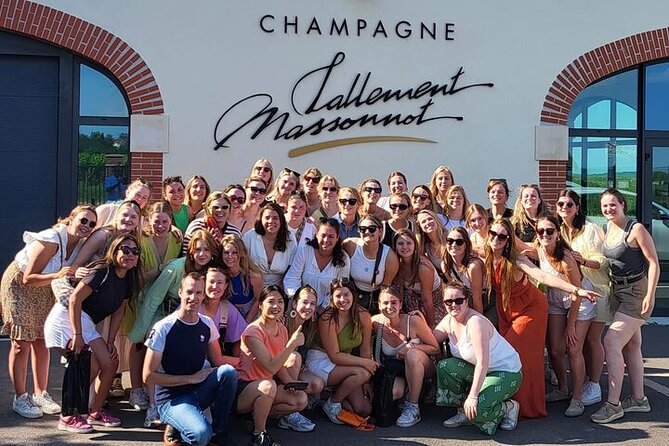
You start and finish at Champagne Lallement Massonnot Winery, 35 Rue Haute, 51390 Coulommes-la-Montagne, France. The activity returns to the meeting point, so there is no separate end location to arrange.
The ticket is mobile, and the visit is offered in English. Free cancellation is available if you cancel at least 24 hours before the local start time. Cancellations made less than 24 hours in advance are not refunded, and late changes are not accepted.
The exact information provided does not specify transport from Reims, so you should arrange your own way to the winery and confirm your route before setting out. Do not assume the meeting point is in central Reims simply because Reims is used as the location for the experience.
Because you will be tasting three alcoholic drinks, plan the rest of your day sensibly. The tour itself lasts only about an hour, but you should allow time to reach the village, get oriented, and enjoy the visit without rushing.
Should you book Champagne Lallement Massonnot?
Book this if you want a short, personal Champagne introduction with a strong sense of place. The vineyard view, Reims Cathedral in the distance, Marie Lallement’s family-estate presentation, and the eye, nose, and mouth tasting method give the hour real purpose.
Skip it if you want a large Champagne house, extensive cellar access, a meal, or a long technical workshop. For $30.04, the best value comes from treating it as a guided introduction to grower Champagne, not as a simple three-glass tasting.
For most first visits to the Reims area, I think the balance is right. You see where the wine begins, hear why the producer matters, and leave with a practical way to taste your next glass.
FAQ
Where does the Champagne tasting take place?
It takes place at Champagne Lallement Massonnot Winery, 35 Rue Haute, 51390 Coulommes-la-Montagne, France.
How long does the experience last?
The visit lasts approximately one hour.
How much does the experience cost?
The listed price is $30.04 per person.
How many Champagnes will I taste?
Three Champagne tastings are included.
Can I choose which Champagnes to taste?
Yes. You choose three cuvées with your companion or group from four options: Sun D’eden, Floresian Zest, Baies d’Alizés, and Vintage 2020.
What tasting method is taught?
The tasting follows three steps: eye, nose, and mouth. Sommelier gestures are also explained.
Is the experience available in English?
Yes. The experience is offered in English.
Are snacks included?
No. Snacks are not included, but three Champagne tastings are included.
Can minors and dogs attend?
Alcohol is served only to people aged 18 and over. Minors receive soft drinks. Service animals are allowed, and unassisted dogs are allowed throughout the visit.
Just listed around France
- Vosne-Romanée: Private Vineyards Walking Tour with Tasting★ 4.4 · 9 reviews
- Vineyard of the Alpilles by bike★ 4.6 · 8 reviews
- Vineyard tour and wine tasting in Davron★ 4.5 · 7 reviews
- Vineyard visit in Gyropode, visit of Cave & Tasting Wines of Bandol★ 5.0 · 19 reviews
- Private Vineyard Tour and Wine Tasting in Bandol★ 5.0 · 16 reviews
- Horse riding in the vineyards of Grimaud + wine tasting★ 5.0 · 3 reviews
- Bike ride on the Wine Route from Sélestat★ 5.0 · 5 reviews
- 1/2 day private Vintage tour, vineyards of Saint-Tropez★ 5.0 · 6 reviews
Champagne House Tours, compared.
Champagne Vineyard Experience: Delve into the terroir
Read our review →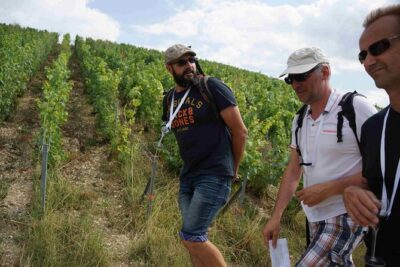
Gourmet walk in the heart of the vineyards with Champagne tasting near Epernay
Read our review →
Champagne tasting, panoramic walk in the vineyards
Read our review →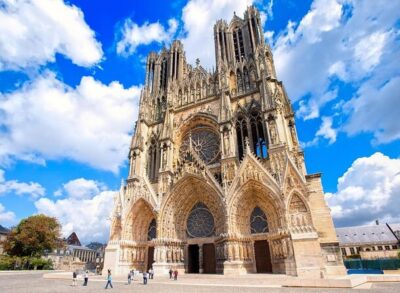
Exclusive Champagne Cellars & Dom Perignon Vineyards tour
Read our review →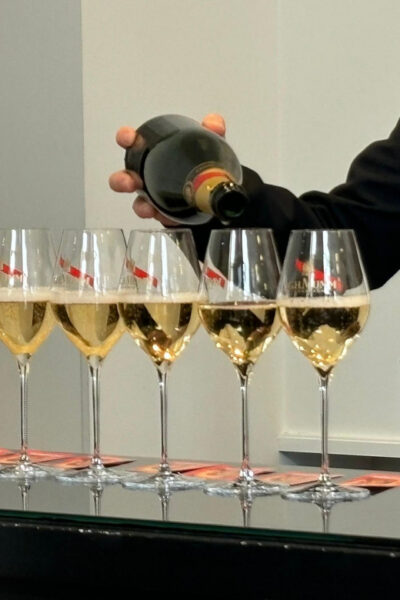
Private Epernay Trip with Champagne Vineyard Tastings
Read our review →
Browse the lists this tour appears in