
REVIEW · WINERY TOURS
History & Local Wines: Amphitheater, Mitrium and Winery Visit
Ancient Capua gives this outing its real hook: you visit a Roman amphitheater older than Rome’s Colosseum, then enter one of the few surviving temples devoted to Mithras. I like the private format, since your group can explore at its own pace, and I like the sharp change of mood from archaeology to a wine tasting near Mount Vesuvius.
The main drawback is the price: $868.20 per person is a serious outlay for about five hours. You are paying for private transport, a guide, history sites, and a winery stop, but this makes the experience a better fit for a small group that values convenience than for a solo visitor counting every euro.
Key points at a glance

- An amphitheater older than Rome’s Colosseum: Visit the Roman arena at Santa Maria Capua Vetere, built about a century before Rome’s famous amphitheater.
- A rare Mithraic temple: See a surviving Mithraeum, a sanctuary linked to the ancient cult of Mithras.
- Two very different halves: Spend roughly three hours on history, then two hours tasting Campanian wine and traditional food.
- Private pickup in Naples: Your guide meets you at your hotel reception, and only your group takes part.
- A Mount Vesuvius setting: The winery stop places wine, vineyards, and the famous volcano in the same view.
- Flexible cancellation: You can receive a full refund if you cancel at least 24 hours before the start time.
Why ancient Capua makes a better history stop than you might expect

Many people heading out from Naples focus on Pompeii, Herculaneum, or the ruins of Paestum. Santa Maria Capua Vetere offers a different story. This town began as an Etruscan settlement around 600 BC and was conquered by Rome in 340 BC, putting it at the meeting point of several major chapters in Campanian history.
You are not simply looking at old stones here. The place helps explain how power moved through the region, from the Etruscans to Rome, and how Roman public life was organized around spectacle, religion, and political influence.
The visit is also appealing because it combines several types of history in one compact stop. You see the amphitheater, learn about gladiatorial entertainment, visit the Gladiator Museum, and then move into the more private world of the Mithraeum. That progression gives the morning some shape instead of making it feel like a string of unrelated ruins.
Your guide is meant to lead the visit, but no guide’s name or professional background is supplied. If the person meeting you is important to your decision, ask for those details before booking. The experience is private, so you should be able to raise questions and set the pace more easily than you could in a large group.
More Winery Tours in Italy
- Private Full-Day Tour to Pompeii and Mt. Vesuvius with Winery Visit
★ 4.5 · 14 reviews - Mt Vesuvius with Winery Visit
★ 4.5 · 5 reviews - Vesuvius, Pompeii Ruins, experience vineyards and the winery tour with lunch.
★ 5.0 · 2 reviews
The amphitheater older than Rome’s famous arena
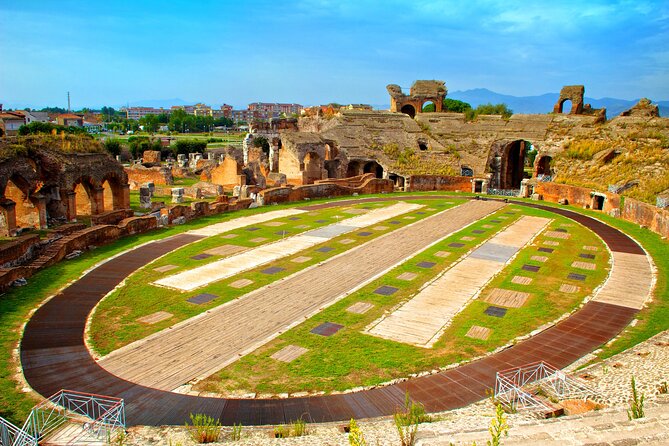
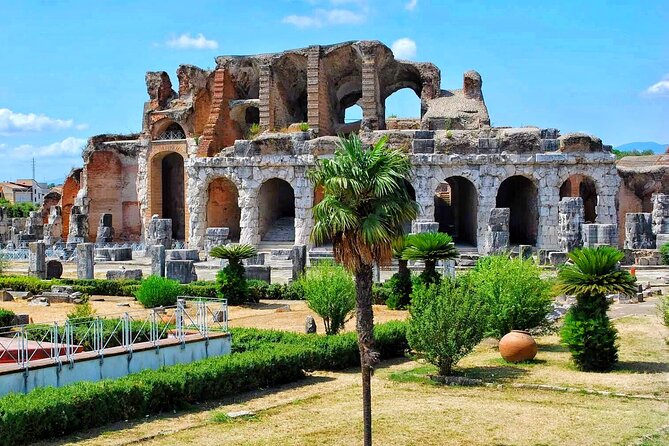
The amphitheater is the headline stop. It was built roughly one century before the Roman amphitheater in Rome, making it an important reminder that large-scale Roman entertainment did not begin with the Colosseum.
The site is connected with gladiatorial performances, including the tradition that Spartacus performed there. That detail gives the visit an immediate human angle. Instead of viewing the arena as a silent ruin, you can picture the public spectacles, trained fighters, crowds, and political theater that once filled it.
The Gladiator Museum adds context to the arena. The supplied information does not specify the museum’s exact displays or how much time you spend inside, so you should expect the guide to shape that part of the visit. Its role is clear, though: it helps connect the building to the people and practices behind Roman combat shows.
I like this pairing. The amphitheater gives you scale, while the museum should provide the smaller details that explain how the arena functioned. If you have already seen Rome’s Colosseum, this is not a replacement for it. It is a chance to see an older Campanian arena and consider how Roman culture spread beyond the capital.
The tour description says the first section lasts about three hours and includes the town, the amphitheater, the Temple of Santa Maria Capua Vetere, the Gladiator Museum, and the Mithraeum. That is a fair amount for one morning. You will want comfortable shoes and enough interest in ancient sites to enjoy a history-heavy opening.
A rare look at the Mithraeum
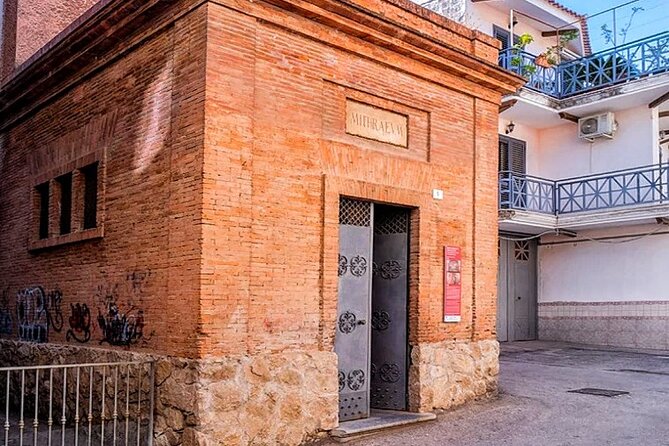
The Mithraeum may be the most unusual stop. Mithraic temples were tied to the cult of Mithras, and only a small number remain preserved. Many were deliberately destroyed after Christianity became dominant, which makes surviving examples especially valuable.
This part of the visit is less immediately grand than an amphitheater. The appeal comes from what it reveals about private religious life in the ancient world. You are looking at a sanctuary connected with a belief system that once existed alongside Roman civic religion and other cults.
The supplied details do not describe the room’s decoration, size, lighting, or access arrangements, so I would not promise a particular visual effect. Go for the significance of the site rather than a guaranteed dramatic photo. A guide’s explanation matters here, since the Mithraeum may not make much sense from the architecture alone.
This is also where the tour feels most different from a standard Roman ruins outing. The amphitheater shows public entertainment. The Mithraeum points toward a more restricted religious setting. Together, the two sites give you a broader view of ancient life in Capua.
The Temple of Santa Maria Capua Vetere and the town visit
The experience includes a guided visit in Santa Maria Capua Vetere and a stop at the Temple of Santa Maria Capua Vetere. The supplied information gives no separate description of the temple, so you should treat it as part of the town’s wider historical fabric rather than expect a full standalone museum visit.
That uncertainty is worth noting because the advertised five hours cover transportation, several historical sites, and a winery. The day should be interesting, but it is not designed for a slow, exhaustive examination of every monument. You are getting a guided overview with a few strong focal points.
I like the town setting because it places the ancient remains in a living Campanian community. You are not only visiting an isolated archaeological park. You are moving through a place that began long before Rome and continued through many later periods.
More Winery Tours in Naples:
- Saint-Émilion: Grand Cru Classé Winery Visit and Tasting
★ 4.6 · 1,118 reviews - Montserrat Full Day Tour with Farmhouse Lunch and Winery Visit
★ 5.0 · 1,068 reviews - Montserrat & Winery Visit Tour with Traditional Farmhouse Lunch
★ 4.5 · 1,035 reviews - Saint Emilion Half-Day Trip with Wine Tasting & Winery Visit from Bordeaux
★ 4.5 · 1,034 reviews
From ruins to vineyards near Mount Vesuvius
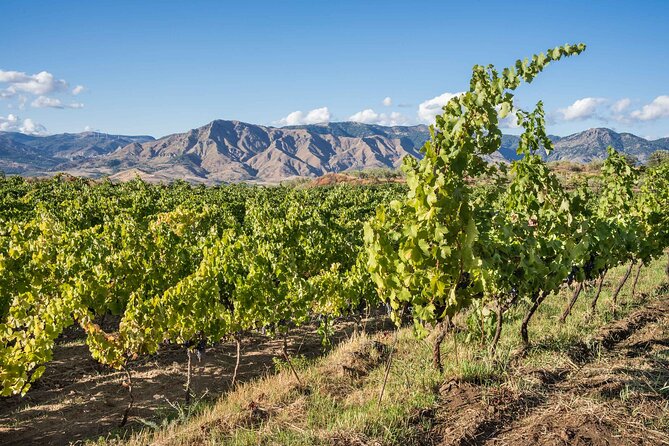
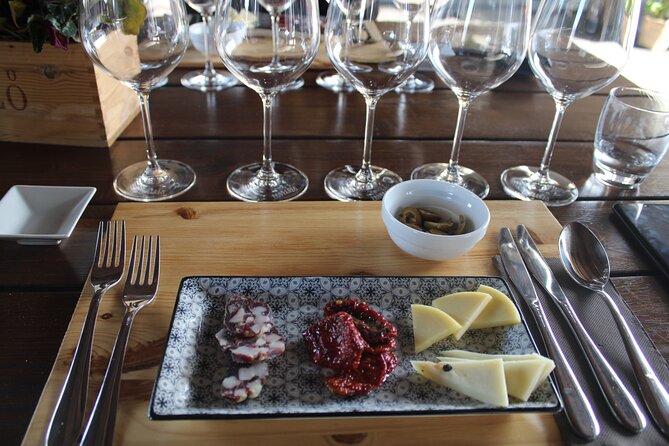
After about three hours of history, the mood changes completely. The final two hours take you to a winery in the Province of Naples, in front of Mount Vesuvius. You taste different local wines with traditional food, surrounded by vineyards and views toward the volcano.
That timing is well judged. Archaeological sites require attention, and a seated food-and-wine stop gives you room to slow down. You can talk through what you have seen without rushing directly back to Naples.
The wine tasting is described in broad terms only. Specific grape varieties, vintages, tasting pours, menu items, and winery name are not provided. You should therefore avoid booking with a fixed expectation of a particular wine or meal. The clear promise is a selection of local wines paired with traditional food in a vineyard setting.
The winery visit also gives the tour a stronger Campanian identity. Wine is not an afterthought here. It connects the volcanic soil around Vesuvius with local food traditions and offers a different way to understand the area.
The setting may be the most memorable part for you if you enjoy scenery with your meal. Mount Vesuvius gives the stop a strong visual anchor, but weather can affect what you see. The experience requires good weather, and poor conditions can lead to a different date or a full refund.
What the private format really adds
The private design is one of the clearest advantages. Only your group participates, and pickup is offered from your hotel reception in Naples. You do not need to find a meeting point elsewhere in the city, which saves time and makes the morning easier, particularly if you are unfamiliar with Naples.
Private does not automatically mean leisurely. The visit still covers several sites in approximately three hours, followed by a two-hour winery stop. Still, you can ask more questions, spend longer at a favorite location, or move on when your group has had enough.
A private vehicle also matters because the tour combines Naples with Santa Maria Capua Vetere and a winery near Vesuvius. The exact vehicle, transfer times, and pickup range are not specified, so ask the provider about those details if transport comfort is important to you.
Group discounts are available, though the amount is not stated. At $868.20 per person, the value improves if the price changes meaningfully for a larger private party. Before booking, ask for the total cost for your group and confirm exactly what is included in the quoted figure.
Is $868.20 per person good value?

At first glance, the cost is high. Five hours at $868.20 per person is not a budget outing, especially when admission is shown as included without separate ticket charges and the wine tasting details are broad.
The value depends on what you are buying. You are paying for private pickup, a private guide, transport between Naples, Santa Maria Capua Vetere, and the winery, several historical stops, and a food-and-wine experience. If you would otherwise need to arrange these pieces separately, the convenience has real value.
It makes more financial sense for couples, families, or small groups who want a private day and do not want to manage regional transport. Group discounts could also change the calculation, but you need the actual discount before deciding.
For a solo visitor or a pair focused mainly on the amphitheater, the price is harder to defend. You might prefer a less expensive archaeological visit and arrange wine tasting separately. The tour earns its price only if the private service and combined program are central to what you want.
Who should book this experience?
I would recommend it to someone who has already seen Naples’ major historic center and wants a more specialized day outside the city. It suits people who enjoy Roman history but also want time for food, wine, and a scenic setting.
It is particularly useful for a private group with mixed interests. One person can enjoy the amphitheater and Mithraeum, while another gets a relaxed winery visit rather than a full day of ruins.
You should think twice if you want a slow archaeological study, a detailed wine education, or a low-cost outing. The historical portion covers several places, and the winery information is not specific enough to promise a serious technical tasting.
The activity is open daily from 8:00 AM to 8:00 PM during the stated operating period, from April 14, 2022, through June 16, 2026. The exact start time is not given, so confirm it when booking.
Booking details worth checking first
Confirmation is provided at booking, and most people can participate. No special participation restrictions are listed, but the first portion involves walking around historic sites, so practical footwear is sensible.
Free cancellation applies if you cancel at least 24 hours before the experience begins. Cancellation inside that window is not refundable, and changes made within 24 hours are not accepted. The cutoff uses local time.
Good weather is required. If poor weather cancels the activity, you are offered another date or a full refund. Since the winery stop depends partly on the outdoor setting and views toward Vesuvius, check the forecast before the final cancellation window closes.
My verdict: a strong private history-and-wine combination
This tour offers a distinctive pairing: an amphitheater older than Rome’s Colosseum, a rare Mithraeum, and local wine near Mount Vesuvius. I like the contrast between public Roman spectacle and private ancient worship, followed by a calm food-and-wine stop.
The high price is the deciding factor. Book it if you value private pickup, a dedicated guide, and a ready-made day outside Naples. Skip it if you want the lowest cost, highly detailed wine information, or long unhurried hours at one archaeological site. For the right small group, it is an efficient way to connect Campania’s Roman past with its food and wine traditions.
FAQ
Where does the tour begin?
Your private guide meets you at your hotel reception in Naples.
How long does the experience last?
The experience lasts approximately five hours.
How is the time divided?
About three hours are devoted to Santa Maria Capua Vetere and its historical sites. About two hours are spent at a winery in the Province of Naples.
Is the tour private?
Yes. Only your group participates in the private activity.
What historical sites are included?
The visit includes Santa Maria Capua Vetere, its amphitheater, the Temple of Santa Maria Capua Vetere, the Gladiator Museum, and a Mithraeum.
What is special about the amphitheater?
It was built about one century before the famous Roman amphitheater in Rome and is connected with gladiatorial performances, including Spartacus.
What is a Mithraeum?
It is a temple associated with the cult of Mithras. The one visited here is described as one of the few preserved Mithraic temples in the world.
What happens at the winery?
You taste different local wines paired with traditional food, with vineyards and Mount Vesuvius nearby.
Is pickup available?
Yes, pickup is offered, with the guide meeting you at your hotel reception.
Can I cancel for a full refund?
Yes, if you cancel at least 24 hours before the experience starts. Poor weather may also lead to a different date or a full refund.
More history on the route around Naples
- Small-Group Full-Day Tour of Côte de Nuits, Côte de Beaune Vineyards and Beaune Historical District
★ 5.0 · 364 reviews - Albufeira Wine Tour: 2 Vineyards, 6 Tastings & Historic Silves
★ 5.0 · 123 reviews - San Diego to Temecula: Wine Country Tour & Historic Old Town
★ 5.0 · 93 reviews - Partinico: Historic Sicilian Vineyard & Wine Tasting Tour
★ 4.8 · 36 reviews
Just listed around Naples
- Wine Tour and Lunch with Winetasting and Vineyard Visit★ 5.0 · 23 reviews
- Mt. Vesuvius Tour from Naples with Lunch at a Vineyard Included★ 4.0 · 3 reviews
- Tour from Napoli to pompei/ercolano: Luxury Tour, Secret Vineyard★ 5.0 · 2 reviews
- Vesuvius, Pompeii Ruins, experience vineyards and the winery tour with lunch.★ 5.0 · 2 reviews
- Naples Tuk Tuk Experience Views and Vineyards★ 5.0 · 3 reviews
- Private Full-Day Tour to Pompeii and Mt. Vesuvius with Winery Visit★ 4.5 · 14 reviews
- Pompeii excavations and its vineyards★ 3.5 · 3 reviews
- Mt Vesuvius with Winery Visit★ 4.5 · 5 reviews
Winery Tours, compared.

Montserrat Full Day Tour with Farmhouse Lunch and Winery Visit
Read our review →
Montserrat & Winery Visit Tour with Traditional Farmhouse Lunch
Read our review →
Saint Emilion Half-Day Trip with Wine Tasting & Winery Visit from Bordeaux
Read our review →
Chianti Delights: A Tale Of Two Wineries With A Vineyard Dinner
Read our review →
Toledo Guided Tour & Winery Visit with Tasting
Read our review →
Douro Valley for Wine Lovers with Visit to 4 Wineries and Lunch
Read our review →Browse the lists this tour appears in