
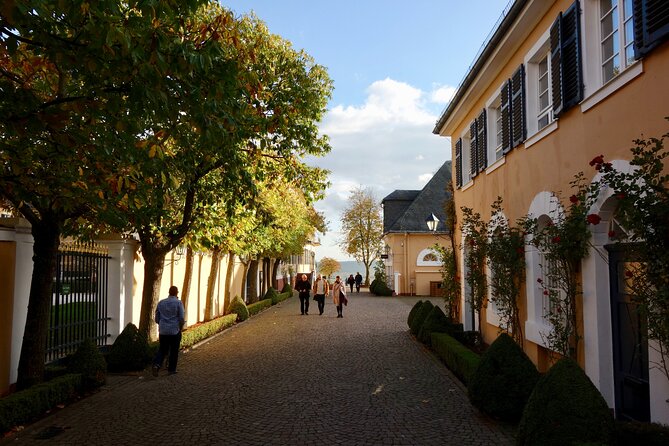
REVIEW · GERMANY VINEYARD TOURS
Small Group Rheingau Vineyards Tour with Castles and Abbeys
The best part of this Rheingau wine tour is that the wine never gets separated from the place that made it. You begin at Kloster Eberbach, a 1,000-year-old monastery tied to the rise of Riesling, then move through castle country, a large regional tasting room, and a family-run estate. It feels like a day of discovery rather than a string of unrelated tastings.
I like the small maximum of seven people, which gives guide Jérôme room to adjust the wine choices to your taste. I also like the mix of stops: the solemn monastery, the lively RheinWeinWelt tasting room, and the more personal feel of a family winery. The main consideration is the price, $199.55 per person, which does not include lunch. You are paying for private transport, guiding, access, and a full half-day in the Rheingau, not simply for a glass of wine.
Key points at a glance
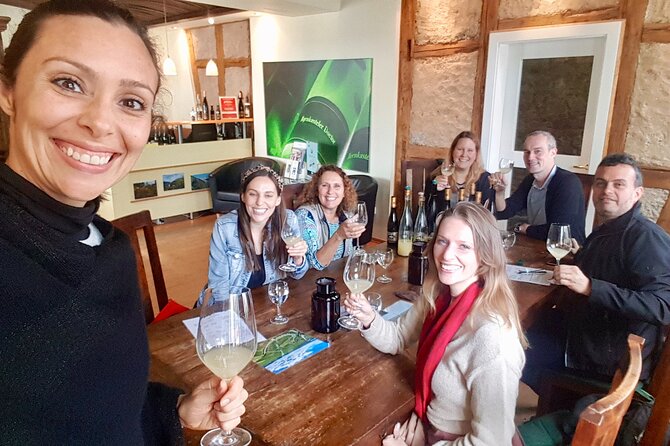
- Kloster Eberbach sets the scene: Explore the former monastery and taste 4 to 6 wines in its tasting room.
- Jérôme is the guide to know: His role combines regional history, wine instruction, and practical help choosing bottles that suit your palate.
- RheinWeinWelt offers breadth: Taste 5 wines from a selection of about 80 Rhine-region producers while choosing lunch.
- The final estate adds a family touch: Sample 6 wines, from Riesling to Pinots, at Kaufmann, Ress, or a similarly rated winery.
- The group stays very small: The vehicle carries no more than 7 participants, making conversation and questions easy.
- Plan for uneven ground: Stairs, steep sections, and uneven paving mean comfortable shoes are essential.
Why the Rheingau makes a good wine day from Mainz
The Rheingau is a natural choice if you want to see more than Mainz without giving up a full evening in town. This tour leaves from BottleStops at Binger Schlag in Mainz and returns there after roughly 5 to 6 hours. It is also practical for a visit from Frankfurt, since Mainz is easy to reach by train and pickup arrangements can be made at the meeting point.
The day focuses on German wine through three different lenses. At the monastery, you learn how religious communities helped shape winemaking. At RheinWeinWelt, you compare bottles from many producers in one place. At the final estate, you get a closer look at how a family operation presents its own wines.
That progression matters. If you have only a passing knowledge of German wine, tasting one bottle after another can blur together. Here, the settings help you remember the differences. The old stone buildings give the first wines a sense of place. The broad selection at RheinWeinWelt lets you test your preferences. The final tasting gives you a more focused look at one estate.
You should also expect the tour to be more educational than a casual afternoon at a vineyard. Jérôme is known for explaining both the wine and the region, and he can shift the tasting toward your preferences as the day develops. That is useful if you are not sure whether you favor dry Riesling, sweeter styles, or Pinot wines.
More vineyard visits around the world:
- From Porto: 2 Wine Regions, Farm-to-Table Lunch & Boat
★ 4.9 · 5,724 reviews - Napa and Sonoma Wine Country Full-Day Tour from San Francisco
★ 4.5 · 4,455 reviews - Douro Valley Tour: 2 Vineyard Visits, River Cruise, Winery Lunch
★ 5.0 · 3,542 reviews
Starting at Kloster Eberbach, the historic heart of the day
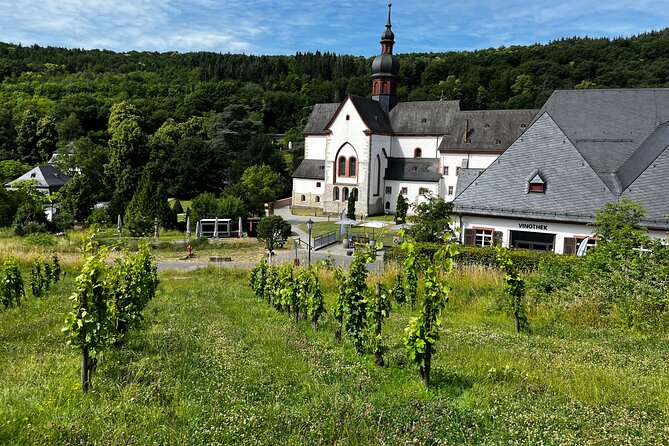
Kloster Eberbach is the most distinctive stop. This former monastery is about 1,000 years old and is closely linked with the development of Riesling in the Rheingau. The visit gives you more than a pretty building and a few pours. You walk through historic spaces while learning about the monks’ contribution to growing grapes and producing wine.
The monastery is also where the tour makes its strongest connection between culture and agriculture. Wine in Germany is not just a modern export product. It is tied to land, religious institutions, trade, local work, and long-running family traditions. The setting helps those facts feel concrete.
A tasting of 4 to 6 wines takes place in the monastery’s tasting room, so you can begin comparing styles in a memorable setting. The tasting is included in the tour price, as are admission charges and transport. You are not left to find your own way between rooms or figure out which wines best represent the area.
Allow for walking on uneven surfaces and stairs here. The monastery is not a smooth, modern attraction designed for effortless movement. If you have restricted mobility, this tour may be a poor fit, particularly because later stops also involve steep stairs or uneven paving.
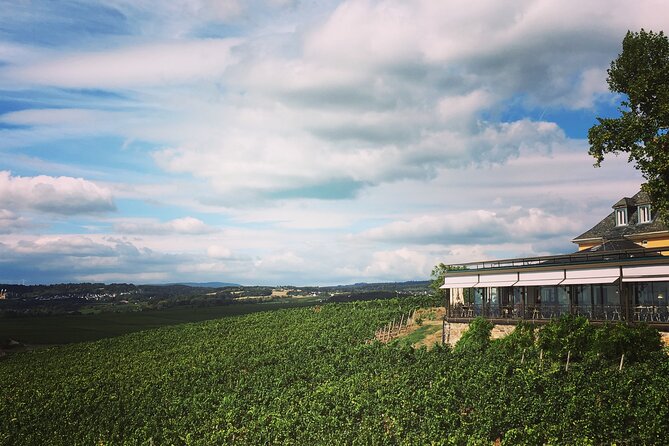
Passing Johannisberg Palace and the Rheingau views
The route continues past the impressive setting of Johannisberg Palace. If time allows, there may be a brief stop. That wording matters: you should treat the palace as a scenic part of the drive, not as a guaranteed long visit with a full palace tour.
The scenery helps break up the tastings. You are not spending the entire day indoors, and the private vehicle makes it possible to cover several parts of the Rhine wine country without arranging local connections yourself. One account of the tour also included a ferry crossing, but the stated route specifically promises the drive past Johannisberg Palace, so details may vary with the day’s timing and conditions.
This is one reason a small group works well. A guide can keep the schedule moving while still responding to the group’s interests. If everyone is lingering over a tasting, the brief sightseeing stop may need to stay brief. The day has several substantial stops, so the schedule cannot stretch indefinitely.
Lunch and choice at RheinWeinWelt
RheinWeinWelt in Rüdesheim gives the tour a different rhythm. Instead of focusing on one winery, this tasting room presents wines from around 80 producers in the Rhine River region. You taste 5 wines, with Jérôme helping you choose based on what you enjoyed earlier.
This is especially helpful if you want to understand the range of the region rather than commit to one house style. You can compare producers and ask for guidance without having to visit 80 separate cellars. The setting also gives you a chance to pause, eat, and talk through what you have tasted so far.
Lunch is not included. You choose from a menu featuring locally sourced food, freshly prepared dishes, or cheese and charcuterie boards. The boards make particular sense if you want a leisurely wine lunch rather than a large meal, but the final choice is yours.
Budget extra for lunch when comparing the tour price with other wine excursions. The meal is described as a real part of the stop, not a rushed sandwich break, but it remains an additional cost. If you are traveling on a strict budget, this is the main extra expense to plan for.
RheinWeinWelt is also a good place to make your preferences clear. Tell Jérôme what you like and dislike. If you prefer crisp and dry wines, sweeter Rieslings, or red varieties such as Pinot Noir, the tasting can be shaped around that information. You do not need to arrive as a wine expert.
Same wine country, a different gate to drive through:
- San Francisco Super Saver: Muir Woods & Wine Country w/ optional Gourmet Lunch
★ 4.5 · 3,352 reviews - Day Trip to Kakheti Wine Region Including 9 Wine Tastings
★ 5.0 · 2,774 reviews - Toledo Tour & Vineyard Walk with Wine Tasting from Madrid
★ 5.0 · 2,546 reviews - From Tbilisi: Kakheti Wine Region Tour with 9 Wine Tastings
★ 4.9 · 2,541 reviews
Finishing at a family-run estate
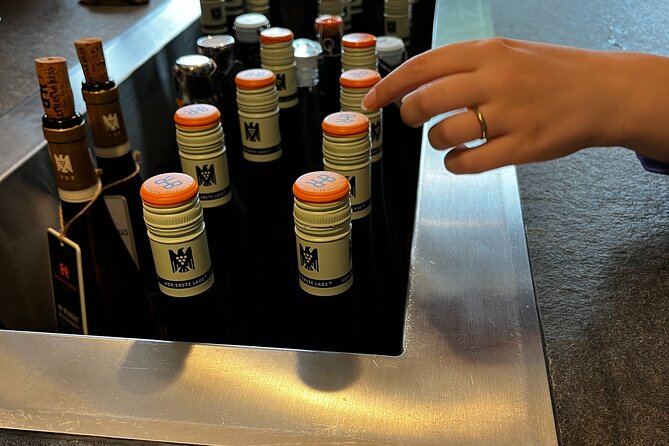
The final stop is a tasting at Weingut Kaufmann, Ress, or another similarly well-regarded estate, depending on the day. The key point is the change in scale and mood. After the monastery and the broad regional selection, you finish with a family-run winery and a flight of 6 wines.
The tasting moves from Riesling to Pinots and is intended to show the estate’s main styles. This gives you a useful contrast with the earlier tastings. You are no longer sampling a wide range from many producers. You are seeing how one estate builds a recognizable collection.
The exact winery is not fixed in the information provided, so you should not book this expecting a guaranteed visit to Kaufmann specifically. What is promised is a highly rated family estate and a representative tasting. That flexibility can work in your favor, since the guide can select a suitable stop for the day’s route and timing.
A final estate visit also gives the tour a more personal finish. You can ask questions about the wines without the stop feeling like a quick retail tasting. The group size helps here, since six or seven people can usually exchange impressions without the conversation becoming unwieldy.
What the $199.55 price really covers
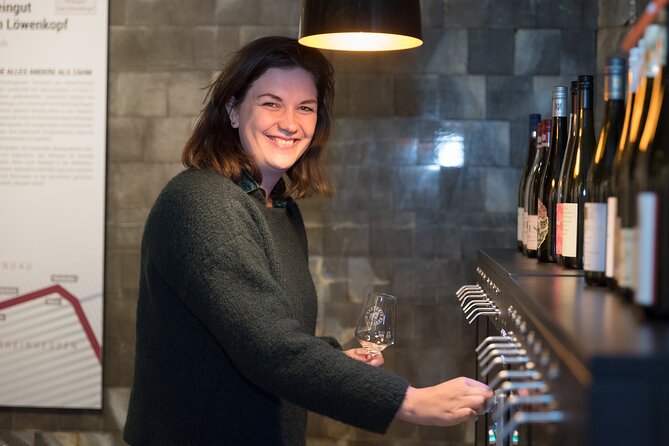
At $199.55 per person, this is not the cheapest way to taste German wine. It is also not simply a tasting fee multiplied across three locations. The cost covers an air-conditioned private vehicle, all stated admission fees, the monastery tasting, the final estate tasting, and a guide for roughly half a day.
You are also paying for the route design. Reaching Kloster Eberbach, Johannisberg, Rüdesheim, and a family estate on your own would require more planning and likely several transport decisions. The private vehicle removes that work and lets you focus on the day.
The maximum of seven participants is important to the value. A large coach tour can offer a lower price, but it rarely allows the guide to adapt the wine choices to individual tastes. Here, Jérôme has time to learn what you prefer and explain the differences in plain language.
Lunch remains outside the price, and you will want to account for that before booking. Still, if you value a well-planned route, personal instruction, and comfortable transport, the cost is reasonable for a small-group wine day. If your main goal is only to drink as many inexpensive samples as possible, you may find it harder to justify.
Jérôme’s role makes the day more personal
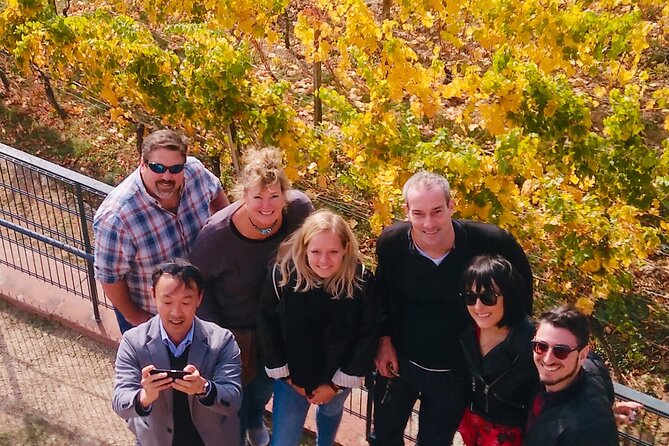
Jérôme is central to the experience. His job is not limited to driving you from one stop to another. He explains German wine, gives context about the Rheingau, discusses the monastery, and helps you decide what to taste next.
The strongest praise connected with the tour centers on his friendly manner, clear communication, and ability to combine wine with local history. He also contacts participants before the tour with meeting instructions, which is useful if you are arriving from Frankfurt or another nearby base.
I would approach the day with a few questions ready. Ask about Riesling styles, the difference between dry and sweeter German labels, or how Pinot wines fit into the region. You will get more from the tour if you treat it as a conversation rather than waiting passively for each pour.
The small group also means the mood can depend on the people sharing the vehicle. With only a few participants, that usually creates an easy social atmosphere, but it also means you will spend much of the day with the same small set of people. For most wine lovers, that is an advantage.
Practical details before you book
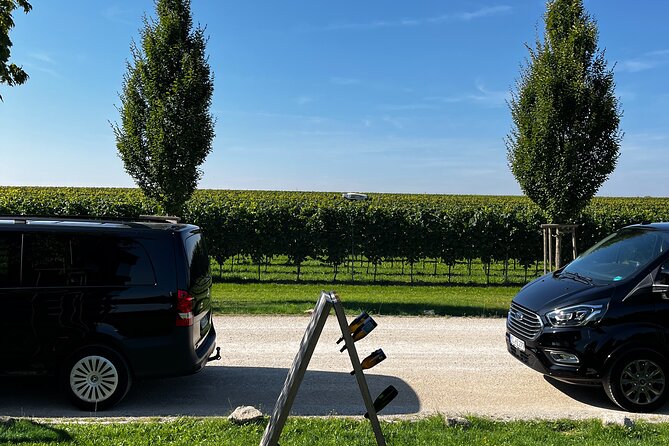
The meeting point is BottleStops at Binger Schlag, 55122 Mainz. The tour ends back at the same point. It is offered in English, uses a mobile ticket, and confirmation is provided at booking.
You must be at least 18 years old. Most adults can take part, but the route includes stairs, steep sections, and uneven surfaces. Wear shoes with a secure sole and avoid treating this as a polished indoor tasting with no walking.
The tour is not recommended for people with restricted mobility. That is not a minor footnote, since the monastery and winery settings can involve uneven paving and stairs. If mobility is a concern, contact the provider before committing.
Free cancellation is available if you cancel at least 24 hours before the start time. Changes or cancellations inside that window are not accepted for a refund. The tour also requires a minimum number of participants, so if the provider cancels for that reason, you receive an alternative or a full refund.
Who will enjoy this Rheingau wine tour most
This tour suits you if you want German wine explained in context, not just poured into a glass. It is a good match for couples, small groups of friends, and solo visitors who enjoy meeting a few fellow wine enthusiasts.
You will get the most from it if you enjoy both culture and food. Kloster Eberbach gives the day a historical anchor, RheinWeinWelt provides lunch and variety, and the final estate offers a closer look at family wine production.
It is less suitable if you want a long, slow visit at one vineyard. The day covers several locations, and the palace stop may be brief or dependent on timing. It is also not ideal if you want lunch included in the advertised price or if you cannot manage stairs and uneven ground.
Should you book it?
Book this Rheingau tour if you want a well-paced introduction to German wine with comfortable transport and a guide who can adjust the tasting to your palate. The monastery, castle views, Rüdesheim stop, and family estate give the day enough variety to feel like a regional outing rather than a single winery appointment.
Skip it if your priority is the lowest possible price, a guaranteed long visit at one named estate, or a completely accessible route. For everyone else, the combination of 15 or more potential wine samples, local food, regional history, and a maximum group of seven makes this a strong half-day choice from Mainz.
FAQ
Where does the tour begin?
It begins at BottleStops, Binger Schlag, 55122 Mainz, Germany.
Where does the tour end?
The activity ends back at the meeting point in Mainz.
How long does the tour last?
The tour lasts approximately 5 to 6 hours.
How many people can join the tour?
The maximum group size is 7 participants.
Is lunch included?
No. Lunch is an additional expense at RheinWeinWelt.
What food is available for lunch?
You can choose freshly prepared dishes from a menu with locally sourced produce, or select a cheese or charcuterie board.
How many wines will I taste?
The stated tastings include 4 to 6 wines at Kloster Eberbach, 5 wines at RheinWeinWelt, and 6 wines at the final estate.
Is the tour available in English?
Yes. The tour is offered in English.
Is there an age restriction?
Yes. Participants must be at least 18 years old.
Is the route suitable for people with restricted mobility?
No. The tour involves steep stairs, uneven paving, and walking over uneven surfaces, so it is not recommended for people with restricted mobility.
Just listed around the world
- Winery Visit and Tasting in Elche with wines and tapas from Alicante in Van★ 5.0 · 9 reviews
- Wuerzburg: Vineyard rally with wine tasting and group dynamics★ 4.8 · 6 reviews
- Yolo: Vineyards, Farms & Cultural Gems – Audio Driving Tour★ 4.3 · 5 reviews
- Winery Visit & Tasting on the Volcanic Slopes near Catania★ 5.0 · 2 reviews
- Woodinville Wine Country: Downtown Wine Tasting Pass★ 4.4 · 2 reviews
- Xalo: Vineyard Tour with Wine Tasting and Snacks★ 4.9 · 8 reviews
- Winery Visit & Tasting near Grosseto with 6 wines★ 4.8 · 6 reviews
- Winery Visit on Parma Hills & Wine Tasting with Food Platter★ 5.0 · 26 reviews
Germany Vineyard Tours, compared.
From Dresden: Saxon Wine Route Steamer Day Cruise
Read our review →
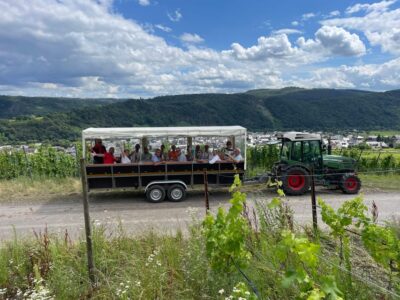
Kröv, Mosel: Covered wagon ride through the vineyards with wine tasting
Read our review →
Koblenz: The Living Vineyard, Nature & Wine Enjoyment
Read our review →
Get Pfalzed – wine tour to unique wine region to taste Red wines
Read our review →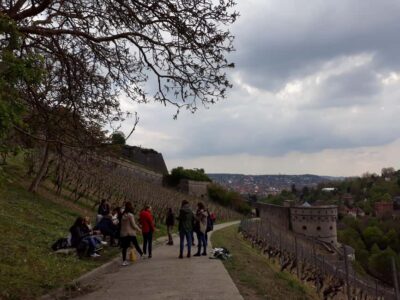
Wuerzburg: Vineyard rally with wine tasting and group dynamics
Read our review →Browse the lists this tour appears in